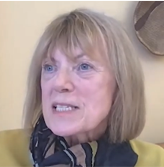


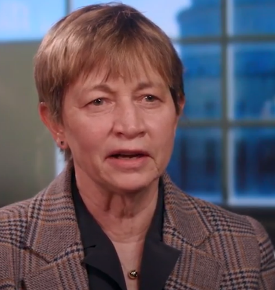

Maria T Zuber
E A Griswold Professor of Geophysics & Vice President, Research, MIT
“So, I’d like to start by talking a little bit about how I became acquainted with the Jameel family. A number of years ago MIT‘s current president, then provost, Rafael Reif, asked myself and another faculty member to reach out to the MIT campus and to see what parts of environmental studies MIT wanted to amplify and wasn’t involved with to the extent that they would really like to be. And and we did that, and what came out of that was water and food that our faculty really viewed these areas as critical to the human condition and some work was going on but that that work could be amplified in an MIT way. In ways that could help the world. And Raphael introduced me to Mohammed Jameel and asked us to talk about that and Mohammed‘s reaction was: “well if we did a water and food center how many people do you think you could help?” And I hadn’t really thought about it, and I said well, I bet we could help thousands – and and he seemed to like that answer. And that led to the Abdul Latif Jameel Water and Food Systems laboratory (J-WAFS) at MIT.
And one of the first activities that that lab undertook was a study of a dam in Ethiopia, close to the border of Egypt, and the director John Lienhard called together international experts to investigate the filling of the dam in a way that it wouldn’t negatively impact inhabitants of the Nile to the north of the dam. And that study was undertaken, it was given to the governments of Ethiopia and Egypt and one of the things that came out of the study is there are a hundred million people who get their water from the Nile in Egypt. And then it impacted me that it was like. oh my god, you know we’ve we’ve done something that potentially positively influenced the lives of a hundred million people.
And it then struck me that this is the way that Mohammed Jameel thinks! He thinks about impact and he thinks about improving the human condition on a large scale.
Working with the Jameel family has also been a very personal experience for me. Our collaborations between MIT and Community Jameel have brought me to the Middle East on a number of occasions and I developed an interest in helping women from Saudi Arabia, and more broadly in the Middle East, mainly in the areas of enhanced educational opportunities for women and also how do we assimilate women into the workplace, so that they can help their families, and also help the economies in Saudi Arabia and the Middle East. And I got a great deal of satisfaction out of my interactions in these activities and I don’t think that I would have undertaken this if it hadn’t been for my association with Community Jameel – and I am very grateful to them for that.
So, when I reflect on um the 75th anniversary of Community Jameel, I think a lot about how much this family has done for those in need. Knowing the family, their dedication to their father Abdul Latif Jameel, their values, their compassion, but also their business sense and their drive. It was really the perfect combination to help people and to associate with others who had similar interests. You know, I often think that the most important people in the world to the Jameel family are those who have the greatest needs. And the Jameel family, through Community Jameel, has delivered. And I’d just like to take this opportunity to thank them for everything that they’ve done to allow MIT to help others in the world, and that they’ve done, you know, just for people everywhere. It’s been such an honor and a privilege to be associated with Community Jameel and I just look forward what we’re all going to do collectively in the future.”
Learn more about our contributor here.