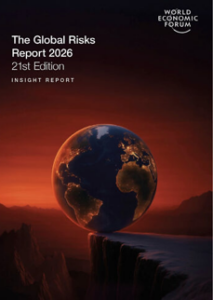
The World Economic Forum’s (WEF) Global Risks Report 2026, published in January 2026, heralds the second half of what it justifiably terms a ‘turbulent decade’.[1]
Back in 2020, most people would have expected the COVID-19 pandemic to be the low point of the decade in terms of the global risk landscape.
Five years later, there are a number of other issues with a justifiable claim to that dubious accolade: the sudden emergence of super-intelligent AI systems; soaring global temperatures; conflict in Ukraine; and more recently; hostilities between Israel and the USA, and Iran.
 Risk, it seems, is now our constant companion, the specter that threatens to undo all we have collectively achieved.
And yet, through the rollercoaster events of recent history, the human narrative has endured.
Somehow, amid 2026’s matrix of challenges, civilization continues to function. Factories still oil the cogs of trade and commerce. The global economy continues to transcend borders. The internet still offers a voice to billions. Innovation accelerates at breakneck pace.
Perhaps the story of the WEF’s Global Risks Report 2026 is not one of dire prognostication but a story of opportunity. Why? Because alongside awareness of risk comes preparedness, and with preparedness comes the promise of a less chaotic, more sustainable future.
Context is key. So what are the global risks deemed most urgent in 2026, and how has the perception of risk has evolved from the previous 12 months?
Risk rankings: What threats keep experts awake?
The Global Risks Report quantifies risk across multiple categories – economic, environmental, geopolitical, societal and technological – as highlighted by more than a thousand experts across academia, business, government, international organizations and civil society. The top six risks believed most likely to cause material risk to global society in 2026 straddle all these sectors.
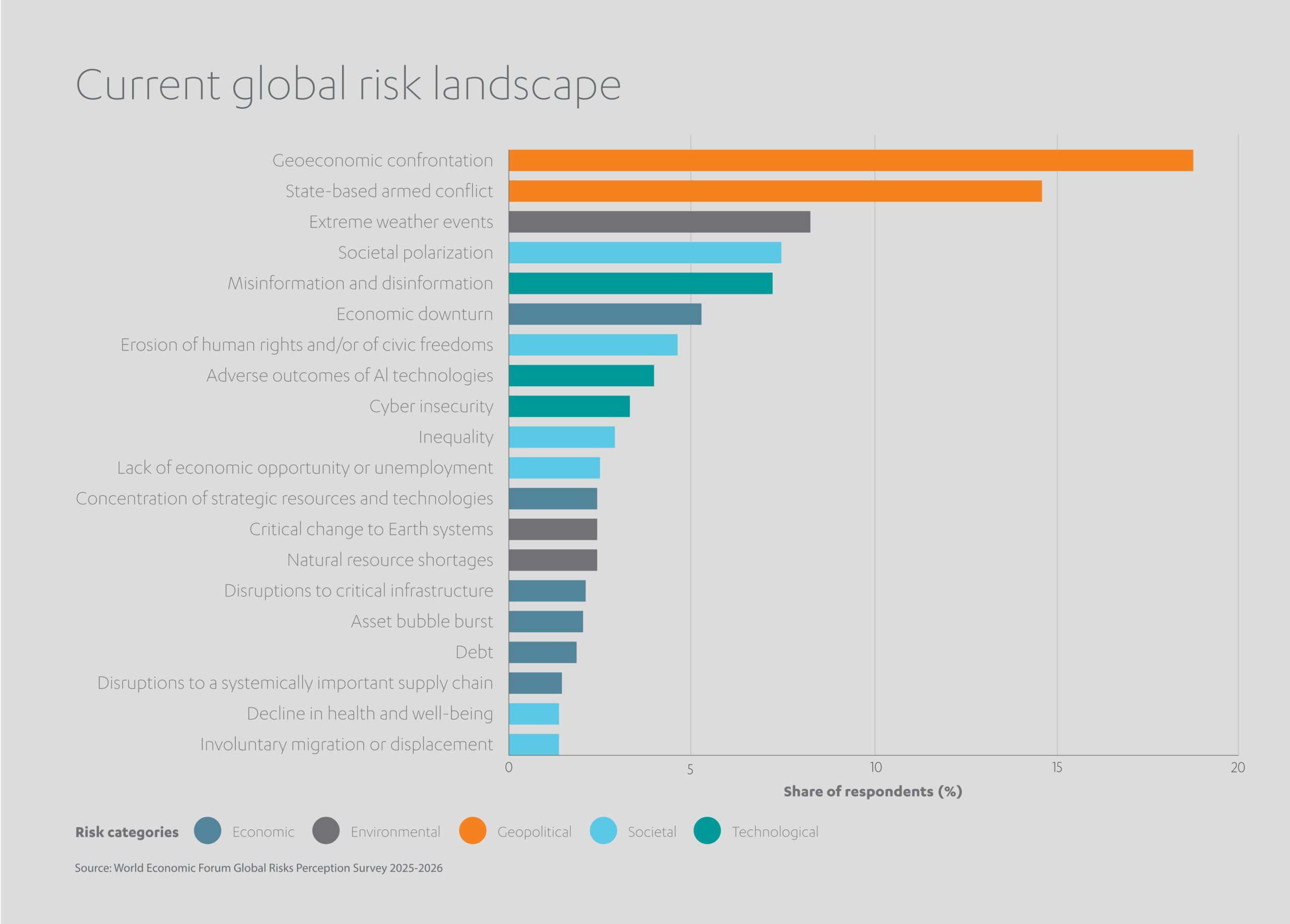
Geoeconomic confrontation, cited by 18% of respondents, is gauged the most immediate risk to the remainder of 2026, perhaps unsurprising given the combative stance taken by the Trump administration in America to tariffs and trade. Geoeconomic confrontation is followed by state-based armed conflict (14%), extreme weather events (8%), societal polarization (7%), misinformation and disinformation (7%), and economic downturns (5%).
A rather more nuanced picture emerges when the question of risk is measured in terms of severity, over both the short term (two years) and long term (10 years).
Over a two year period, chief concerns are again led by geoeconomic confrontation, followed by misinformation and disinformation, societal polarization, extreme weather events, state-based armed conflict and cyber insecurity. For comparison, in 2025 geoeconomic confrontation ranked only ninth on the two-year list, demonstrating its rapid ascent up the global agenda.
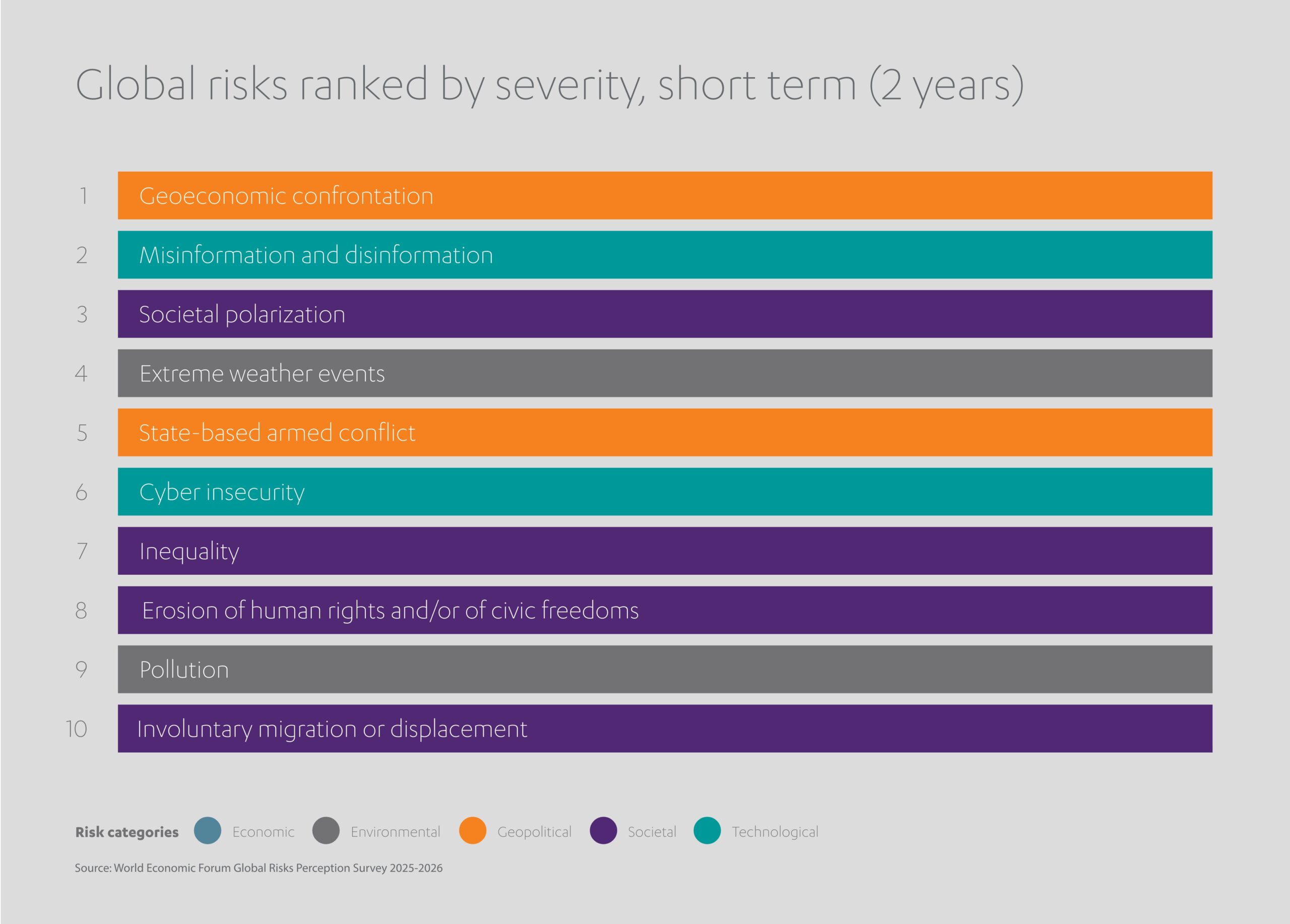
In fact, all of the ‘highest climbers’ on the two-year list are related to the world’s increasingly fragile financial ecosystem. Joining geoeconomic confrontation among the top five rising risks are economic downturns, inflation, asset bubble bursts and disruptions to critical infrastructure.
 The International Monetary Fund’s (IMF) World Economic Outlook Update of January 2026 sheds some possible light on this economic pessimism. Several factors focus on downgraded growth expectations for the industry often hailed as our savior – artificial intelligence.[2] A negative reevaluation of AI’s productivity, the IMF cautions, “could lead to a decline in investment and trigger an abrupt financial market correction, spreading from AI-linked companies to other segments and eroding household wealth.” Beyond overhyped AI, the IMF report also raises the possibility of trade strife and domestic or international tensions, which together could stifle financial markets, commodity prices and supply chains.
Perhaps surprisingly, the perils falling furthest and fastest down the two-year risk list are clustered around a hazard many would regard as the most existential threat of all: climate change.
Among the top five ‘biggest fallers’ in the WEF’s two-year risk ranking are critical changes to Earth systems (down seven places), biodiversity loss and ecosystem collapse (down five places) and pollution (down three places).
This might at first glance seem counterintuitive, given that 2025 was again one of the hottest years in human history, continuing a run of record-setting temperatures for planet Earth.[3] In reality this is most likely a temporary – even misleading – anomaly. Climate concern has only suffered a relative downgrade compared to soaring economic fears, the latter peaking in 2026 due to the compound threats of supply disruptions, trade tariffs and a spike in the global cost-of-living.
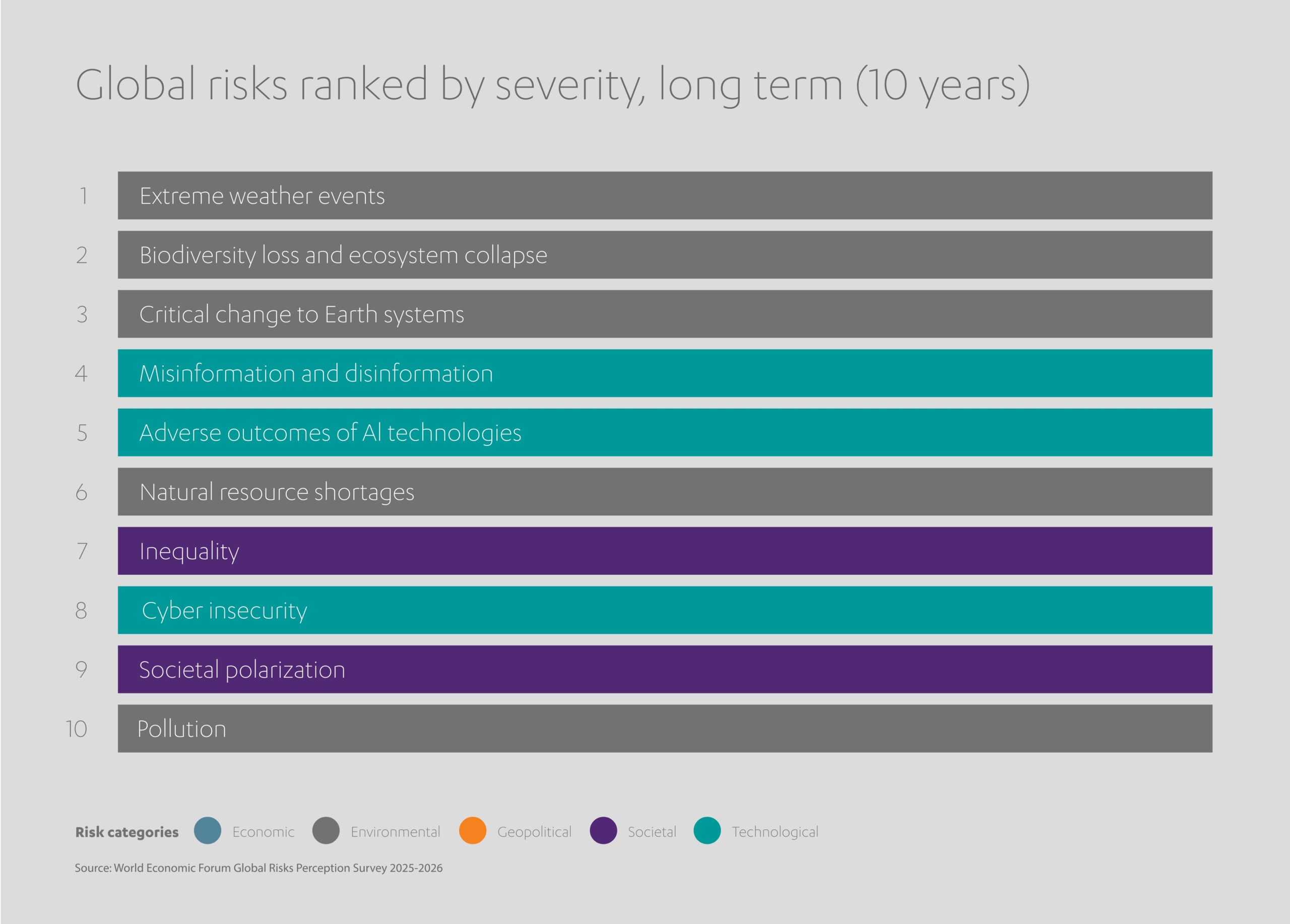
How can we be sure? By appraising the longer term risk matrix, encompassed in the WEF risk report’s 10-year rankings.
In this list, environmental concerns reclaim their logical place at the forefront of the risk agenda. Environmental perils dominate the list, with extreme weather events, biodiversity loss / ecosystem collapse, and critical changes to Earth systems occupying the top three spots respectively. Natural resource shortages and pollution also feature in the top tier of this 10-year list.
To explain the unwavering presence of environmental risks in the public perception, one only need pay attention to the realities of life in 2026. Read a newspaper headline, or take a walk outside, and the evidence is abundant that global warming and environmental breakdown are the prime dangers we will be forced to navigate in the near and mid-term future.
Has environmental risk moved beyond the hypothetical?
Climate data over the last 12 months has reinforced the risk posed by rising temperatures and increased human exploitation of the Earth’s resources.
In 2025, the global average surface temperature was 1.44oC above the pre-1900 average. The past three years, 2023-2025, collectively represent the three warmest years in history across all the World Meteorological Organization’s (WMO) datasets.[4]
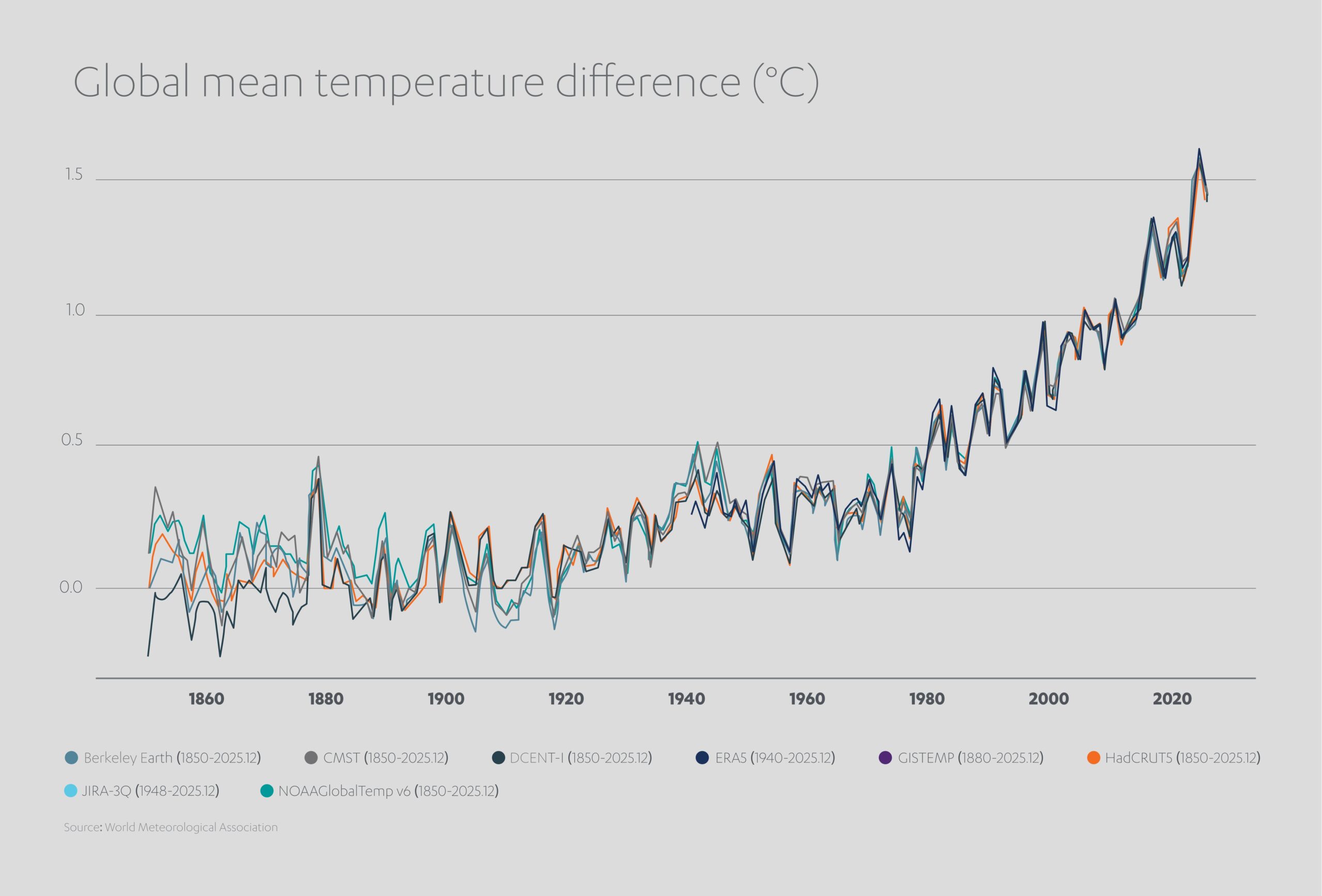
Ocean temperatures in 2025 also registered among the highest ever, indicating the long-term build-up of heat within the climate system. Annual global mean sea surface temperatures in 2025 reached 0.49°C above the 1981-2010 baseline.[5]
The US National Oceanic and Atmospheric Administration (NOAA) reported that temperature across the Arctic in 2025 were the highest in 125 years, with the region warming four times quicker than the global average.[6] Sea ice was the lowest ever recorded in the 47-year satellite record, with the oldest, thickest Arctic ice falling more than 95% since the 1980s.
Extreme weather events became ominous in their frequency during 2025. In February, eight inches of rainfall caused flash floods in the USA’s Appalachian region, with rivers overflowing and landslides destroying homes, leaving 22 people dead and more than a thousand others requiring rescue.[7]
Asia also endured widespread flooding, with powerful monsoons hitting Sri Lanka, Indonesia, Thailand, Malaysia, the Philippines and Vietnam through November and December.[8] More than 1,600 people lost their lives, alongside widespread infrastructure damage and mass human displacement. With the floods came the inevitable breakdown of sanitation systems and outbreaks of disease. The region was further shaken by rare cyclonic storms bringing havoc in their wake. More than 100 tropical storms occurred worldwide in 2025, with half reaching cyclone designation.[9]
The UK experienced record rainfall and flooding in 2025. Prolonged dry spells and accompanying heatwaves hit Europe and North America causing a spate of wildfires. Europe experienced its highest annual incidence of wildfires in 20 years, while in Canada annual wildfire emissions were the second-highest on record.[10]
In Somalia drought-linked hunger left 4.4 million people facing food shortages in 2025, with more than 780,000 reaching critical levels.[11] Iran entered its sixth year of drought, with the five main reservoirs supplying capital city Tehran only 11% full as of November.[12]
As we enter 2026 there appears to be no respite in environmental stress, with scorching early-season heatwaves already threatening California and other western states of the USA.[13]
Apart from the physical and emotional toll of extreme weather, climate change also carries a financial burden the world can scarcely afford. By some estimates, the biggest 10 disasters of 2025 accounted for at least US$ 120 billion of insured losses.[14]
For people affected by these disasters environmental decay is not just data points on a spreadsheet – it is a reality expressed in family tragedies and lost livelihoods. ‘Risk’ for these people is more than a hypothetical future state. It is unfolding here and now, and only threatening to grow in potency.
With the environment more precariously balanced than ever, the WEF Global Risks Report 2026 includes a special investigation into potential disruption to critical infrastructure over the coming decade. It transpires that the systems on which we rely, both natural and manmade, are more vulnerable than at any time in history
Cascading risk: What does a more dangerous future look like?
As we embark on our new, riskier future, extreme weather events and natural disasters threaten more than just short-term damage. They jeopardize the critical infrastructure and services – the internet, energy grids, public utilities, financial markets and telecommunications – upon which we have come to depend.
Offered a severity scale of one to seven, the chance of substantial disruption to critical infrastructure over the next two years was rated four or more by 53% of Global Risks Report respondents, rising to 70% over a 10 year period.[15]
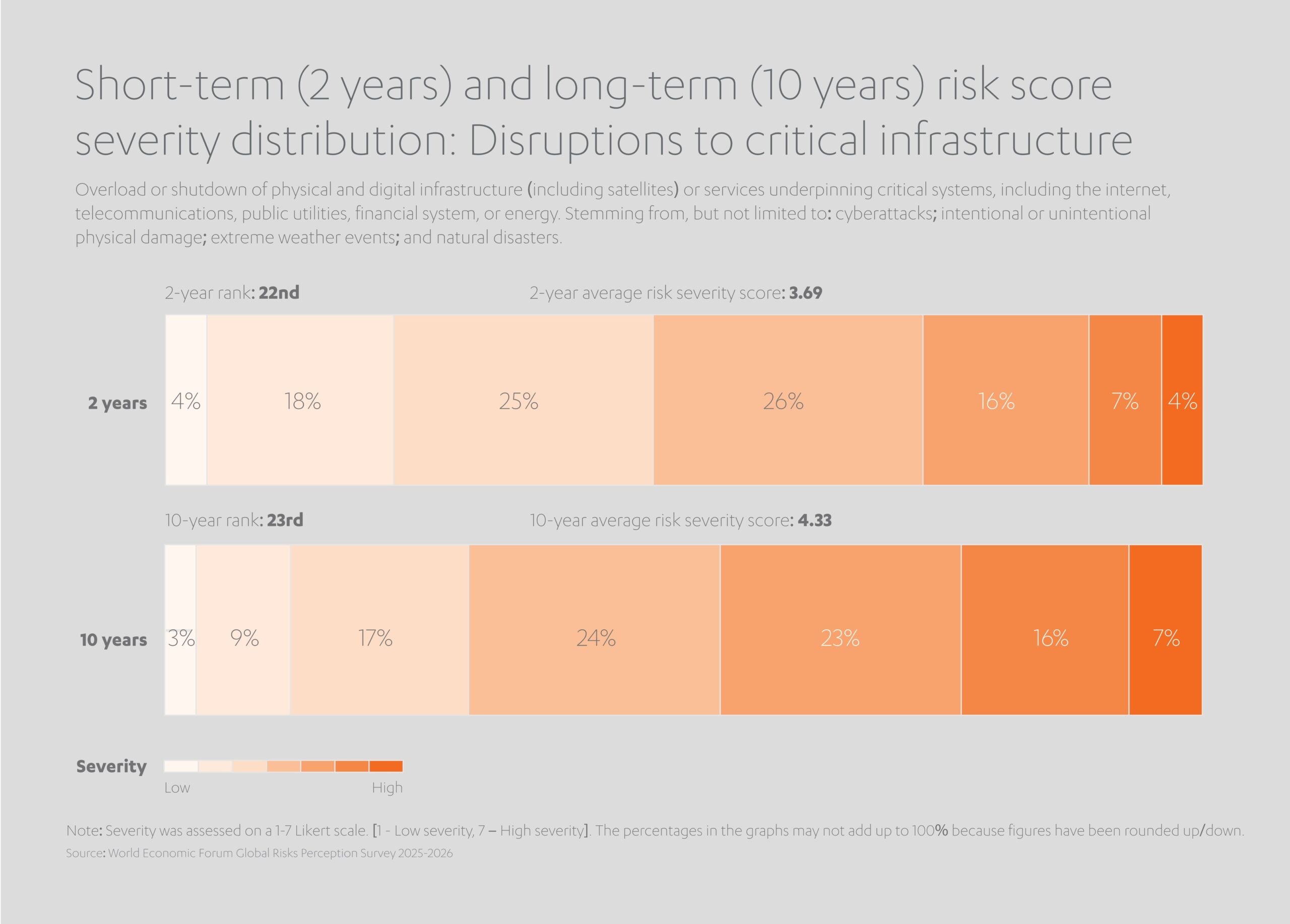
We could be looking, the WEF notes, at the perfect storm of risks: Ageing critical infrastructure becoming more prone to failures, with more frequent and intense meteorological phenomena overwhelming services and amplifying wider social challenges, all complicated by escalating geoeconomic rivalry.
As we migrate to a more digital world we also run the risk of cascading disasters, where one event triggers a series of ripples across multiple assets, from power and water to transport and communications. A future energy blackout, for example, might interrupt digitized networks which control water supplies, which might in turn force nuclear power plants that require water for cooling to shut down, compounding the original energy problem.
A warming world carries numerous infrastructure risks. Mass reliance on air conditioning units during hot spells, for instance, can stretch energy grids to breaking point. Heatwaves can cause rail tacks to buckle or road surfaces to melt. Violent storms can wreck solar panels. Prolonged rainfall can swamp drainage systems. Rising levels of salination threaten to increase the cost of water treatment.
And then there are droughts, which impact more than drinking water supplies. Droughts can also carry severe consequences for energy grids and logistics. China, Jordan, Iraq, Morocco and Syria are all prone to hydropower fluctuations if river and reservoir levels fall too low. Shipping has already been affected in the Panama Canal during the 2023-2024 drought, when larger vessels found the waterway suddenly impassable.
It would be naive to believe that these fears are confined to emerging economies. As a result of their high technological dependence, perceptions of risk to critical infrastructure are even more pronounced in developed markets like the USA and Europe.
Against this backdrop, must we resign ourselves to a riskier and more fragile future? Or can we be proactive in creating a safer and more sustainable society for generations to come
Can we still de-risk our world?
To mitigate these multiple and often interconnected threats, there are numerous actions we can take globally to help de-risk society and turn problems into opportunities.
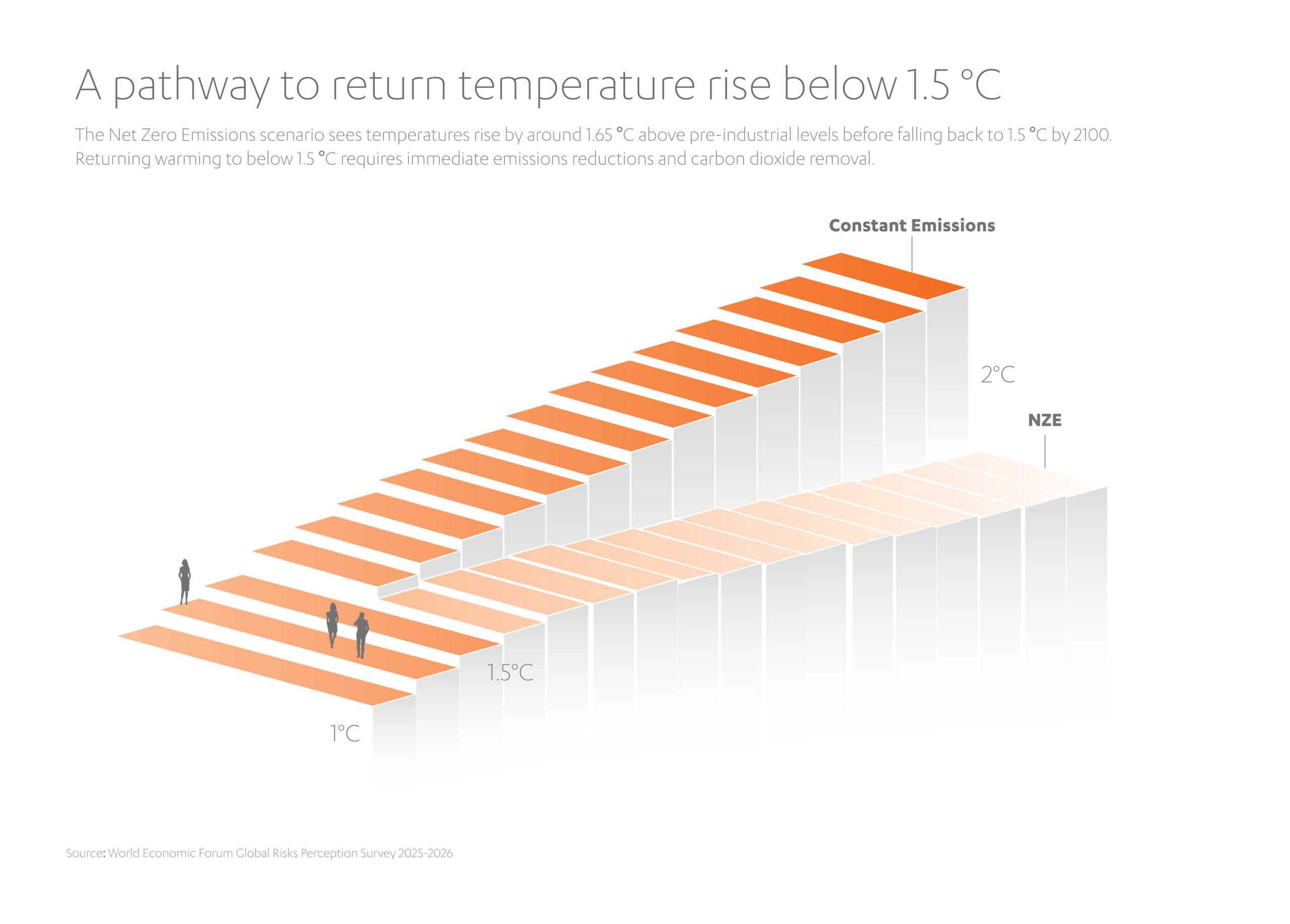
With so many risks emanating from climate change, we must first and foremost redouble our efforts to cut emissions and curtail global temperature rises. Fossil fuels are responsible for more than two-thirds of all greenhouse gas emissions, so we must hasten our switch to sustainable energies, particularly wind and solar power.[16]
Under the International Energy Agency’s (IEA) Net Zero Emissions by 2050 Scenario, the installed capacity of renewables worldwide must increase fourfold over the next decade.[17] By 2035 low-emission technologies must account for at least one-third of all energy consumption. The use of sustainable fuels – liquid biofuels, biogases, low-emission hydrogen and other hydrogen-based alternatives – must quadruple by that same date. Energy investment in the NZE Scenario must increase to around US$ 4.8 trillion annually over the next decade. This would mark a rise of around 50% from today’s levels, although each dollar spent will mean savings from lower fuel prices and efficiency gains.
Addressing energy and emissions is only the start. Comprehensive global de-risking involves each stratum of society and every tool at our disposal:
- Development assistance, such as international aid for disaster risk response, can help combat human displacement amid natural catastrophes
- Financial instruments, such as those deployed by international development agencies or NGOs, can remedy shortfalls in public infrastructure, making vital services more resilient to future challenges
- National and local regulations can help tackle biodiversity loss and pollution
- Watertight global treaties and other international agreements can reduce the likelihood of resource competition, and in the long term lower the occurrence of extreme weather events
- A cohesive approach to protocols and standards, legitimized by multi-stakeholder engagement, can counteract the potential dangers of AI technologies
- Public awareness and education, along with more investment in research and development, can prevent declines in health and wellbeing and guard against the proliferation of infectious diseases, particularly as climate impacts escalate
- Farsighted corporate strategies can be designed to fix fiscal problems such as economic downturns, supply chain disruptions, unemployment and skills shortages.
As we have seen, there is much we can do to offset the risks highlighted in the WEF Global Risks Report 2026. Success stories reinforce the benefits of timely interventions. One new analysis shows that efforts to promote cycle lanes and electric cars have already helped slash toxic air pollutants by more than 20% in cities as geographically diverse as London, San Francisco, Warsaw and Beijing.[18]
Promptness and collaboration are key, because inaction will only allow emergent risks to become entrenched in our systems.
A vibrant private sector is also crucial to supplement the spending power and innovation capacity of the overstretched public realm.
How can the private sector help steer us to a safer society?
Forward-thinking businesses like Abdul Latif Jameel, with sustainability in their DNA, can help turbocharge many of the strategies necessary to reduce existential risk in our global systems.
Fotowatio Renewable Ventures (FRV) is the flagship renewable energy business of Jameel Energy and one of the industry’s leading players.
FRV manages a constantly expanding portfolio of more than 3 GW of solar, wind and BESS energy storage projects presently in operation (rising to over 4 GW including projects in development and construction) across four key international markets – Europe, Australia, the Middle East and Latin America. Through FRV-X, its dedicated innovation and incubation platform, the company is also exploring emerging technologies and business models, data centers, digital energy platforms and green hydrogen development.
Apart from contributing to the global sustainable energy transformation, Abdul Latif Jameel is also invested in projects to counter other existential societal risks – global water shortages and human health crises.
Similarly, Almar Water Solutions, the dedicated water solutions business of Jameel and Environmental Services, manages a diverse catalogue of desalination, wastewater treatment, reuse and recycling programs. Operating across three business strands – asset management, services, and industry and technology – Almar Water Solutions is active within Europe, the Middle East, Latin America, Africa, and Asia-Pacific, ensuring dependable water access for homes and businesses in some of our most water-stressed regions.
Abdul Latif Jameel’s investments in energy and water are not isolated interventions, but part of a broader, integrated response to the interconnected risks shaping our world. From decarbonizing power systems to safeguarding access to clean water, these initiatives reflect a recognition that today’s global challenges do not exist in silos, and neither can their solutions. By aligning commercial capability with long-term societal need, such efforts demonstrate how private sector action can move beyond mitigation, helping to build resilience into the very systems on which modern life depends.
“The benefit of recognizing risks – their triggers, symptoms and antidotes – is that we can conspire to neutralize their more harmful tendencies,” says Fady Jameel, Vice Chairman, International, Abdul Latif Jameel. “Counteracting risk becomes, in the process, a golden opportunity – a chance to encourage innovation, employment and collaboration, as both FRV and Almar Water Solutions are doing in their respective fields.
“Abdul Latif Jameel’s multifaceted approach to confronting the world’s hybridized risks is a microcosm of what we must aspire to as a global society.
Tackling global warming, while protecting our economies and safeguarding public health, requires an ambitious and joined-up strategy. It demands energetic financing and a resolute focus on the common good. With these core principles in place, there is no risk that our civilization cannot overcome, no future that we cannot make reality.”
Global risks: Five fast facts
Q: What is the most immediate risk to society in 2026 according to the Global Risks Report 2026?
A: Geoeconomic confrontation is deemed by experts to be the most pressing risk (18%), followed by state-based armed conflict, extreme weather events, societal polarization, misinformation and disinformation, and economic downturns.
Q: Does the risk outlook change over a 10-year forecast period?
A: Over the longer term the environment dominates the risk severity landscape, notably in extreme weather events, biodiversity loss / ecosystem collapse, and critical changes to Earth systems.
Q: Why do environmental fears dominate the longer term risk agenda?
A: Pure statistics. In 2025 the global average surface temperature was 1.44oC above the pre-1900 average, while annual global mean sea surface temperatures reached 0.49°C above the 1981-2010 baseline. The thickest Arctic ice has declined more than 95% since the 1980s.
Q: Are we already feeling the impacts of inhabiting a riskier world?
A: Yes, not only socially and environmentally, but also financially – the biggest 10 disasters of 2025 accounted for at least US$ 120 billion of insured losses globally.
Q: How decisively must we act to counter the world’s primary risk stimulant – climate change?
A: To reach net zero by 2050 we must increase renewable power capacity fourfold, use low-emission technologies for one-third of all energy consumption, and quadruple the proportion of biofuels we use.
[1] https://www.weforum.org/publications/global-risks-report-2026/
[2] https://www.imf.org/-/media/files/publications/weo/2026/january/english/text.pdf
[3] https://wmo.int/news/media-centre/wmo-confirms-2025-was-one-of-warmest-years-record
[4] https://wmo.int/news/media-centre/wmo-confirms-2025-was-one-of-warmest-years-record
[5] https://wmo.int/news/media-centre/wmo-confirms-2025-was-one-of-warmest-years-record
[6] https://www.theguardian.com/world/2025/dec/16/artic-record-heat-shrunken-sea-ice-report
[7] https://disasterphilanthropy.org/disasters/2025-appalachian-floods/
[8] https://www.britannica.com/event/Asia-Floods-of-2025
[9] https://www.copernicus.eu/en/news/news/observer-global-climate-highlights-2025-insights-copernicus-climate-change-service
[10] https://www.copernicus.eu/en/news/news/observer-global-climate-highlights-2025-insights-copernicus-climate-change-service
[11] https://wmo.int/media/news/global-drought-hotspots-report-highlights-human-and-economic-impacts
[12] https://www.theguardian.com/world/2026/jan/15/how-day-zero-water-shortages-in-iran-are-fuelling-protests
[13] https://www.theguardian.com/us-news/2026/mar/12/california-heatwave
[14] https://www.theguardian.com/world/2025/dec/27/cyclones-floods-and-wildfires-among-2025s-costliest-climate-related-disasters
[15] https://reports.weforum.org/docs/WEF_Global_Risks_Report_2026.pdf
[16] https://www.un.org/en/climatechange/science/causes-effects-climate-change
[17] https://www.iea.org/reports/world-energy-outlook-2025/net-zero-emissions-by-2050
[18] https://www.theguardian.com/environment/2026/mar/12/london-san-francisco-and-beijing-achieve-remarkable-reductions-in-air-pollution


 Added to press kit