 Dubai, UAE
Are we measuring the right things?


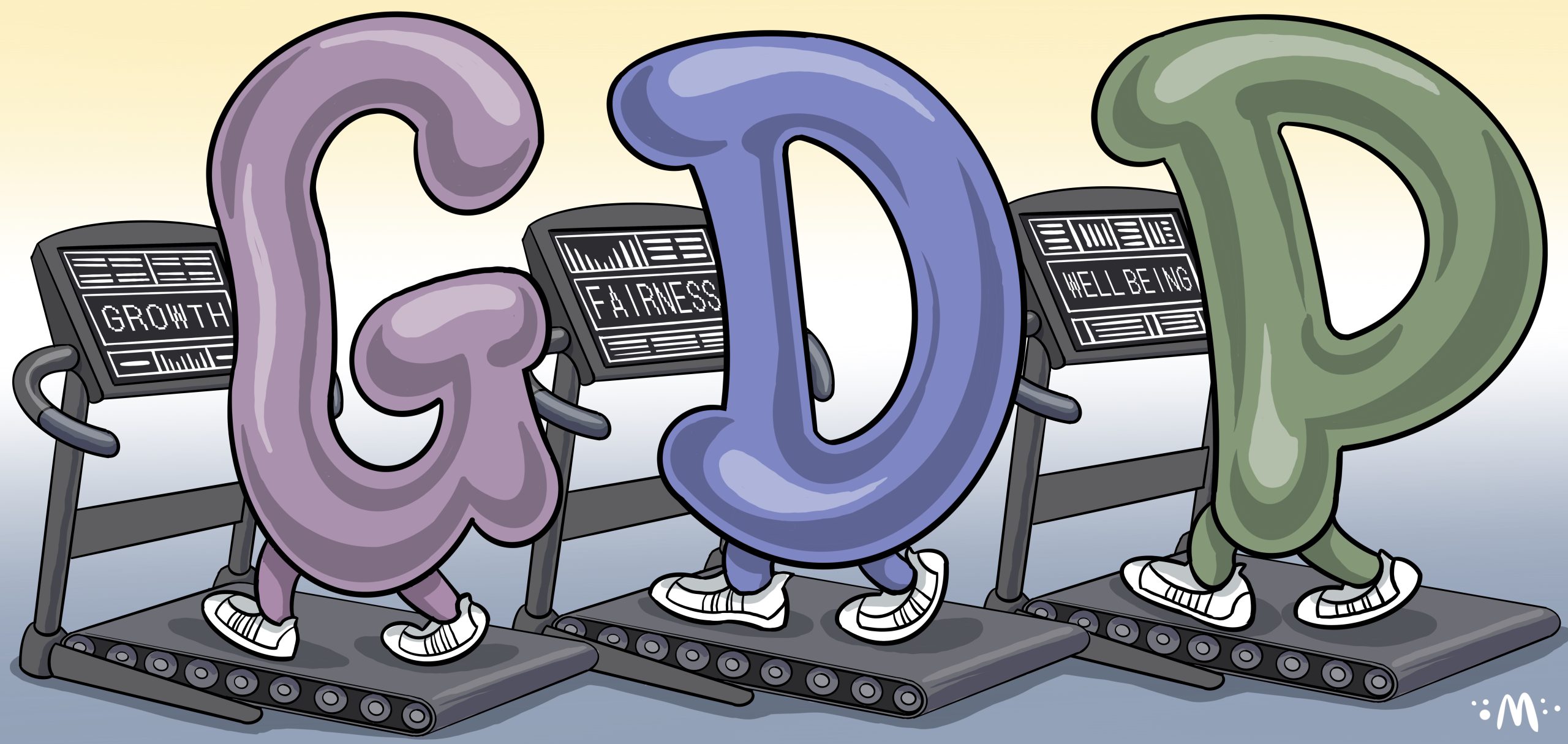
Global GDP is forecast to hit US$ 126 trillion this year, but young people in the world’s richest regions say they’re less happy than they were 15 years ago. What does that tell us about the way we measure progress – and is it time to look beyond GDP?
Let’s start with some good news: Gross domestic product (GDP) is growing worldwide. If current momentum holds, the wealth generating power of all nations will combine for US$ 126 trillion of economic activity in 2026, up sharply from US$ 118 trillion in 2025.[1]
The following year could be even more buoyant, with forecasters anticipating global GDP of US$ 132 trillion in 2027, led by the mega economies of the USA (US$ 34 trillion), China (US$ 22 trillion), Germany (US$ 6 trillion), India (US$ 5 trillion) and Japan (US$ 5 trillion). Taken on a superficial level this appears to be a win for us all, boosting jobs and public sector spending power.
The bad news is that this increased economic might not be reflected in our daily quality of life. Worse, we might not even have the tools to measure the disparity correctly.
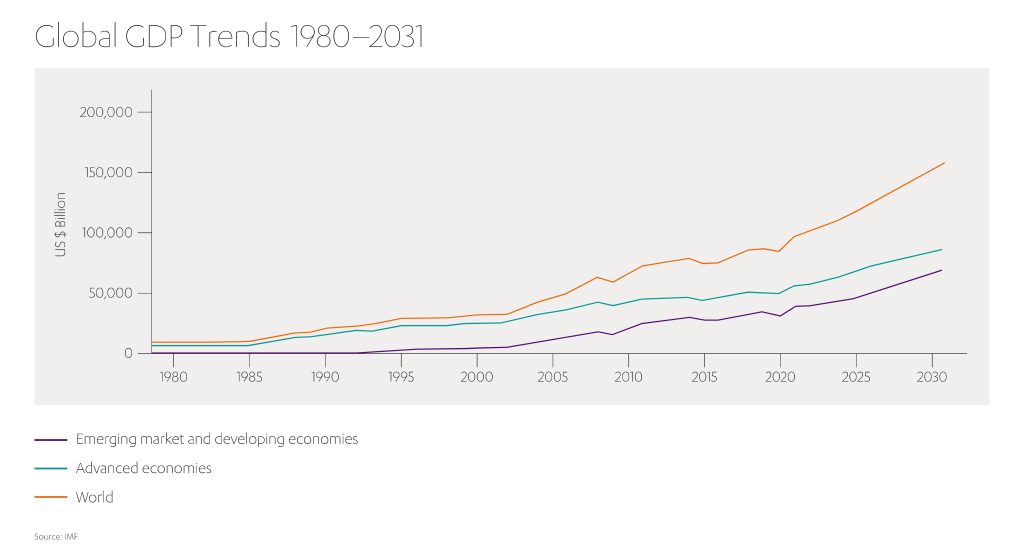
GDP as a concept has been around for almost a century. It uses national output, expenditure and income to calculate the total monetary value of a country’s entire goods and services over a given year. Rising GDP is considered cause for celebration. Falling GDP is generally taken as a sign of economic malaise – a warning that we are heading in the wrong direction.
GDP tells us nothing about happiness, stability, equality, health or sustainability – the things that truly matter to people’s lives
However, more people are starting to ask: How useful is GDP as a measurement tool? Certainly, there is some merit in knowing the wealth-creating capacity of a nation: It helps us plan ahead, set budgets, and tell a unifying story about striving for a common goal.
But it is just one solitary data point in the complex web of inputs that affect our day-to-day lives. GDP tells us nothing, for example, about happiness, stability, equality, health or sustainability. These are the things that truly matter to people’s lives, each of them far more fundamental to shaping the future than transient financial peaks and troughs.
What can we learn from GDP?
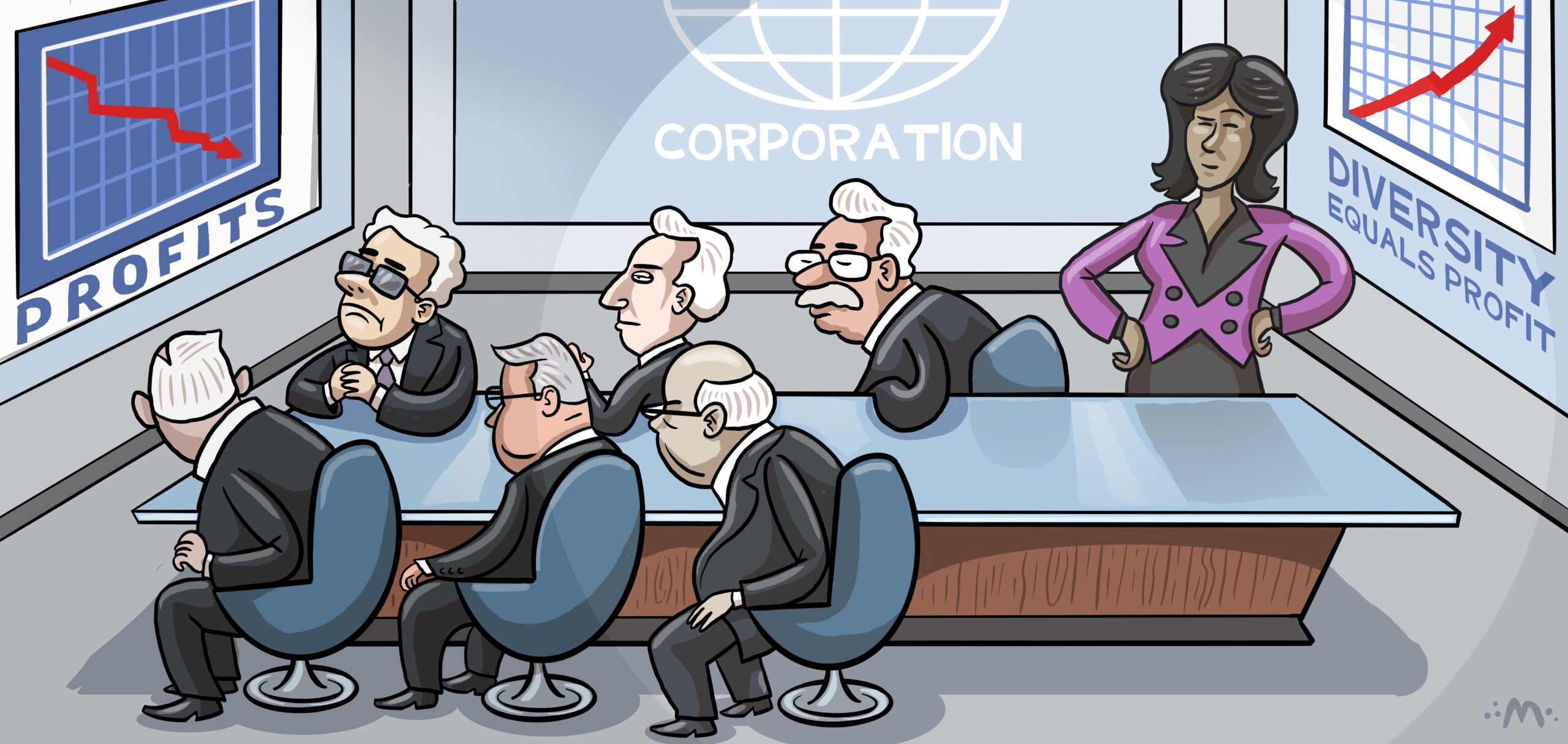
GDP risks arming us with knowledge about the price of everything yet the value of nothing. Governments continue to chase GDP myopically, even when that growth is accompanied by rising insecurity, worsening health, the destruction of natural environments, or greater inequality.
GDP is just one element of an intricate mix of pressures that manifest in an individual’s contentment or insecurity
No-one is advocating for the abandonment of GDP as a measurement tool. It is quantifiable, consistent and indicative of broad trends. But we must recognize that GDP is just one element of an intricate mix of pressures that manifest in an individual’s contentment or insecurity. For example, it fails to consider:
- Wellbeing: GDP is not an indication of wellbeing, which generally plateaus beyond a certain income level. Nor can it portray standards in health and education, a sense of community, or opportunity – all of which are intrinsic to liberty and contentment.
- Inequalities: If a minority is growing wealthier while the majority are becoming poorer, GDP makes no distinction. With its unnuanced national gaze, GDP can suggest economic growth, when in fact the gulf between haves and have-nots is expanding.
- Future prosperity: GDP is simply a measure of the previous 12 months’ economic success or failure. It overlooks any tactical short-termism that might have artificially boosted figures. It discards the longer-term debts – economic or environmental – that might have been accrued in the pursuit of profits but will one day need repaying. And it has nothing to say about the human cost of that wealth accumulation, such as decaying social cohesion, depletion of finite resources, and underinvestment in infrastructure.
- Public services: Robust national wealth is supposed to underpin healthcare systems, schools and social services. However, high GDP does not always mean high investment, and quality of life can decline even in advanced economies.
- The hidden digital economy: Modern businesses might be based in one country but registered in another for tax purposes, skewing figures. Additionally, the proliferation of free-to-access digital services, such as social media or search engines, contribute to prosperity in ways too opaque to measure through profit and loss alone.
If policymakers rely on incomplete insights when designing strategic goals, they could inadvertently guide their countries toward growth that looks strong on paper, but leaves people, communities and the planet worse off. In a data-driven, climate-stressed economy, GDP can supplement our perceptions but not represent them entirely.
Better measurement is vital for engineering a more resilient future. Is happiness, that most fundamental of qualities, a useful starting point?
How is GDP misleading?
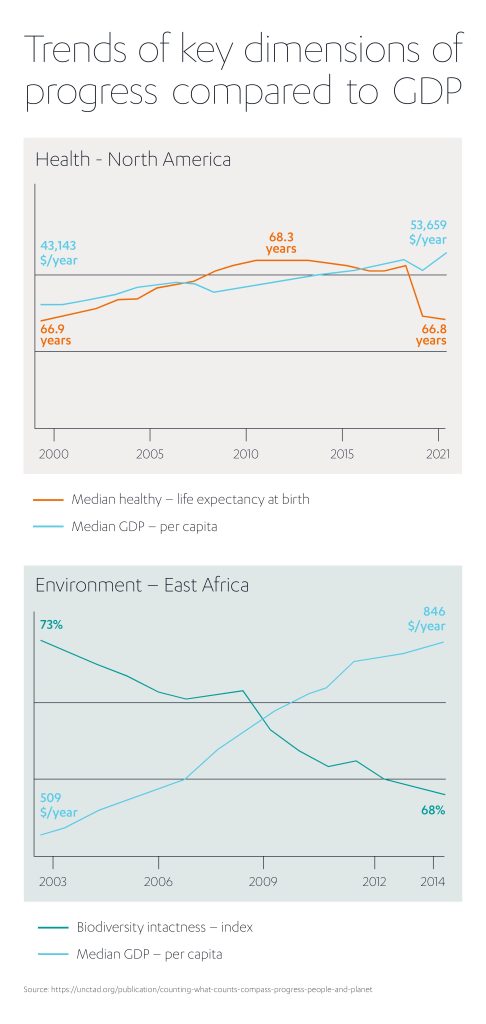
Extrapolating societal progress purely from GDP can mask a number of worrying trends in both mature and developing countries.
In the USA, for instance, rising GDP runs counter to median healthy life expectancy, which is just 66.8 years now compared to 68.3 in the early 2010s. In Eastern Africa, where median GDP per capita has climbed from US$ 509 to US$ 846 since the start of the millennium, biodiversity intactness has fallen from 73% to 68%. And in the UK, where GDP grew 0.6% in Q1 2026, an estimated 400,000 children now rely on charitable ‘baby banks’ for essentials, up 11% in a year.
Can we measure ‘happiness’?
If GDP proves inadequate as a yardstick of societal progress, other data might be more meaningful in illuminating the success, or otherwise, of a nation’s direction. One metric taps directly into the veins of people’s lived experience: Their perceived levels of happiness.
Despite rising GDPs, longer lives and the rapid evolution of technology, young people are less happy than they were 15 years ago
The Wellbeing Research Centre at Oxford University in the UK publishes an annual World Happiness Report, quizzing more than 100,000 respondents across 140 countries on their level of life satisfaction. Despite rising GDPs, longer lives and the rapid evolution of technology, its 2026 instalment makes the startling point that across North America and Western Europe, young people especially are less happy than they were 15 years ago.[2]
A deeper examination of the figures over the last decade shows that even in the ‘happiest’ nations, contentment levels are lower than before.
Using 2026 data, the top 10 countries for happiness are Finland, Denmark, Iceland, Costa Rica, Sweden, Netherlands, Norway, Israel, Luxemburg and Switzerland, with happiness levels averaging 7.327 on a 0-10 scale.[3] Back in 2015, while many of the top ranking countries were the same, they recorded a higher average happiness score of 7.434.[4] Today, respondents from just 10 countries rate their happiness at 7.0 or higher, a third fewer than the 15 countries exceeding 7.0 a decade ago.
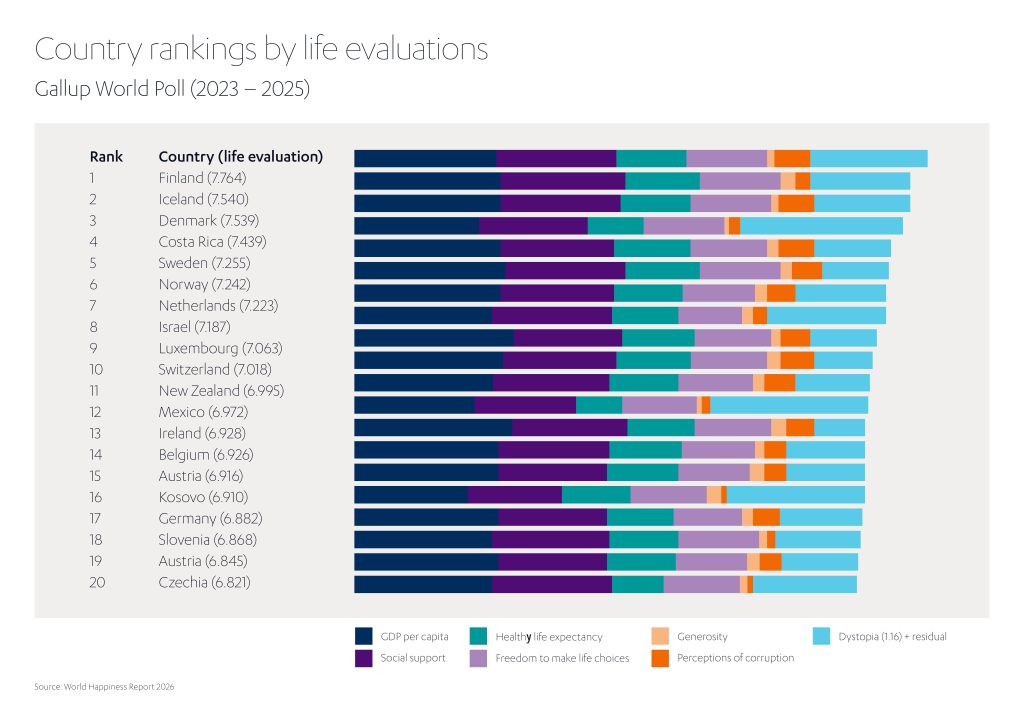
Rising GDP yet falling happiness. Given this contradiction, clearly there is a mismatch between the things we are measuring and the things that really matter. So, what else should we be measuring, and why?
Can we devise a better measurement system than GDP?
It is a matter to which the United Nations (UN) has given considerable thought, producing a report in 2026 headed Counting What Counts: A Compass of Progress for People and Planet. It sets out to define measurement criteria suggesting progress in equitable, inclusive and sustainable wellbeing.
The report proposes no less than 31 separate indicators based around four distinct components, clustered under the UN’s ‘Beyond GDP’ banner:
- Foundational principles: Measuring notions of peace, basic human rights and our obligation to respect the planet
- Current wellbeing: Indicators reflecting people’s daily experiences
- Equality and inclusion: Gauging fairness, or disparities, among population groups
- Sustainability and resilience: Connecting present outcomes to their likely impact on future wellbeing.
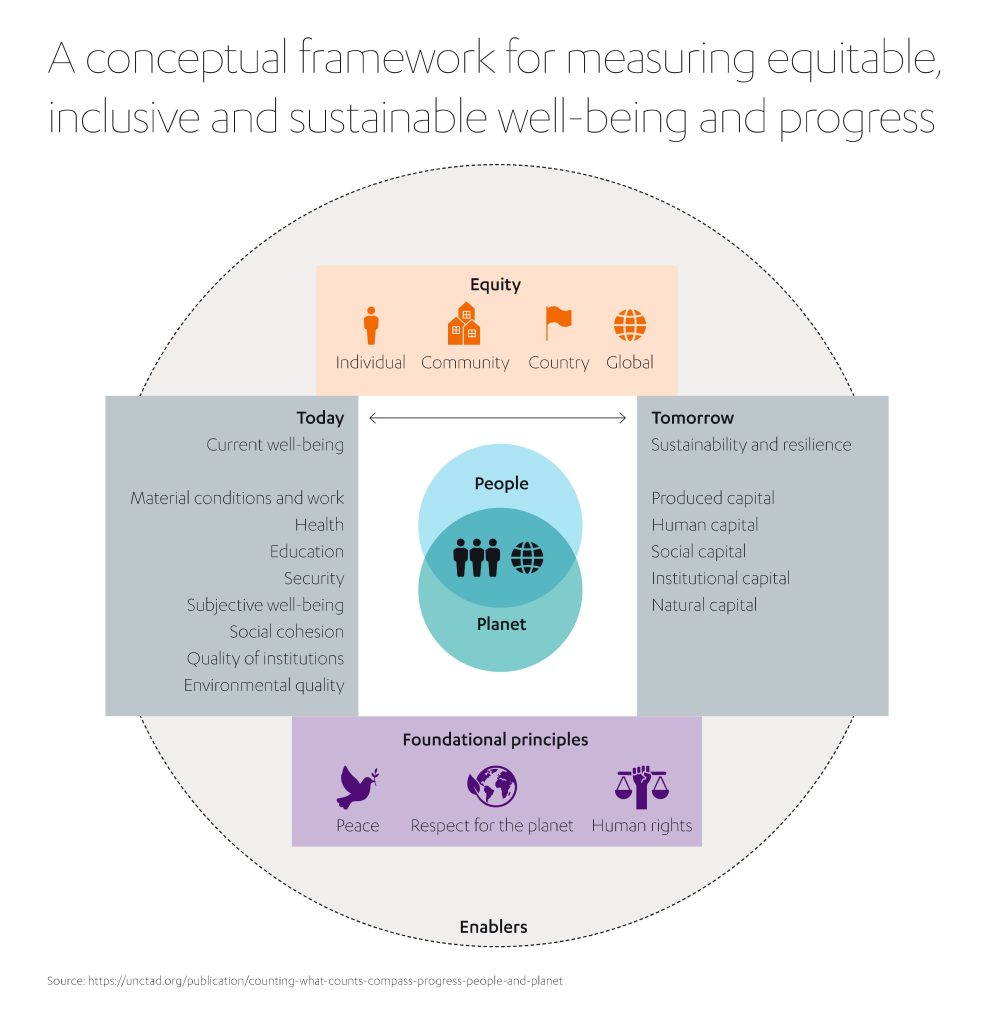
Together, the authors say, these four concepts map the conditions necessary for a healthy and functioning society, today and long into the future.
Each of the four components contains several different metrics to quantify their tangible impact. Many are based around the UN’s Sustainable Development Goals, meaning the data is already collected by national governments. So how exactly can they be assessed?
How could we measure ‘foundational principles’?
In data terms, the UN’s Counting What Counts report suggests the foundational principles – peace, human rights and respect for the planet – are all statistically measurable.
Peace, it argues, can be gauged by the number of conflict-related deaths, both direct and indirect, per 100,000 people.
Human rights can be ascertained by the proportion of people who have felt discriminated against over the past year, or who have suffered physical or sexual abuse.
Data indicating respect for the planet can encompass greenhouse gas emissions per capita, as well as biodiversity intactness.
How could we measure ‘current wellbeing’?
‘Current wellbeing’ focuses on conditions people experience in their everyday lives. It can be assessed through measures such as household income, financial security and access to decent work.
Health outcomes may be reflected in life expectancy, health-span, maternal and child mortality rates, and the prevalence of preventable diseases. Education indicators can track literacy, learning outcomes and participation in schooling. Safety and security encompass actual exposure to crime and individuals’ perceptions of personal safety.
Subjective wellbeing recognizes that prosperity is not solely economic, measuring factors such as life satisfaction, happiness and people’s sense of purpose
Subjective wellbeing recognizes that prosperity is not solely economic, measuring factors such as life satisfaction, happiness and people’s sense of purpose. Social connections can be evaluated through levels of trust, participation in community life, unpaid care and the availability of support networks.
The quality of institutions may be reflected in public confidence in government, or via access to effective public services. Environmental quality can be assessed through indicators such as air pollution, water purity and exposure to environmental hazards.
How could we measure ‘equality and inclusion’?
‘Equality and inclusion’ examines how fairly wellbeing is distributed across society. Income inequality can be measured through indicators such as the Gini coefficient, a measure of statistical dispersion representing income, wealth or consumption inequality.
Poverty can be assessed from data revealing the proportion of people unable to achieve a basic standard of living. Inclusion in the labor market can be tracked through employment opportunities and wage disparities, including differences in earnings between women and men.
Beyond economic outcomes, equality and inclusion also consider whether particular groups experience overlapping disadvantages linked to age, gender, ethnicity, disability or geography. The aim is not just to understand average levels of prosperity, but to identify who is benefiting from progress and who risks being left behind.
How could we measure ‘sustainability and resilience’?
‘Sustainability and resilience’ asks whether today’s prosperity is being achieved at the expense of future generations. This involves measuring the different forms of capital upon which societies depend.
- Produced capital includes the infrastructure, buildings and machinery that underpin economic activity.
- Human capital reflects the knowledge, skills and capabilities of the population, measured through indicators such as the proportion of young people not in education, employment or training.
- Institutional capital examines the strength and effectiveness of public bodies, including levels of confidence in civil services and governance systems.
- Social capital captures trust, cooperation and the strength of relationships within communities.
- Natural capital considers the health of ecosystems, biodiversity, forests, freshwater resources and the climate itself.
Natural capital considers the health of ecosystems, biodiversity, forests, freshwater resources and the climate itself
Together, these resilience indicators can reveal whether societies are capable of withstanding future shocks and sustaining long-term wellbeing.
The Beyond GDP framework will succeed if it can be populated with accurate data and used to steer key policy decisions. Policymakers and statisticians across all nations are being urged to start collating figures, building on existing SDG data channels to hasten adoption.
Momentum is also growing behind other movements to devise more meaningful ways of ‘measuring the right things’.
What are the other leading rivals to GDP?
We need to ensure the data we collect is fit for the future. The Organization for Economic Cooperation and Development has its own instrument for measuring what matters: The Wellbeing Data Monitor (WDM).
For over a decade the WDM’s social and economic dashboards have charted the progression of personal wellbeing, environmental quality, standard of public services and security.
New Zealand’s ‘Wellbeing Budgets’
From 2019 to 2023, politicians in New Zealand reimagined annual Budget statements as ‘Wellbeing Budgets’.
Focusing on both current and future wellbeing, they placed wellness, happiness and the environment at the heart of the agenda alongside traditional economic concerns. The Budgets drew on data from the Treasury’s Living Standards Framework (LSF) together with input from sector experts.
Over four years, the Wellbeing Budgets allocated NZ$ 25.6 billion to several key priority areas: Shifting to a low-carbon economy, supporting the digital transition, cutting child poverty, reducing mental health suffering, and raising incomes for Māori and Pacific peoples.
Fully interactive, the Wellbeing Data Monitor allows members of the public to create their own indexes by ranking each criteria according to its significance in their own lives. Eleven separate topics are weighted to generate overall scores: Housing, income, job security, social support, education, the environment, health, democracy, happiness, safety and work-life balance.
Similarly, the World Bank administers its Changing Wealth of Nations (CWON) program, operating on the principle that economic output cannot alone reveal whether prosperity is ephemeral or sustainable. CWON includes a broad portfolio of criteria to diagnose whether GDP growth is being achieved by expanding or depleting the asset base of a nation. Including concepts such as skills, education and health, along with natural assets such as forests, fish stocks, minerals, water and ecosystems, it aims to gauge the potential prosperity of future generations.
People and their capabilities should be the ultimate criteria for assessing the development of a country, not economic growth alone
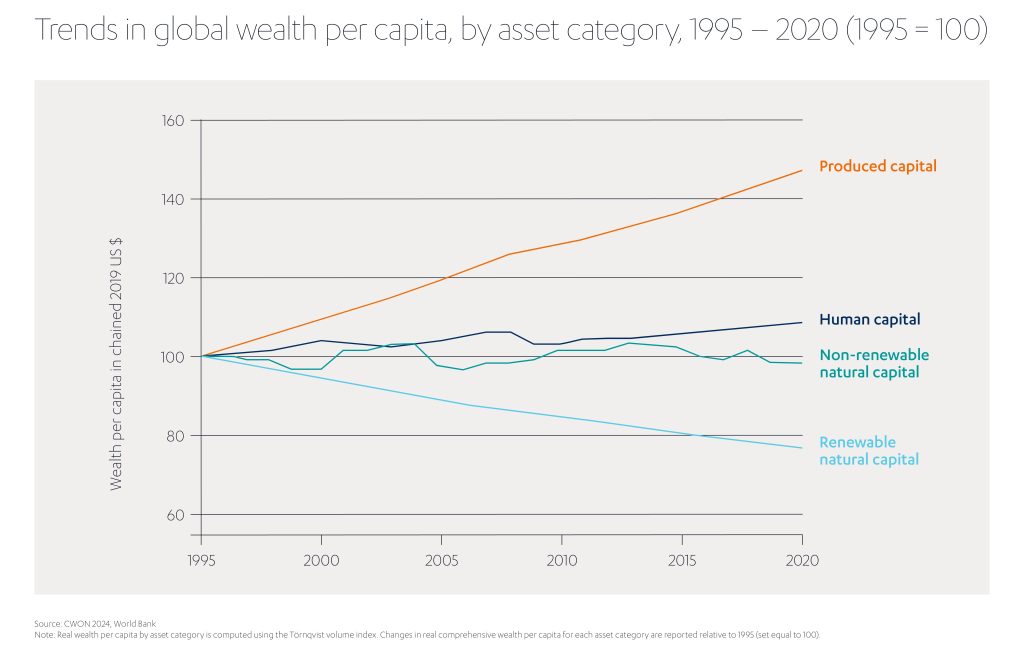
CWON’s insights highlight several of the contradictions of typical notions of ‘progress’. It notes that while produced capital has increased by almost half since 1995, renewable natural capital has fallen by more than 20% during the same period, particularly impacting Sub-Saharan Africa, the Middle East and North Africa.[5]
The UN Development Programme also seeks to define genuine long-term value, through its Human Development Index (HDI). In the UN’s own words, the HDI was created to “emphasize that people and their capabilities should be the ultimate criteria for assessing the development of a country, not economic growth alone.”
The HDI measures human development against three core criteria: A long and healthy life, being well informed and educated, and having a decent standard of living. It draws data from a range of widely-available metrics: Life expectancy at birth, number of years spent at school, and average national income.
The HDI emphasizes that people signify the true wealth of nations, not the value of goods and services they produce. It proves that economic development does not automatically translate into human development, and that health and education are powerful engines of prosperity. It also highlights that progress can accidentally reverse, noting that the global HDI value dropped for the first time, for two consecutive years, during the COVID-19 pandemic.[6]
Given the invaluable benefits afforded by robust data, what should we be doing to measure human lives in a more considered manner?
What can we do to move beyond GDP?
The transition to a broader understanding of progress will require coordinated action across governments, international institutions, statisticians, businesses and civil society. The UN outlines a number of recommendations for different stakeholders to help drive more meaningful measurements in the future.[7]
Governments:
- Integrate wellbeing, sustainability and inclusion indicators into national decision-making alongside GDP.
- Invest in stronger data collection systems capable of tracking social, environmental and economic outcomes.
- Embed long-term thinking into policy, ensuring future generations are considered alongside immediate economic priorities.
- Increase transparency by regularly reporting progress against a wider set of national wellbeing metrics.
International organizations:
- Help establish globally consistent frameworks for measuring societal progress beyond economic output alone.
- Support lower-income countries with technical expertise, funding and capacity-building for data collection.
- Promote international cooperation so countries can compare progress using common indicators.
- Ensure sustainability, resilience and wellbeing measures become more prominent within global development agendas.
The international statistical community:
- Develop trusted methodologies capable of measuring complex concepts such as wellbeing, social cohesion and environmental health.
- Improve the availability, quality and comparability of data across different countries and regions.
- Harness new technologies, data sources and analytical tools to strengthen evidence-based policymaking.
- Continue refining indicators so they remain relevant to emerging social, economic and environmental challenges.
Civil society, academia, the private sector and the media:
- Encourage public debate about what constitutes genuine progress and societal success.
- Conduct research into alternative measurement frameworks and their practical applications.
- Support greater corporate transparency around environmental, social and governance impacts.
- Help communicate complex findings in accessible ways, ensuring citizens understand how wellbeing, resilience and sustainability affect everyday life.
What we choose to measure shines a telling light on our collective priorities. If we wish to create societies that are not only wealthier but also fairer, healthier and more resilient, then our metrics must evolve accordingly.
How can data bring clarity to a complex world?
GDP is a valuable figure to quantify, expressing the value of a country’s entire goods and services in black and white numbers.
Yet, our world is not black and white. Climate impacts are escalating, inequalities are expanding, AI is threatening to swallow millions of jobs, and even the concept of truth itself is up for debate. A single financial figure fails to capture the upheaval that societies are experiencing, and offers no answers to a turbulent future.
“Only by measuring the right things can we convert hopes of environmental recovery, sustainable resource distribution and the protection of human life, into reality”
What we need is not only more data, but the right data. We need data that tells us about people’s lives, not in sweeping economic generalizations, but in the nuances which reflect health, homes, freedom, happiness, security and opportunity.
The more holistic our approach to data, the greater the chance of devising worthwhile solutions to many of the complex challenges facing us today. The answer lies not in jettisoning GDP, but in strengthening it with more relatable insights from initiatives such as the WDM, CWON and HDI. Only by measuring the right things can we convert hopes of environmental recovery, sustainable resource distribution and the protection of human life, into reality.
Five fast facts: Are we measuring the right things?
Q: Does rising GDP mean people are living better lives?
A: Not necessarily. Global GDP is on track to rise from US$ 118 trillion in 2025 to US$ 132 trillion by 2027, but GDP growth tells us nothing about things like happiness, health, equality or sustainability.
Q: Are young people happier than they used to be?
A: Apparently not. Despite rising incomes and rapid technological progress, the 2026 World Happiness Report found people under 30 in North America and Western Europe, for example, are less happy than they were 15 years ago.
Q: What are some alternatives to GDP?
A: The UN’s ‘Counting What Counts’ report sets out a Beyond GDP framework with 31 indicators across four pillars: foundational principles, current wellbeing, equality and inclusion, and sustainability and resilience.
Q: Can economic growth mask long-term damage to the planet?
A: Yes. The World Bank’s Changing Wealth of Nations report shows produced capital (infrastructure, machinery) has grown by almost half since 1995, while renewable natural capital has fallen over 20% in the same period.
Q: Should abandon GDP altogether?
A: No. GDP is still a useful, quantifiable indicator, but it needs to be strengthened with complementary tools like the OECD’s Wellbeing Data Monitor, the World Bank’s CWON and the UN’s HDI, so it can become are more accurate basis for real progress.
[1] https://www.imf.org/external/datamapper/NGDPD@WEO/OEMDC/ADVEC/WEOWORLD
[2] https://www.worldhappiness.report/ed/2026/executive-summary-happiness-and-social-media/
[3] https://www.worldhappiness.report/ed/2026/international-evidence-on-happiness-and-social-media/
[4] https://files.worldhappiness.report/WHR15.pdf
[5] https://www.worldbank.org/en/publication/changing-wealth-of-nations/brief/natural-capital-data-hub
[6] https://hdr.undp.org/content/human-development-report-2021-22
[7] https://www.un.org/sites/un2.un.org/files/high-level_expert_group_on_beyond_gdp_final_report.pdf


 Dubai, UAEOctober 21 , 2026