How can social enterprise contribute to a brighter future?



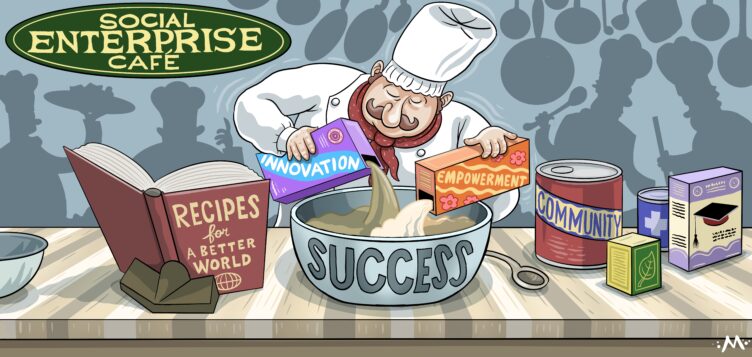
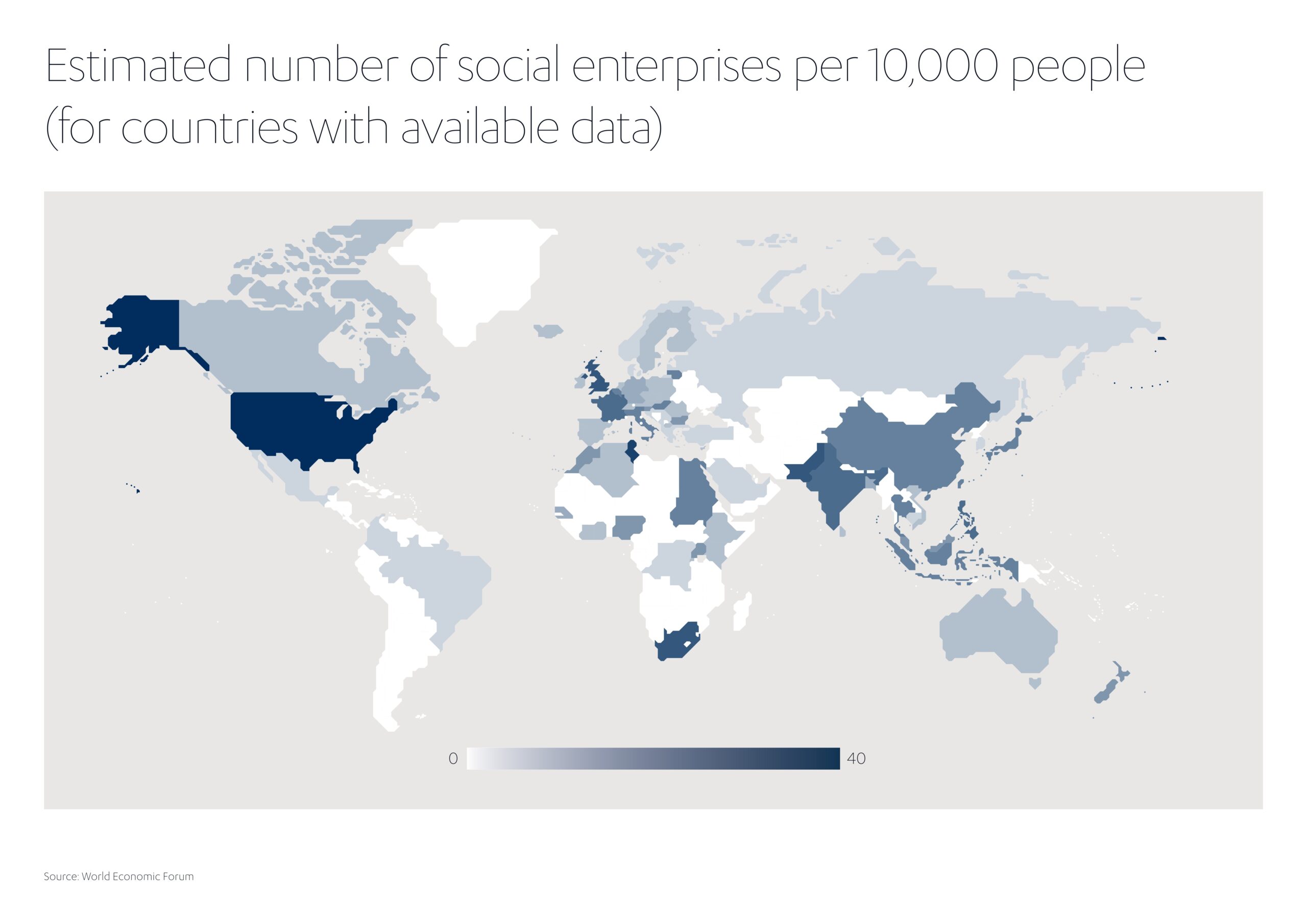
Globally, social enterprises are on the rise in a big way. A recent report by the World Economic Forum (WEF) suggests there are now around 10 million social enterprises putting purpose before profit globally. These schemes span more than 80 different countries across multiple continents including emerging markets in Africa, Asia and the Middle East. Together they generate around US$ 2 trillion in revenue annually and create nearly 200 million jobs for people who would otherwise struggle to care for their families or pay their bills.[1]
Combined, the sector is even larger than the US$ 1.57 trillion clothing industry and more than twice the size of the US$ 875 billion advertising industry. Moreover, the sector is helping to improve gender equality. Approximately half of all social enterprises are led by women, compared to around 20% of traditional businesses. So, what exactly do we mean when we talk about social enterprises, and how are they so effective at changing lives?
Social enterprises in action
For single mother Qiqa Nyangiw in South Africa, social enterprise means earning enough money to look after her family. Child grants and government maintenance payments were insufficient to meet their basic needs and the future looked bleak.
“Life was a constant battle. As the sole provider for my family, unemployment was a heavy burden. The stress was overwhelming, leaving me emotionally drained and helpless. There were nights we went hungry. I was too ashamed to ask for help from anyone,” she recalls[2].
But then salvation appeared in the form of TCB (Taking Care of Business), a social enterprise scheme which since 2010 has helped thousands of people across South Africa collect, repair and resell unwanted clothing and other goods to secondary markets for profit. Qiqa reports that she can now put food on the table without the anxiety of empty cupboards, giving her a sense of independence she never thought possible.
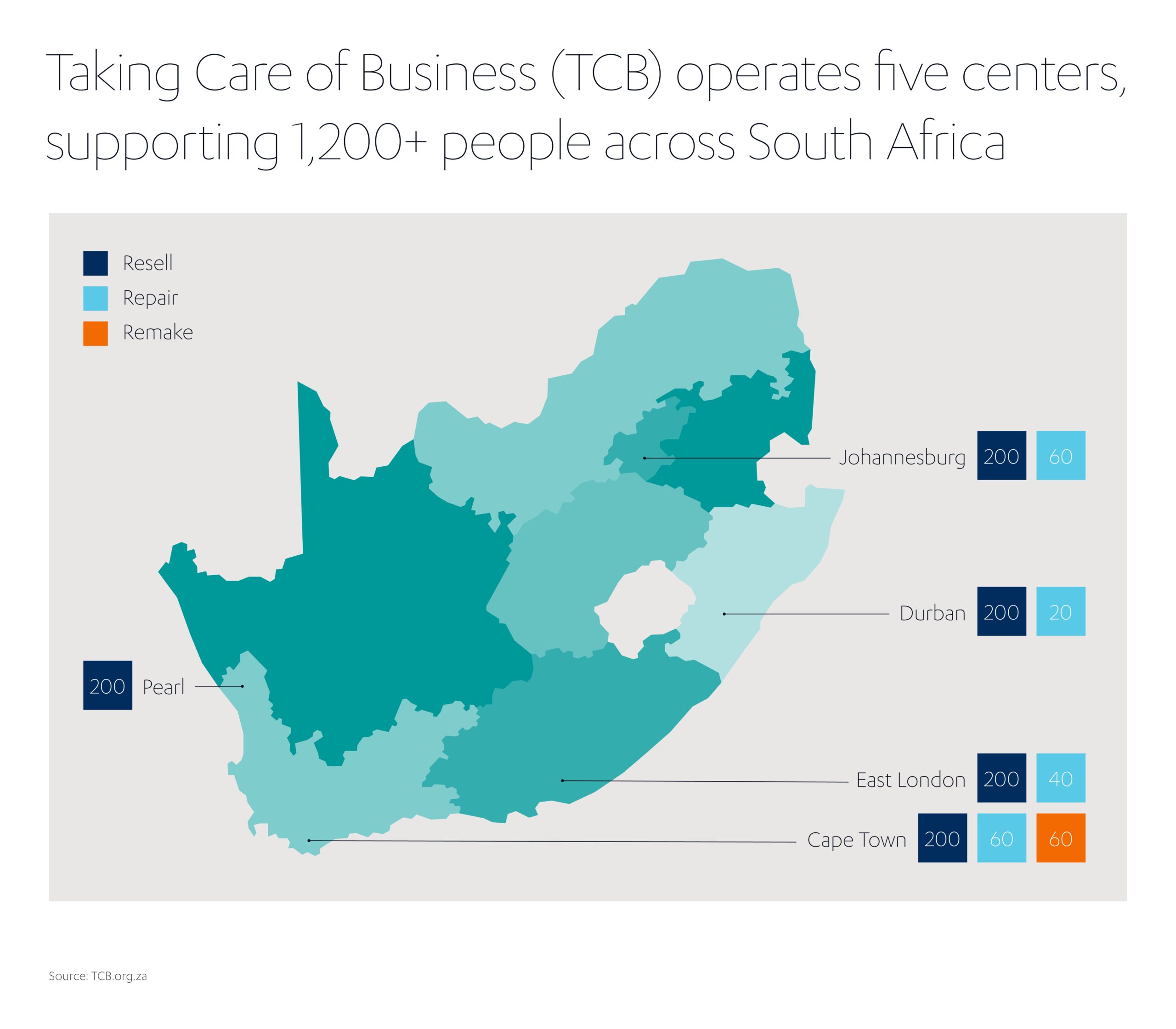
Her tale is far from uncommon. TCB is just one of a galaxy of social enterprise schemes around the world providing skills, equipment and contacts to communities most in need. Social enterprise schemes fill the gap where traditional private sector businesses and state support offer insufficient opportunities for employment and security.
Social enterprises can take several forms, but typically they aim to fulfil a social need while simultaneously generating revenue to sustain their own operations. They might be microfinance organizations providing small loans to entrepreneurs in developing countries to stimulate economic growth. Or fair-trade businesses supporting farmers in emerging markets selling ethically-sourced goods. Or community development corporations injecting cash into local communities to improve quality of life by creating new jobs. Or even grassroots renewable energy collectives, generating income from environmentally friendly power sources such as wind and solar.
On the ground, social enterprises span multiple realms, from agriculture and manufacturing to financial services and healthcare. They can assume many guises, their variety as limitless as human imagination and endeavor. To illustrate their diversity, here are a few notable examples already making a daily difference to communities around the world.
Brazil-based Green Mining has developed smart ‘reverse logistics’ technology to help companies recover product packaging from consumers and return it the supply chain. So far it has found new use for 10.1 million kg of unwanted packaging, in the process saving some 12.7 million kg of unnecessary carbon emissions.
EMFED Farms, headquartered in Ghana, provides management services to smallholder cocoa farmers who are aged or infirm and cannot afford the upfront cost of labor. In its first five years of operation, EMFED increased average yields from 484 kg to 894 kg and raised the average net income of farmers at a CAGR of 49%.
Classical Handmade Products, based in Bangladesh, has created 4,500 jobs to support rural communities while introducing products made from indigenous raw materials to global markets. The program prioritizes safe and comfortable working conditions for employees, along with regular medical check-ups.
In Jordan, the Jordan River Foundation showcases bespoke handicrafts made by local women which are then sold via IKEA stores worldwide. The scheme emphasizes quality craftmanship, cultural heritage and lean production processes, and has so far benefitted almost 80,000 individuals.
In Mexico, the Hipocampus Centros de Aprendizaje provides affordable childcare and education for children aged one to six. It provides work for local women, frees up caregivers to focus on generating their own income, and helps develop the next generation of entrepreneurs. Since 2016, it has established 12 learning centers across five Mexican states (Guanajuato, Michoacán, Veracruz, State of Mexico and Durango).
These undertakings, and hundreds more like them, represent a sizable chunk of commerce, comprising 3% of all businesses worldwide and more than 2% of global GDP.[3]
With environmental, economic and cultural benefits, social enterprises have the power to inspire positive change everywhere. What is stopping them from scaling even greater heights?
What hinders the progress of social enterprises?
Despite proof of their effectiveness, the WEF asserts that social enterprises face unique challenges at every stage of their journey, from launch to expansion.[4]
- Access to finance: Social enterprises, just like regular businesses, need funds to buy on credit, pay staff, or advertise their wares. However, traditional lenders are less willing to finance social enterprises upfront because their ultimate goals are cultural as well as commercial, complicating the return-on-investment metric. Public sector funds are equally hard to access. Even in a mature market such as the EU, fewer than half of all social enterprises receive any public sector funding.[5]
- Spreading the message: Despite their increasing proliferation, social enterprises struggle to convey the importance of their work to society at large – perhaps because they cannot afford to invest in the kind of marketing campaigns favored by purely commercial rivals. Without fully comprehending their purpose or impact, lawmakers and consumers alike can fail to grasp ‘the big picture.’
- Legislation: Typically, regulatory systems and financial stimuli are geared around commercial, not social, metrics. Policymakers risk overlooking the potential of social enterprises because their impacts are more subtle, therefore harder to quantify, than a profit and loss spreadsheet.
- Procurement: Social enterprises are often excluded, by accident or design, from procurement processes, limiting their ability to forge new partnerships and scale up their operations. Financial implications are often the only criteria that matter when it comes to accessing new contracts, at the expense of more opaque – but just as important – environmental, social and governance (ESG) concerns.
Evidence suggests that a lack of ‘entrepreneurship education’ is preventing many more innovators around the world from launching their own business for social good. In the absence of people with the know-how to navigate complex regulatory and commercial systems, many social enterprises remain stifled in their infancy – and that’s if they graduate from the drawing board at all.
This fundamental hurdle acknowledged, what steps can we take to remedy the deficit of entrepreneurship education and promote the cause of social enterprise schemes worldwide?
Can education fuel a new era of social enterprise?
Several potential strategies for accelerating the spread of social entrepreneurship emerged during the WEF’s Innovating for Social Impact panel at its Special Meeting on Global Collaboration, Growth and Energy for Development in Saudi Arabia in 2024. Chief among them is entrepreneurship education – in other words, inspiring the social entrepreneurs of tomorrow.
According to the panel, entrepreneurship education should begin at a young age within the school system. Private and state schools should collaborate on teaching students not only how to create businesses and manage projects, but also how to organize effective community initiatives.
Youngsters must be taught about the range of jobs available within social enterprises and be incentivized to make the shift towards altruistic careers. Business classes at university, for example, could embed the notion of ‘social good’ as a measurable outcome.
By raising awareness about social innovation, we can counter the notion that profit, and philanthropy, are mutually exclusive. Commercial enterprises can adopt a social dimension by embracing progressive policies, such as recruiting from disadvantaged communities, or reinvesting a share of proceeds in land restoration.
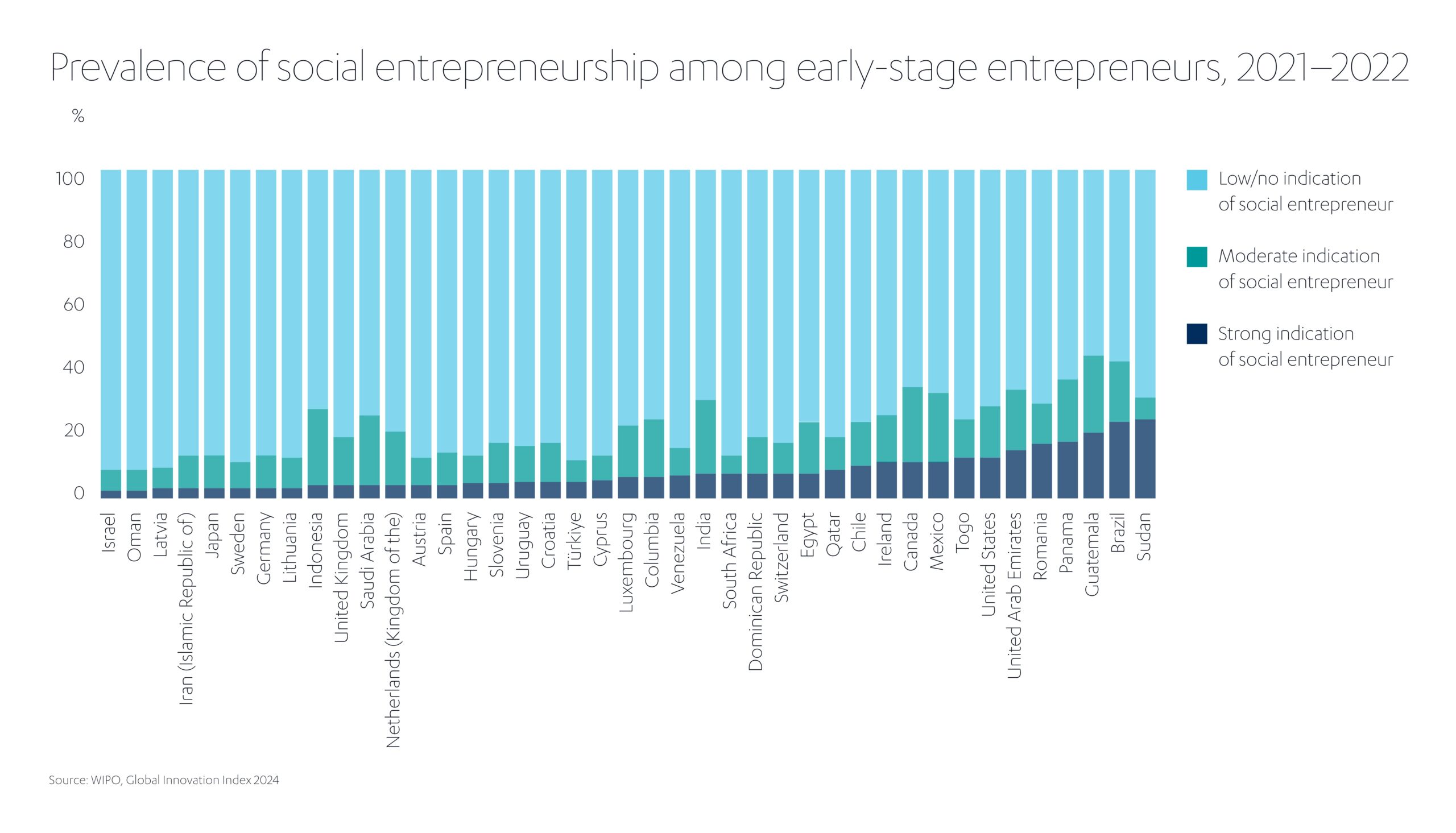
There is much untapped potential waiting to be exploited. Studies evaluating the prevalence of social awareness among early-stage entrepreneurs around the world suggest a wealth of enthusiasm waiting to be unleashed, often in the markets that need it most. Sudan, Brazil, Guatemala, Panama, Romania, Togo and Mexico all feature among the top 10 nations globally for youngsters demonstrating a strong inclination for social enterprise.
Often, inspiration and guidance are decisive factors. We should be providing aspiring social entrepreneurs with mentors to help steer them through the realities of a competitive commercial landscape. The Saudi-based Arab Institute for Women’s Empowerment, for example, matches senior female executives with emerging young professionals, teaching them how to mobilize money and develop impactful social programs.
Beyond education, what other strategies can help unlock the true potential of social enterprises?
Some countries, including France, Canada and the UK, have adopted legislation recognizing social enterprises as distinct legal entities, providing them with the same privileges and protections as businesses. In the UK, for instance, common forms include Community Interest Companies (CICs), Charitable Incorporated Organizations (CIOs) or Social Enterprises Limited by Guarantee or Shares. The different categories dictate the organization’s governance, tax obligations, and ability to attract funding. Such frameworks provide confidence and clarity in a sector sometimes beset by uncertainty, and could serve as templates for other countries to follow.
The Global Goals Summit, which focuses on actionable strategies to address global challenges and create a more resilient world, has outlined a series of additional steps for supporting social enterprises at scale.
- Local action: Communities are best placed to understand the challenges they face and what steps are needed to mitigate them. We need robust frameworks in place empowering local citizens to spearhead effective interventions via social enterprise. Tailored training is essential to tackle specific local issues – be they geographical, economic or diversity-based – and help strengthen the social fabric of our neighborhoods.
- Financing: Private and public lenders need to design a new class of financial products specifically for social enterprises. These loans must be flexible enough to help release bottlenecks in the funding pipeline, using blended finance instruments or leveraging guarantees to lower risk perception on the part of investors.
- Broker input: Brokers can help negotiate a fertile middle ground between the competing needs of social enterprises and big business. Skilled brokers can negotiate fair repayment terms and faster decision-making. Crucially, they can help harmonize sometimes competing goals, ensuring that social enterprises are ready for insertion into the value chain, and that large commercial outfits are receptive to new ethical dynamics.
- New technology: Social enterprises are often excluded from the exciting benefits of big data and AI because of their high upfront costs. This imbalance must be rectified to help social entrepreneurs fully explore the potential of new technology. Social enterprises are typically located within disadvantaged or impoverished communities. Arming them with the right data, embellished by the groundbreaking power of machine learning, can help them confront challenges efficiently and at scale. Social enterprises could also help narrow the damaging ‘digital divide’, in which the digital economy represents 15.5% of global GDP yet 2.6 billion people lack reliable internet access.[6]
Social enterprises, if correctly administered, can inspire a more rapid transition to the stakeholder economy, a fairer and more sustainable system for organizing our human society.
Does an enterprising spirit shape a more hopeful world?
The Jameel family has long recognized the value of local, ethical entrepreneurship and supports the concept of social enterprise through a number of initiatives, as well as through our global philanthropies including, for example Community Jameel Saudi, in Saudi Arabia, and internationally, Community Jameel.
Notable examples include Bab Rizq Jameel, which supports young people in Saudi Arabia, Egypt and Morocco to find work. It matches people to jobs and helps create opportunities for employment as a step towards economic independence. In 2024, Bab Rizq Jameel launched the second and third editions of the Virtual Job Fair, which uses virtual reality technology to enhance communication between employers and job seekers, benefiting tens of thousands of participants. The organization also continued to roll out its training and employment program in the coffee sector and introduced a similar program in the bakery sector, in collaboration with employment and training partners across the kingdom.
To help nurture and inspire the next generation of Saudi entrepreneurs, Community Jameel Saudi introduced the eighth edition of the StartSmart Competition for Entrepreneurship in 2024, aimed at supporting and training Saudi entrepreneurs and increasing the number of small and medium enterprises. Competition finalists benefit from an intensive training program and high-level mentorship and guidance, Additionally, the organization held a series of StartSmart Meetups, offering interactive and inspiring discussion sessions throughout the year in a stimulating entrepreneurial environment.
Other initiatives aimed at helping individuals and communities to thrive include Hemam Jameel, which supports disabled people through employment opportunities, education and training, Nafisa Shams, meanwhile, provides women with an integrated work environment to help them produce high quality artisanal products. This is achieved through specialized training programs and production lines, including, for example a working from home program, which empowers Saudi women to achieve a balance between family responsibilities and an active role in the job market.
The Nafisa Shams Academy offers a diverse portfolio of online and in-person courses, ranging from administration and computer skills to art and fashion design.
Also in Saudi Arabia, the Abdul Latif Jameel Hospital has been addressing the kingdom’s most pressing healthcare needs since 1994, from managing the rising incidence of lifestyle-related diseases to pioneering advanced medical treatments previously unavailable in the region. Through its commitment to cutting-edge technology, continuous medical education, and patient-centered care, Abdul Latif Jameel Hospital has transformed the lives of more than 175,000 patients over the past three decades, serving as a cornerstone of the country’s healthcare infrastructure.
In the international sphere, Community Jameel’s initiatives include Ejada (formerly TREE), which comprises a systems-wide teacher training program that uses compassion to help teachers overcome trauma and deliver effective teaching; and the Pratham Jameel Second Chance initiative, which aims to support 10,000 girls and women in India each year who have dropped out of school to restart their formal education.
Art Jameel, meanwhile, supports artists and creative communities in Saudi Arabia and the UAE and works globally. Art Jameel’s programmes – across exhibitions, commissions, research, learning and community-building – are grounded in a dynamic understanding of the arts as fundamental to life and accessible to all. Its major institutional partners include the Victoria and Albert Museum, The Metropolitan Museum of Art and the Delfina Foundation. Locally, the foundation works with individuals and organizations to develop innovative programming that embraces both ancient and new technologies and encourages entrepreneurship and the development of cultural networks.
Community Jameel partnered with MIT in 2005, to support the Jameel Poverty Action Lab (J-PAL), a global network of affiliated professors focused on alleviating global poverty; and in 2014, co-founded the Jameel World Water and Food Systems Lab (J-WAFS) at MIT, which conducts research to help overcome worldwide water scarcity and food supply shortages; and the Jameel World Education Lab (J-WEL), which works with educational innovators across the world to create practical new ideas that could transform learning at scale.
The world faces multiple economic and environmental headwinds over the coming decades which will require innovative thinking to negotiate. Social enterprises are a proven instrument for combating inequality and putting the world on a more sustainable footing as it faces these existential challenges.
When we hear the testimonies of those whose lives have been salvaged by the timely intervention of social enterprises, we cannot help but feel inspired. By raising public awareness, installing more comprehensive legal structures and liberating access to finance, we can further unleash the transformational potential of social enterprises and reap the benefits of a more optimistic future.
Five fast facts: social enterprise
- How many social enterprises exist globally?
Around 10 million social enterprises operate across more than 80 countries, generating approximately US$2 trillion in revenue annually. - How do social enterprises impact employment?
Social enterprises create nearly 200 million jobs for people who would otherwise struggle financially, with about half of all social enterprises led by women (compared to 20% of traditional businesses). - How do social enterprises compare to other global industries?
The social enterprise sector is larger than the US$1.57 trillion clothing industry and more than twice the size of the US$875 billion advertising industry. - What are the main challenges facing social enterprises?
Key challenges include limited access to finance, difficulty communicating their impact, unsuitable legislation, and exclusion from procurement processes that prioritize financial metrics over social impact. - How does the Jameel family support social enterprise?
The Jameel family supports social enterprise through initiatives like Bab Rizq Jameel (employment opportunities), StartSmart Competition (entrepreneurship training), Hemam Jameel (supporting disabled people), and Nafisa Shams (women’s empowerment programs).
[1] https://initiatives.weforum.org/global-alliance-for-social-entrepreneurship/state-of-the-sector
[2] https://www.tcb.org.za/from-empty-stomachs-to-building-a-future/
[3] https://www3.weforum.org/docs/WEF_The_State_of_Social_Enterprise_2024.pdf
[4] https://www3.weforum.org/docs/WEF_The_State_of_Social_Enterprise_2024.pdf
[5] https://www.wipo.int/web-publications/global-innovation-index-2024/en/special-theme-2024-unlocking-the-promise-of-social-entrepreneurship.html
[6] https://technologymagazine.com/articles/wef-equitys-role-in-the-green-digital-transformations


 Added to press kit