 Dubai, UAE
 Making a splash: how are intelligent food & water systems reshaping our future?




 Dubai, UAESeptember 16 , 2026
As climate and population pressures intensify, new technologies are reimagining how we grow food and manage water – uniting innovation and sustainability in a shared mission for the planet’s future.
Water and food are the foundations of life, yet both are under growing strain. Around the world, shifting climates, population pressures, and fragile supply chains are testing the systems that sustain us. These are not theoretical concerns; they are unfolding now all around us, shaping the future of every community and every economy.
But challenge often inspires innovation. Today, we are witnessing a revolution in how we think about and manage the world’s most essential resources. From predictive analytics that can foresee droughts before they strike, to precision agriculture that nurtures crops with a fraction of the water once required, technology is helping us work with nature rather than against it.
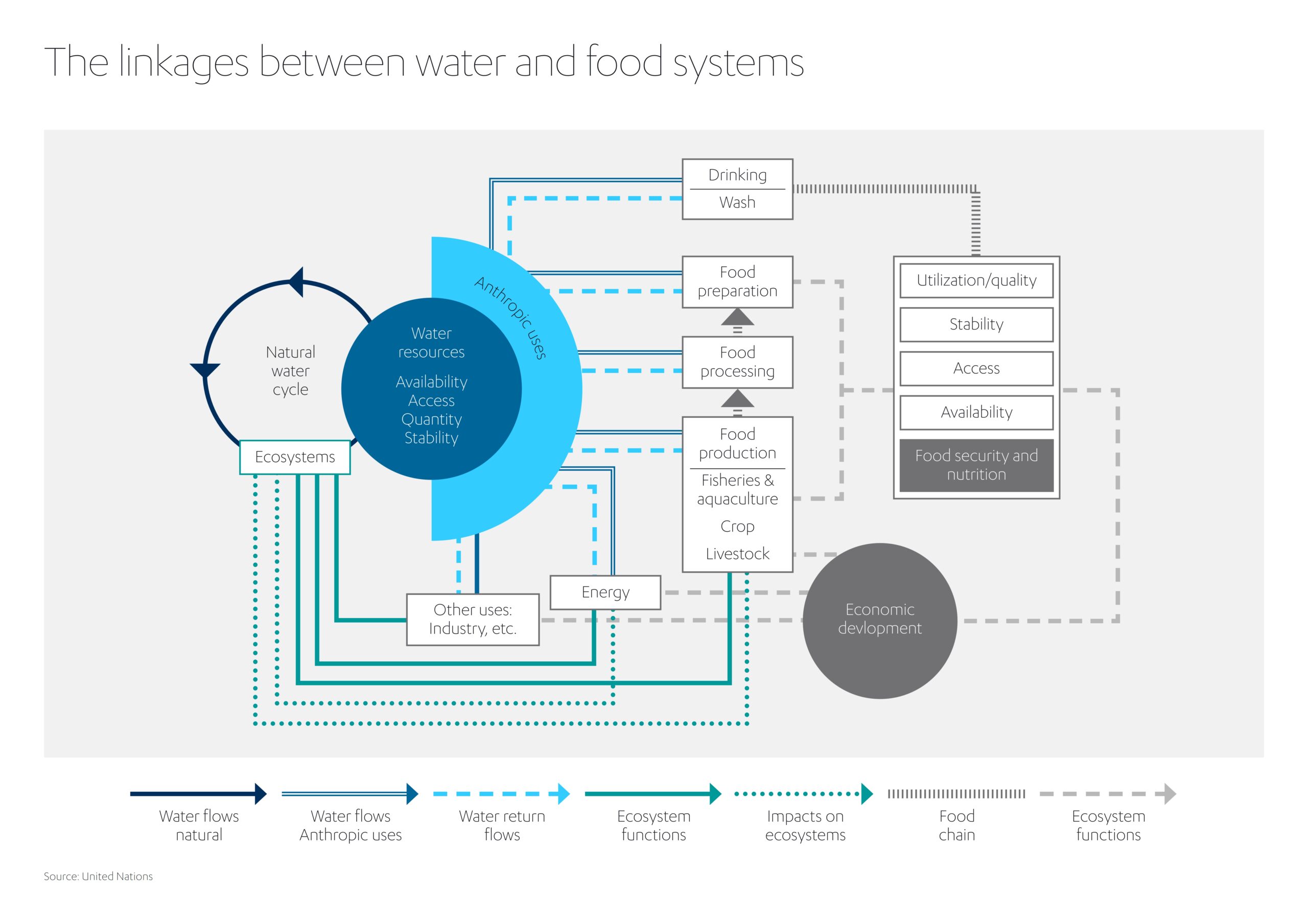
Crucially, progress depends on seeing food and water not as separate issues, but as a single, interdependent system; one that can be made far more resilient, efficient, and equitable through intelligent design. Technology is crucial to this, but it’s about more than technology alone. It also requires foresight, collaboration, and responsibility, ensuring that innovation serves humanity, not just efficiency. By integrating science, policy, and purpose, we can transform the way the world feeds and sustains itself, securing a healthier planet for generations to come.
Why should food and water be considered as one connected system?
As the world population moves towards a widely forecasted 10 billion by 2050, demand for food is projected to rise by around 60%[1]. Meeting that need with today’s methods would place unsustainable stress on already scarce water supplies. Agriculture alone accounts for around 70% of global freshwater withdrawals, and in many regions, particularly in Africa, this figure is even higher[2].
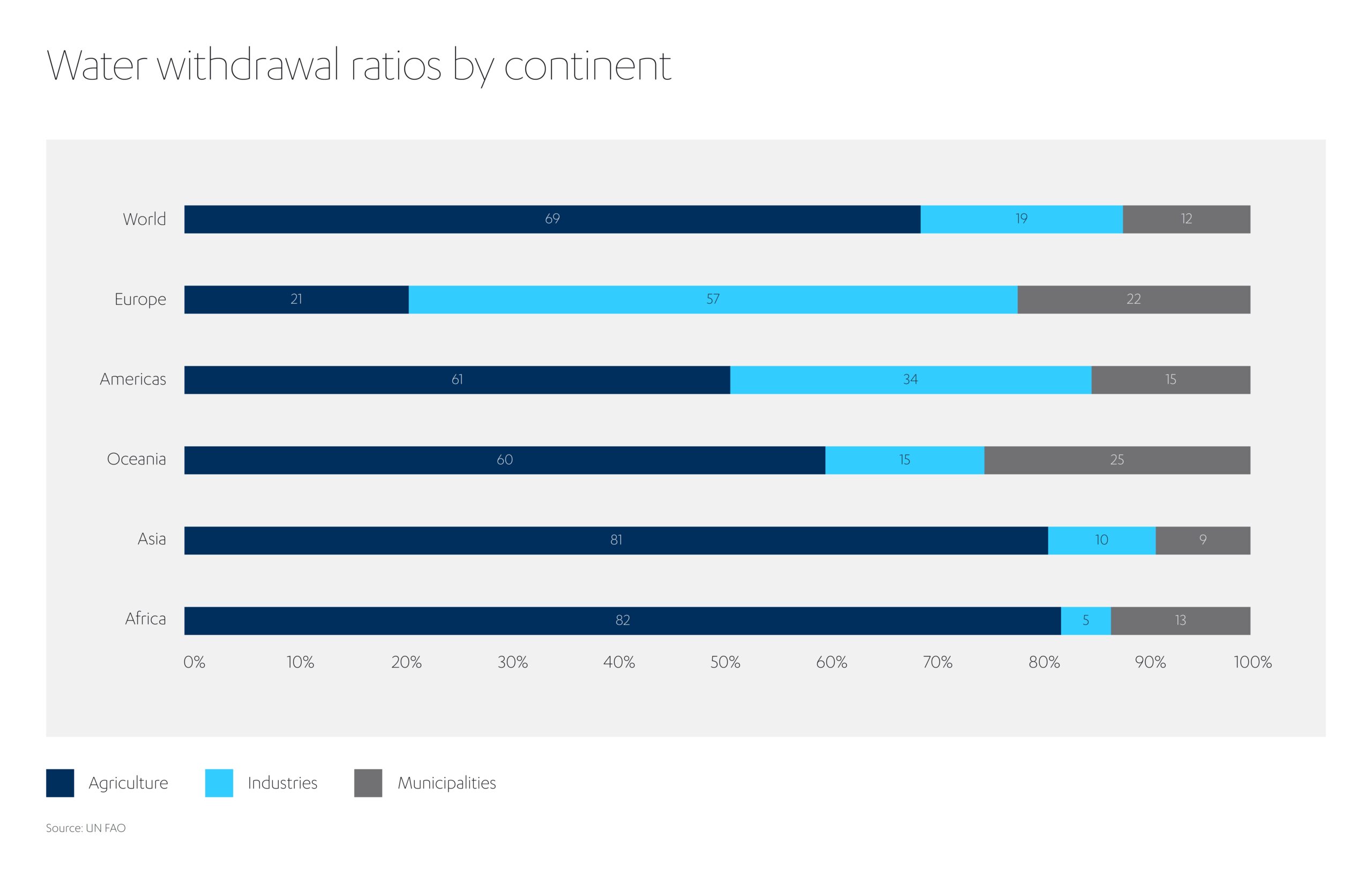
The challenge is compounded by climate change. Food production is responsible for roughly one-third of greenhouse gas emissions[3], while rising global temperatures are reducing the availability and predictability of water sources. Extreme weather events, meanwhile, are now one of the leading causes of crop failure worldwide. It is a feedback loop that threatens to destabilize both ecosystems and economies.
An integrated approach to food and water recognizes these interdependencies. It allows us to anticipate consequences, balance competing demands, and design systems that are more resilient. Food systems already account for almost three-quarters of the world’s freshwater withdrawals, yet global food production is expected to grow by 70% by mid-century[4]. Without smarter management, this trajectory is untenable.
Integration is not simply a technical concept. It is also an ethical one. The global picture is one of contrast and inequality – food surpluses and growing mountains of food waste in some regions coexist with food scarcity in others; some countries face problems around obesity while others grapple with endemic malnutrition. Intelligent systems give us the tools to better align resources with need, connecting such local realities with global insight.
Can technology truly make our food and water systems smarter?
Technology is rapidly transforming how we understand and manage natural resources. Artificial intelligence (AI), data analytics, and digital sensors are creating an unprecedented capacity to collect and interpret information, revealing hidden patterns and enabling faster, more informed decisions.
AI-driven models are already helping farmers predict rainfall, optimize irrigation, and improve yields, for example. Drones and satellite imagery provide detailed real-time assessments of soil health and crop conditions. In water management, AI can track consumption, detect leaks, and model contamination risks, ensuring every drop is used wisely[5].
The principle is simple: when systems can sense, learn, and respond, they become adaptive. This intelligence helps reduce waste, conserve energy, and increase resilience – precisely what our planet’s future demands. But equally important is how these technologies enable collaboration. By linking sensors, databases, and models across national borders, intelligence becomes a shared global language for sustainability.
In India, for example, a network of AI-powered “agri-weather stations” provides hyperlocal forecasts to smallholder farmers, allowing them to plan planting and harvesting windows more effectively – and increasing yields by as much as 30%. In the United States, data-driven analytics are helping utilities reduce water losses and energy use across entire networks.
Across the world, pioneering projects are demonstrating what is possible. In southern Africa’s Limpopo River Basin, where parts of the river run dry for up to 70% of the year, a collaborative project is combining 3D modelling, Internet of Things (IoT) sensors, and AI-based virtual assistants to monitor flows and forecast water availability. This data-driven approach is fostering cooperation between the countries that share the basin, turning competition into collaboration[6].
In Argentina, the Sustainable Agriculture Initiative (SAI) Platform, a global alliance of nearly 200 organizations, is helping peanut growers adapt to drought through regenerative practices[7]. Meanwhile in China, the same network is supporting the government’s goal to reach peak carbon emissions by 2030 and carbon neutrality by 2060 through sustainable agriculture programs[8].
In Costa Rica, one of the world’s leading banana exporters, data stacks are being used to integrate climate, soil, and pest data with market and financial insights, helping to strengthen the sector’s resilience to climate shocks[9].
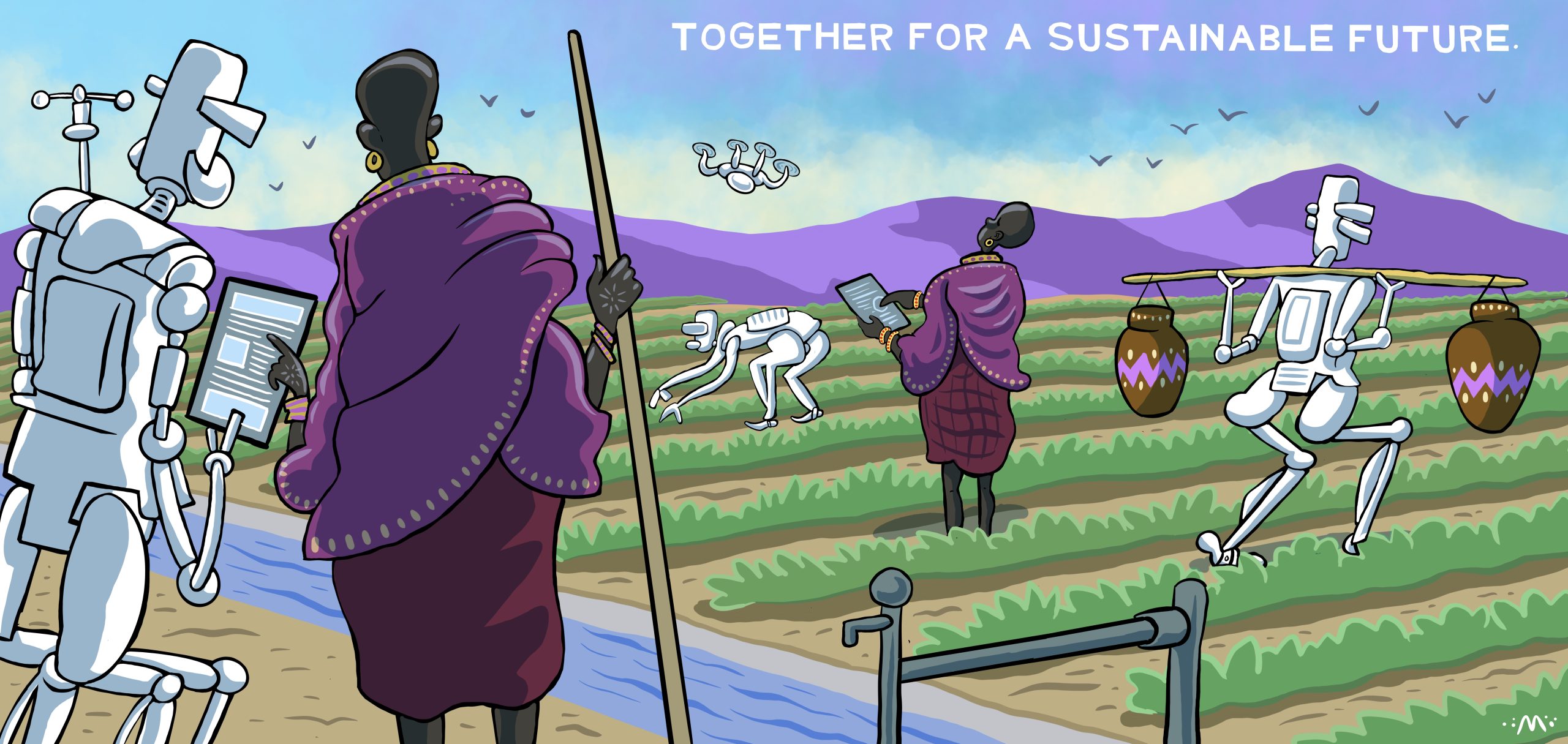
Each example is different, yet the pattern is clear: when knowledge is shared, systems become more sustainable. Intelligent systems are not only about applying technology; they are about empowering people, enabling local communities and policymakers to act decisively based on reliable, real-time information.
How do we ensure innovation is inclusive and equitable?
The benefits of intelligent systems must not be confined to those with the resources to deploy them. The UN Food and Agriculture Organization (FAO) stresses the importance of making agricultural data open and accessible so that farmers in developing nations can reap the same benefits as large agribusinesses[10].
To this end, the World Economic Forum (WEF) has proposed a ‘data stack framework’. In other words, a model that integrates diverse technologies and stakeholders into a single, interoperable system[11]. By combining local data with global analysis, a data stack framework would allow governments, researchers, and producers to make coordinated decisions about food and water management. The goal is a shared digital ecosystem where transparency and accessibility drive collective progress, creating “a clear pathway to better decision-making, resilience and sustainability for generations to come.”
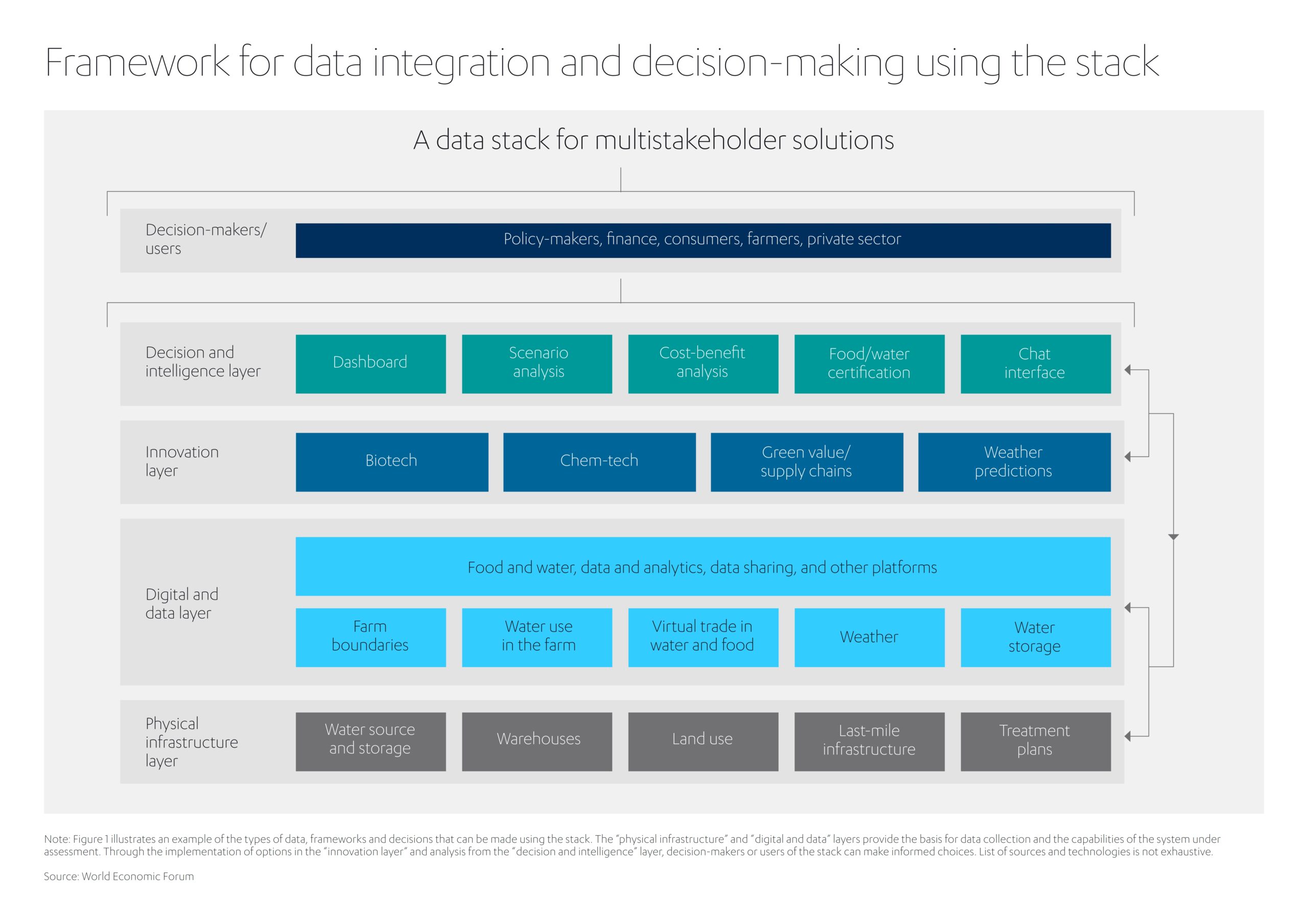
The WEF identifies four priorities to make this a reality:
- creating open and localized data infrastructures
- leveraging innovative financing and nature-based markets
- convening multi-stakeholder partnerships
- future-proofing innovation through adaptive regulation
These pathways ensure that intelligence enhances resilience, not inequality.
Can regulation and responsibility keep pace with innovation?
While technology opens extraordinary possibilities, it also introduces new risks. The UN’s Committee on World Food Security warns that a rapid ‘data revolution’ could deepen global divides if access to digital tools remains uneven. Managing these risks requires proactive regulation, ethical standards, and strong international cooperation[12].
The FAO’s FAOLEX legislative database, which adds around 8,000 new entries each year, illustrates how quickly the governance landscape is evolving. Governments are increasingly tasked with monitoring water use, food safety, environmental impact, and digital compliance, all while ensuring that innovation supports human rights and ecological balance.
But to be truly effective, regulation cannot merely react to change; it must anticipate it. As AI models evolve and decision-making becomes more automated, governments face the challenge of defining accountability. Who is responsible when an algorithm shapes outcomes for millions of people? Ensuring transparency in how data is gathered, analyzed, and deployed will be central to maintaining public trust.
Technology itself can assist with this complexity. Software such as SGS Digicomply uses advanced AI to scan global regulatory databases, tracking rule changes across jurisdictions and alerting organizations to compliance issues. Similarly, blockchain technology is emerging as a tool for food traceability, allowing consumers and regulators to verify the origin and safety of products instantly. The private sector also has a role to play. Food producers and agritech companies are increasingly adopting voluntary sustainability frameworks that go beyond minimum legal standards, reflecting the growing demand for accountability from investors and consumers alike.
For investors, clear regulation provides the confidence needed to fund long-term progress. As investment firm Schroders observes in its Sustainable Food Systems Investment Outlook report[13], “We do not invest based on hopes that uncertain regulation will drive company earnings.” Indeed, they argue that increased regulation should be welcomed: under current trends, the global food system alone could consume the world’s entire 1.5°–2°C carbon budget, making reform both inevitable and essential.
Ultimately, effective regulation is not a brake on progress; it is the foundation that allows innovation to flourish responsibly. By creating transparent, predictable frameworks, policymakers can encourage investment in technologies that deliver measurable benefits, not only in productivity, but in sustainability and social equity.
How can investment accelerate the transition to smarter systems?
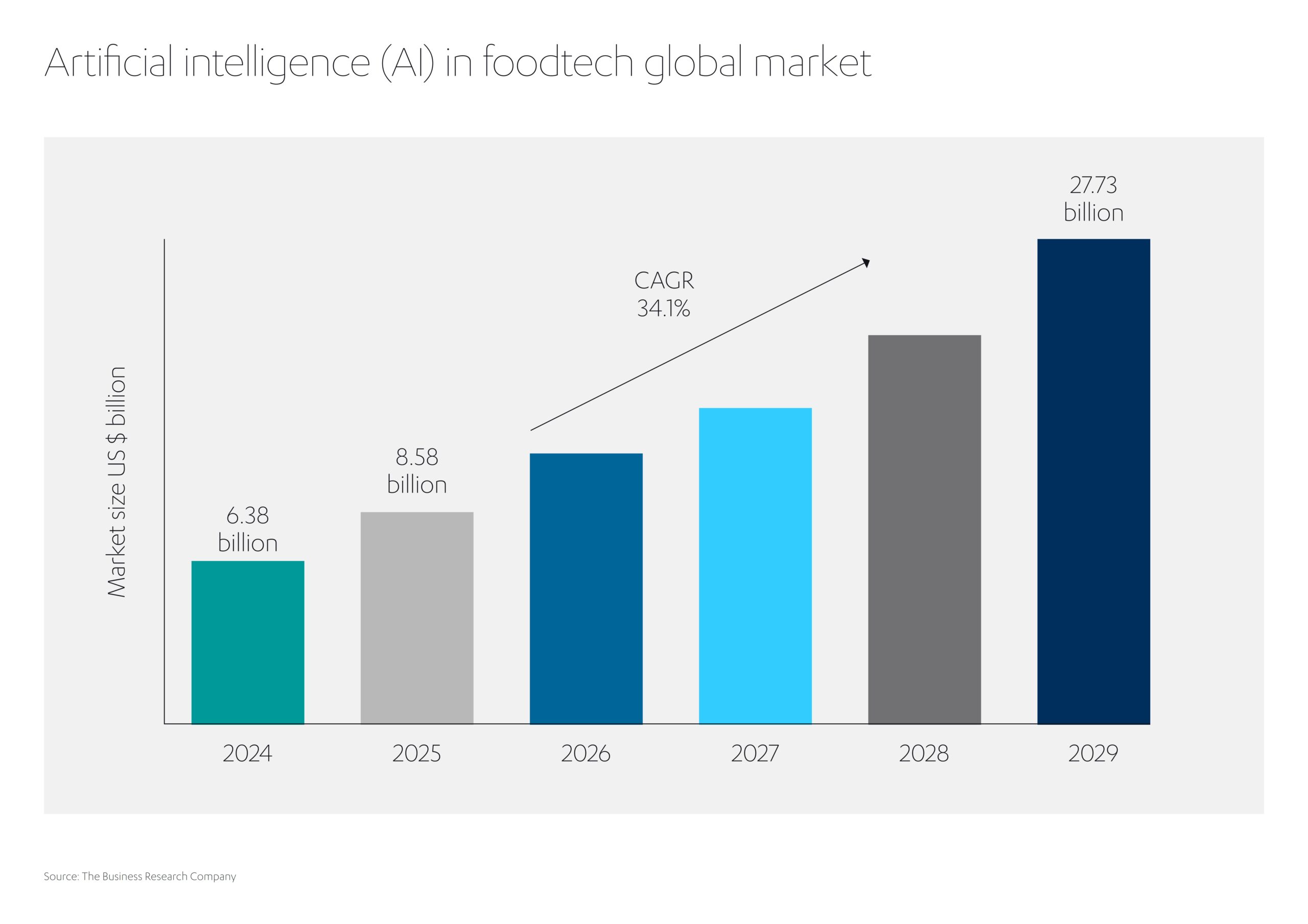
Innovation depends on investment – and here the signs are encouraging. The global AI in foodtech market is forecast to grow to US$ 27.7 billion by 2029, expanding at over 34% annually[14]. Private capital is increasingly drawn to companies that integrate sustainability with technology, seeing opportunity in solutions that make agriculture more efficient, transparent, and climate-resilient.
Public institutions are following suit. The World Bank now considers food, water, and land management as central to its climate transition strategy. Since the 2015 Paris Agreement, it has multiplied its funding for climate-smart agriculture eightfold to nearly US$ 3 billion per year[15].
Partnership between public and private sectors will be crucial. As the ICL Group notes, “Foodtech is emerging as the key to addressing these challenges, blending innovation with sustainability to create resilient food systems.”[16] The next decade will determine whether we can scale these solutions fast enough to meet global demand without further degrading the environment that supports us.
How is the Jameel Family helping to shape the intelligent future?
The Jameel Family is investing in and supporting diverse initiatives across the globe that are working towards more intelligent food and systems.
Celebrating its 10th anniversary in 2025, the Jameel Water and Food Systems Lab (J-WAFS), cofounded by Community Jameel and MIT, embodies the belief that science and compassion together can solve humanity’s toughest challenges. Since its founding, J-WAFS has supported more than 100 research projects aimed at improving the safety, sustainability, and resilience of food and water systems, attracting millions of dollars in funding and influencing policy worldwide.
Its innovations are wide-ranging: developing drought-tolerant crops, advancing low-energy water purification, and harnessing AI to optimize supply chains. Among its most visionary initiatives is an atmospheric water harvester – a device that can draw clean water directly from air, even in arid environments, without external power. Tested in California’s Death Valley, it harvested more water than comparable passive or powered devices[17].
Another project used satellite data, street view imagery and deep learning to generate 10-metre resolution crop-type maps of India’s 125 million smallholder farmers. Accurate crop-type maps help policymakers, agronomists, and local services monitor what crops are grown where and when, enabling more timely insights into crop rotations, changes in farmer planting decisions, and broader agricultural trends. This can lead to better targeting of resources to farmers, thereby improving yields, income stability, and resilience[18].
MIT is also Community Jameel’s partner in the Jameel Poverty Action Lab (J-PAL), a global research centre aiming to reduce poverty through evidence-based policy. Among its many programmes, J-PAL’s Air and Water Labs work closely with government partners to co-generate evidence-based solutions for the most pressing air and water challenges in Africa, the Middle East and North Africa (MENA), and South Asia. Similarly, Jameel C40 Urban Planning Climate Labs assist rapidly growing cities – including Chennai in India, and Amman in Jordan – in merging climate action with urban planning. The labs aim to refine city plans to align with climate goals and develop sustainable, low-carbon urban spaces as models.
Another Community Jameel initiative is the Jameel Observatory, a global platform working at the interface of climate, natural disasters, agricultural and food systems and health, with a focus on low-and-middle income countries. It uses data and evidence to help communities and governments to prepare for – and act on – environmental shocks, and the impacts of climate change on livelihoods and wellbeing. Its current portfolio includes the Jameel Observatory for Food Security Early Action, led by the University of Edinburgh, and Jameel Observatory Climate Resilience Early Warning System Network (Jameel Observatory-CREWSNet), led by MIT.
These programmes demonstrate how research excellence and purpose-driven philanthropy can accelerate progress for all. Investing in initiatives like these is not just about technology but about empowering future generations to thrive and communities to flourish.
Can we build intelligence without exhausting the planet?
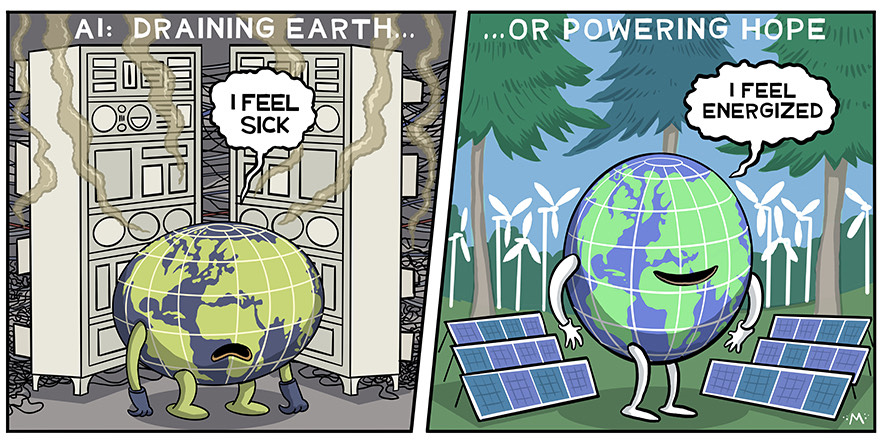
As we embrace AI and data-driven systems, we must also confront their hidden costs. The infrastructure that powers digital innovation – vast data centres, energy-hungry servers, and complex supply chains for rare earth materials – carries its own environmental footprint. The WEF warns that future AI solutions must be designed with sustainability at their core, minimizing energy use and promoting circularity[19]. Balancing innovation with responsibility is therefore critical. Intelligent systems should not only help us produce more efficiently, but also consume more wisely, closing loops, reducing waste, and regenerating the resources on which life depends.
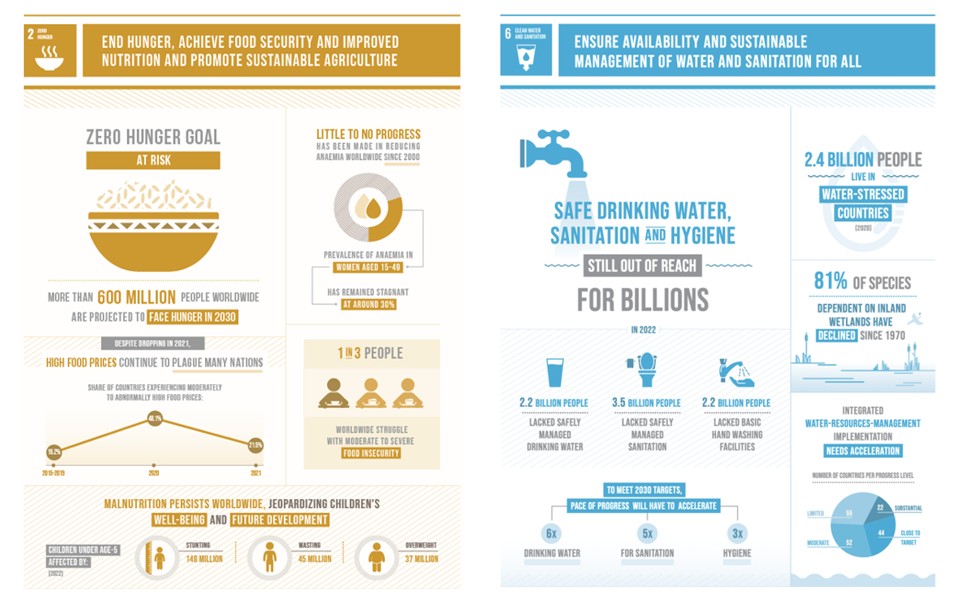
The UN’s Sustainable Development Goals provide a clear framework for this effort. SDG 2 calls for the end of hunger and the promotion of sustainable agriculture, SDG 6 seeks universal access to clean water and sanitation, SDG 13 focuses on combating climate change, while SDG 3 aims to improve health and wellbeing. Many of the other SDGs – around clean energy, education and skills, and responsible growth – are also indirectly impacted by the challenges we face in managing our food and water systems. Achieving these goals requires collaboration and partnership, technological ingenuity and moral imagination.
Our future depends not just on what we build, but how we build it. The challenge before us is to ensure that intelligence, in all its forms, serves humanity’s highest purpose: to sustain life in harmony with the planet that makes it possible. If we can harness that intelligence with empathy and integrity, the promise of a world that is both nourished and sustainable need not remain a dream. It can be our shared reality.
Intelligent food & water systems: five fast facts
Q: How much is global food demand expected to increase by 2050?
A: By around 60% as the world population moves towards 10 billion, placing unsustainable stress on already scarce water supplies.
Q: What percentage of global freshwater withdrawals does agriculture account for?
A: Approximately 70%, with this figure being even higher in many African regions.
Q: How much of the world’s greenhouse gas emissions come from food production?
A: Roughly one-third of all global greenhouse gas emissions are attributed to food production.
Q: How fast is the global AI in foodtech market expected to grow?
A: The market is forecast to reach US $27.7 billion by 2029, expanding at over 34% annually.
Q: How many research projects has J-WAFS supported in its first decade?
A: More than 100 projects aimed at improving the safety, sustainability, and resilience of food and water systems worldwide.
[1] https://www.weforum.org/stories/2024/06/renovation-reinvention-food/
[2] https://www.fao.org/aquastat/en/overview/methodology/water-use
[3] https://www.nature.com/articles/s43016-021-00225-9
[4] https://reports.weforum.org/docs/WEF_Food_and_Water_Systems_in_the_Intelligent_Age_2024.pdf
[5] https://acuvate.com/blog/data-driven-approaches-for-sustainable-water-management/
[6] https://reports.weforum.org/docs/WEF_Food_and_Water_Systems_in_the_Intelligent_Age_2024.pdf
[7] https://saiplatform.org/our-work/news/building-resilience-in-the-argentinian-peanut-sector/
[8] https://saiplatform.org/wp-content/uploads/2025/05/sai-platform_annualreport-2024_in-brief.pdf
[9] https://reports.weforum.org/docs/WEF_Food_and_Water_Systems_in_the_Intelligent_Age_2024.pdf
[10] https://www.weforum.org/stories/2025/01/food-water-security-intelligent-age/
[11] https://reports.weforum.org/docs/WEF_Food_and_Water_Systems_in_the_Intelligent_Age_2024.pdf
[12] https://openknowledge.fao.org/server/api/core/bitstreams/c3163e00-9655-43d1-991a-acc82717cbdf/content
[13] https://www.schroders.com/en-bm/bm/professional/insights/how-the-food-water-system-is-moving-into-the-policy-spotlight/
[14] https://www.thebusinessresearchcompany.com/report/artificial-intelligence-ai-in-foodtech-global-market-report
[15] https://www.worldbank.org/en/topic/climate-smart-agriculture
[16] https://www.icl-group.com/blog/hadar-sutovskys-vision-for-the-future-of-food-tech/
[17] https://jwafs.mit.edu/projects/2024/high-efficiency-atmospheric-water-harvesting-enabled-vibrational-actuation
[18] https://jwafs.mit.edu/projects/2024/national-crop-type-maps-india-using-deep-learning-and-street-view-imagery
[19] https://www.weforum.org/stories/2025/01/food-water-security-intelligent-age/



 Dubai, UAEJune 30 , 2026