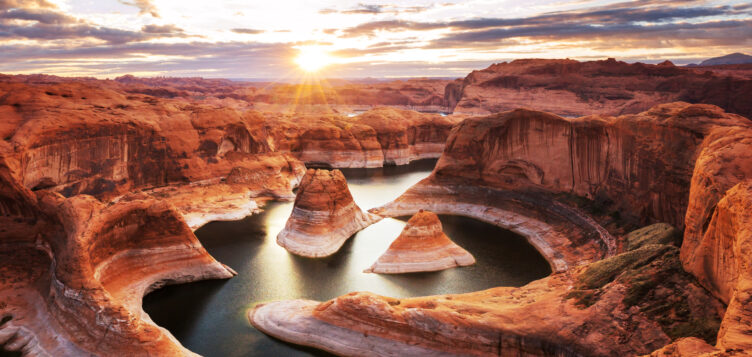
A hike along the Colorado river, stretching some 2,000 km from the Rocky Mountains in the United States to the Gulf of California in Mexico, offers numerous rewards for those whose spirits are stirred by wilderness. It is a journey through almost two billion years of the Earth’s history, boasting crystalline metamorphic rocks, volcanic basalt flows, precipitous canyons and patterned layers of sedimentary deposits – all visual reminders of our planet’s evolution.
Yet here, amid the scenic splendor, visitors can also observe something far less invigorating for the soul: the ominous hallmarks of climate change.
With the western states of the US experiencing more than two decades of continuous megadrought, the Colorado river is experiencing its driest phase in the last 1,200 years, covering 20% less land than in the 1900s.[1] Ancient settlements, sunken vessels and long-submerged cars are peeking through the water surface as river levels steadily decline – eerie ghosts of the past with their own tales to tell. A ‘bathtub ring’, visible along the riverbank, is a stark reminder that waters once flowed tens of feet higher. Riverbeds in areas like Nevada, once impassable due to water flow, are now navigable on foot.
All this is bad news for the 40 million people across seven US states for whom the river is a literal lifeline, including inhabitants of major cities such as Los Angeles and Denver. It threatens bleak harvests for the millions of acres of farmland traditionally irrigated by the river along one of America’s major breadbaskets. The river basin, it is feared, could face a deficit equivalent to 1.8 million Olympic swimming pools next year unless the decline is halted.[2]
The emergency affecting the Colorado basin is not an isolated incident. It is emblematic of the wider water crisis affecting the entire North American continent, one which could endanger jobs, living standards and even lives in the decades to come.
In Mexico, 43% of the 22 million inhabitants of Mexico City lack access to clean water, according to research from the Autonomous University of Mexico[3], while data from the World Bank shows that Mexico’s per capita water availability plummeted from 10,000 cubic meters per year in 1960 to just 4,000 in 2012. Projections indicate this figure could drop below 3,000 cubic meters by 2030, a startling decline that could have far-reaching consequences[4].
Even in Canada, with its vast natural resources, water security is a growing concern. Around 85% of the country’s population live close to the Canada-United States border, yet 60% of all available freshwater is in the far northern regions[5]. Taking this disparity into account, along with the rising frequency and severity of climate-related events, Canada is increasingly viewing water resilience and security as an urgent policy matter.
Without remedy or mitigation, water challenges across North America could manifest as more than visual scars in a hikers’ paradise. Instead, they could come to define one of the most urgent sustainability stories of the 21st Century.
How big is the water crisis facing North America?
The American Society of Civil Engineers (ASCE) warns that public faith in the resilience of local aquifers is “naïve”.[6] Reservoirs are more strained than ever before, with traditional quick-fixes (like diverting supplies from neighboring areas) becoming unfeasible due to the extent of the shortages. The specter of communities literally running out of potable water is, they caution, a “reality”.
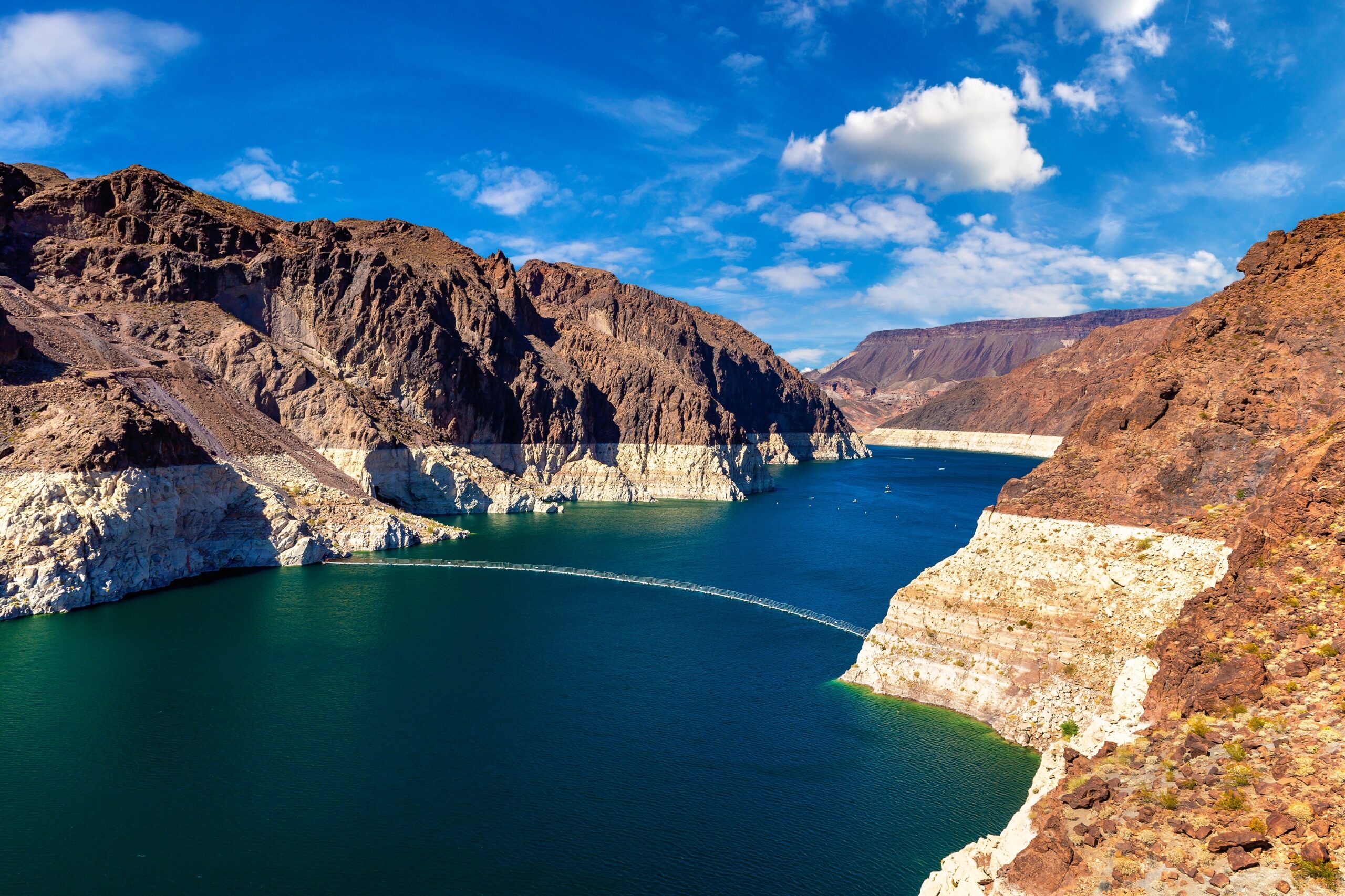
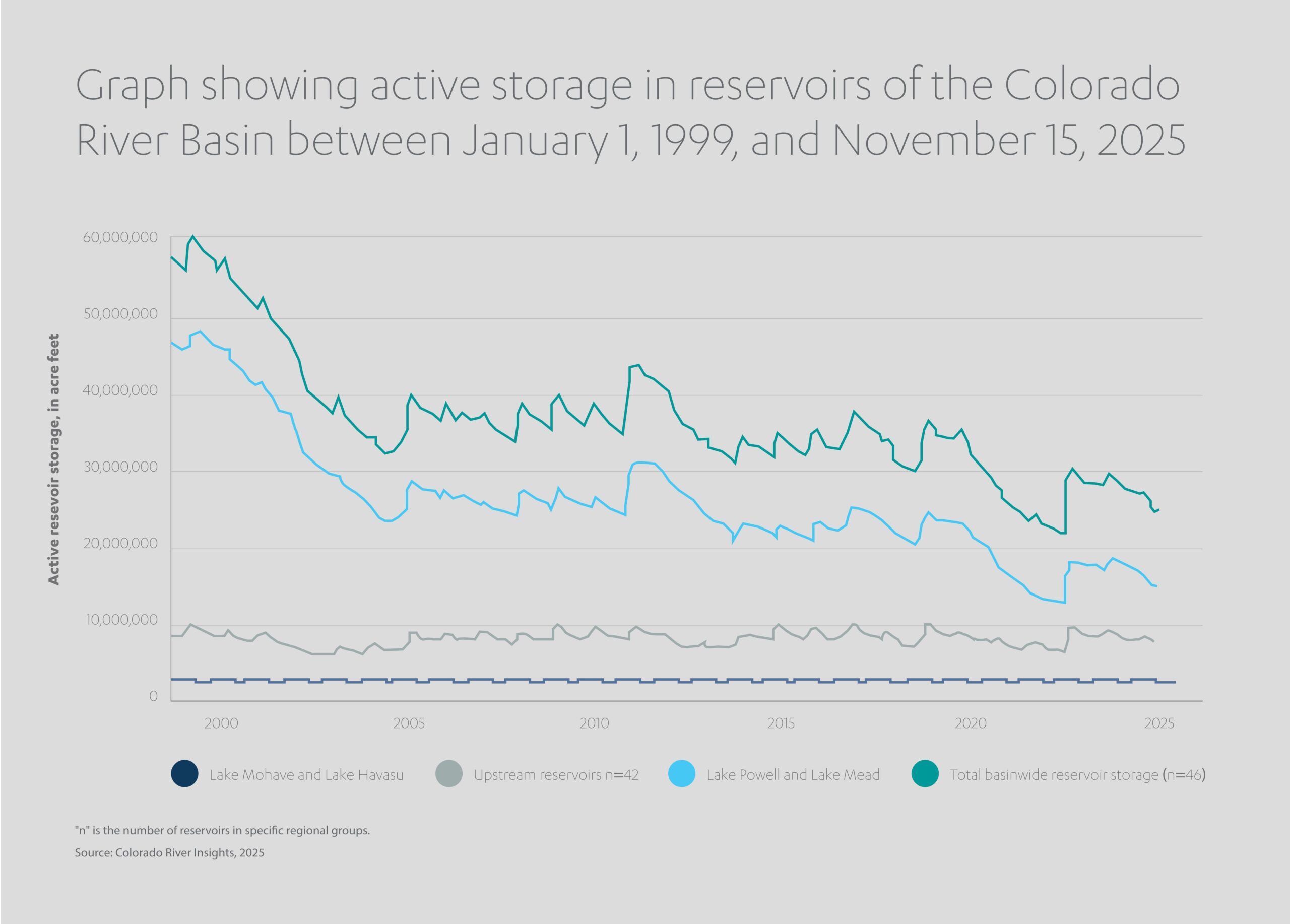
The ASCE’s fears are justifiable, with evidence from Lake Mead and Lake Powell – America’s two largest reservoirs, both located on the Colorado river – raising multiple red flags. As of February 2026, Lake Mead was at just 34% capacity and set to fall further.[7] Reduced run-off feeding Lake Powell could see levels dropping too low to activate hydroelectric turbines at Glen Canyon Dam, curtailing a source of affordable clean power for families and business throughout the region. Troublingly, more than two-thirds of losses in these key water repositories comprise depletion of groundwater – those subterranean reserves of rainfall which replenish far less rapidly than transient surface supplies.[8]
The most recent data indicates that the United States is a thirsty society indeed, currently consuming some 322 billion gallons of water daily split between hydration, sanitation, agriculture and industry.[9] This growing demand is only likely to increase in the coming years because of several factors.
- Population growth: The US is home to more people than ever before. The country’s headcount rose approximately 0.5% in 2025 to more than 343.6 million people.[10]
- Human geography: It’s not just a matter of numbers. Equally important is where people choose to live. More families are moving to warmer regions where water supplies are already under the most extreme stresses.[11] Between 2023 and 2024, the US states dominating migration flows – Texas, California and Florida – were all located in the Sun Belt region, renowned for abundant sunshine and long, hot summers.[12]
- Global warming: As for those temperatures, they inevitably continue to rise across the United States due to climate change. Last year, 2025, was the fourth hottest year on record in America, with temperatures an average of 2.6°F above the 20th Century norm.[13] Warmer temperatures mean increased evaporation leading to higher water consumption across homes, farms and factories, deepening the strain on supplies.
- Data centers: One glance at the headlines reveals another trend likely to exacerbate the looming water crisis across North America: the rise of AI and cloud computing. These technologies are fueling the proliferation of data centers throughout the country, which consume huge amounts of water for cooling processes. More than 150 GW of new data center power capacity is currently planned across the US.[14] Research shows that by 2028 US data center water consumption could double to 150 billion liters per year, or even quadruple to 280 billion liters, compared to 2023 levels.[15]
All these factors contribute to the growing water emergency. Freshwater is vital across multiple sectors in the United States: For generating thermoelectric energy in power stations (45%), for irrigating farmland, (32%), for domestic use (12%), for businesses (5%) and for aquatic agriculture, or ‘aquaculture’ (3%).[16] Insufficient water would mean a radically different society to the one enjoyed by millions today.
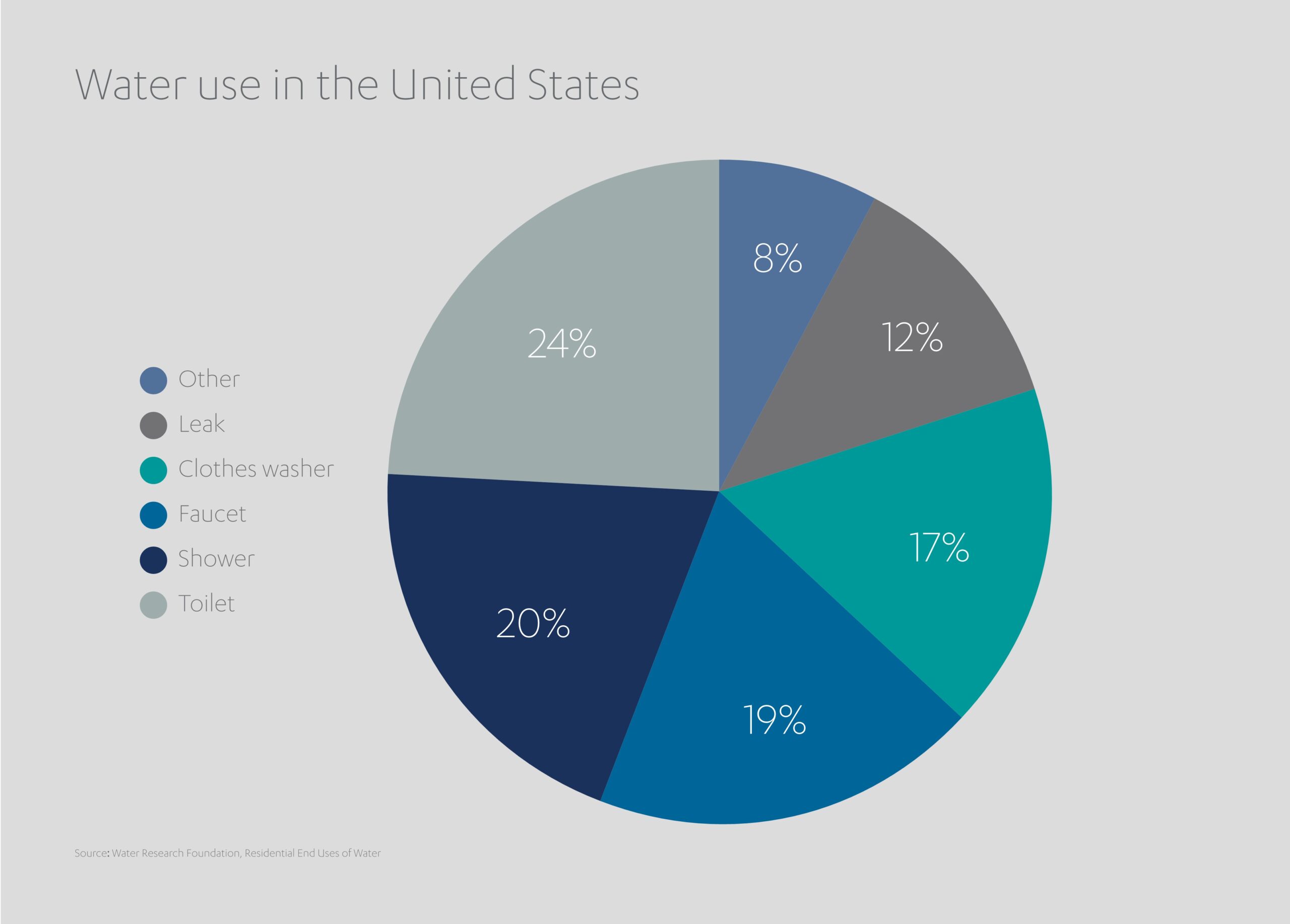
It is in the intimate confines of our homes, with limitless water often taken for granted, where impacts will rapidly be felt once demand exceeds supply. Every day, with barely a second thought, American households use around 300 gallons of valuable freshwater for flushing lavatories (24%), showers (20%), faucets/taps (19%) and washing machines (17%), with the remainder accounted for by leaks and other assorted uses (20%).[17]
Research suggests that by the 2070s almost half of US freshwater basins might fail to meet monthly water demands.[18] Impacts could quickly accelerate as climate change takes hold. In the case of the all-important Colorado river, studies indicate that every one degree rise in temperature reduces water volume by around 9.3%, translating as 1.5 billion tons of water lost so far. The river’s capacity could fall 20%-30% by mid-century.[19]
The time for ‘going with the flow’ is over. A widespread investment crisis underpins the continent’s growing water woes; one which demands a new way of thinking about funding critical national resources.
Can we stem the tide of water wastage?
The National Association of Water Companies (NAWC), a Washington DC-based trade organization representing water and wastewater companies across the United States, says a countrywide water crisis isn’t a hypothetical future scenario. It’s happening now, right before our very eyes.
It warns that despite longstanding fears around dwindling supplies, approximately 240,000 water main breaks are still being recorded each year across the US, costing the nation some six billion gallons of water daily.[20] A fragmented marketplace, with around 52,000 separate water companies registered, means critical infrastructure investments fail to materialize due to cost inefficiencies and lack of expertise.
Ramifications of underfunding run wide and deep. Sustainability consultancy ERM calculates that water is critical for about 60% of US GDP.[21] It reports that the number of companies in the S&P 500 citing ‘water risks’ in their company disclosures soared from 11 to 215 between 2014 and 2023. According to the ERM, the annual funding gap in water infrastructure investment across the US runs to US$ 91 billion, split between upgrading end-of-life equipment, constructing flood defenses, and investing in new technology to tackle water shortages.
Solutions do exist; they just require willpower, forward-thinking investment, and multi-stakeholder coordination. Proven strategies include:
- Conservation in the home: In domestic settings reducing water consumption would require a series of small adjustments, such as installing high-efficiency showerheads, fixing leaky pipes, and adjusting flush volumes of toilets.
- Conservation in industry: For factories, conservation could mean adopting on-site water treatment and recirculation, using advanced cooling technologies, installing smart meters for optimizing processes such as cleaning, and upgrading to low-flow equipment.
- Conservation in agriculture. For farmers, drip irrigation systems could reduce field waste, while sustainable soil practices (such as covering crops in sheets) would vastly increase moisture retention. Other strategies include harvesting rainwater and selecting less water-intensive crops.
- Water recycling: Already several US states, including Arizona and Florida, are using reclaimed ‘grey’ water (typically from sinks, showers and washing machines) for agriculture and industry. As a next step, advanced treatment plants are increasingly making sewage water from toilets and industrial waste reusable, too. One wastewater treatment plant in California forces water through filters to remove bacteria and purifies it via reverse osmosis, before treating it with hydrogen peroxide and ultraviolet light to create an end product as clean as distilled water.[22] Similar plants are now being developed in Utah, Texas and Colorado.
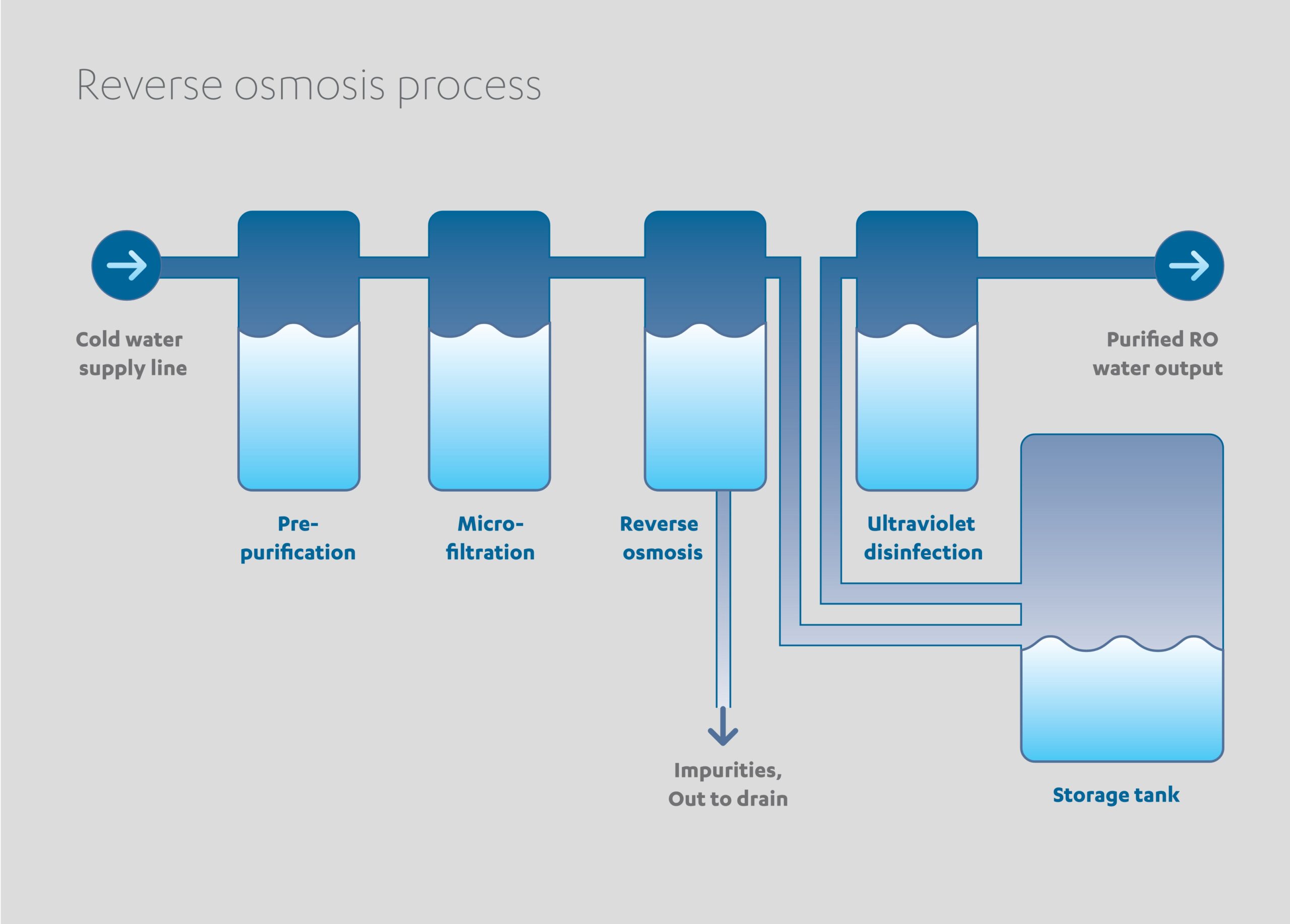
- Desalination: or transforming oceanic water into a drinkable resource, is far from straightforward but is demonstrably viable, with an estimated 300 million people already accessing desalinated water worldwide.[23] A plant in San Diego, California is currently the US’s largest desalination facility, providing water for around 10% of the region’s population, albeit at double the price of conventional water supplies. The process works either by heating saline water and capturing the purified vapor, or by pumping water through special membranes to trap salts. Research is ongoing to hone desalination technology by improving the efficiency of osmosis systems, by converting saline byproducts into usable chemicals, and by powering facilities with renewable energy. Several hundred desalination plants currently operate throughout the US with more on the way. State authorities in Texas believe they could generate billions of gallons of additional water by 2070 through desalination.[24]
- Data center redesigns: Low-water cooling technologies are pivotal to reducing the toll of America’s expanding data centers. Innovations at various stages of development offer hope. With immersion cooling, racks are dipped in a special thermal conduction liquid which removes heat from components before recirculating that same liquid back through the tank. As it relies on synthetic fluids it is a more expensive option than conventional liquid cooling, but greatly reduces water use. Dry cooling systems, alternatively, carry heat-absorbing fluid from servers into external units where it is cooled by ambient air. Currently costly and less efficient than liquid cooling, more research is needed before mass adoption of dry cooling becomes practical.
All these high-impact strategies to safeguard future water supplies demand big-budget investments in technology and innovation. Presently, the US government bankrolls American water infrastructure through schemes like the Water Infrastructure Finance and Innovation Act (WIFIA) and the Clean Water / Drinking Water State Revolving Funds (SRFs). But true game-changing solutions – those with the commercial liberty to experiment, innovate, and scale-up groundbreaking ideas – need the backing of an energetic private sector.
In this all-important private realm, Almar Water Solutions, part of Jameel Environmental Services, is leading by example.
Can the private sector prevail with a flood of innovations?
When Almar Water Solutions was established in 2016, it was founded with the mission of improving the world’s water security, particularly for the most vulnerable global communities. A decade later it manages an innovative portfolio of desalination, wastewater treatment, reuse and recycling programs. Together, these provide dependable water access for communities and businesses in some of the planet’s most water-stressed regions.
Operating across two major business strands – Asset Management and Industrial Services & Technology – Almar Water Solutions is involved in a growing portfolio of water infrastructure projects across Europe, the Middle East, Latin America, and Asia-Pacific, each focusing on sustainable technologies.
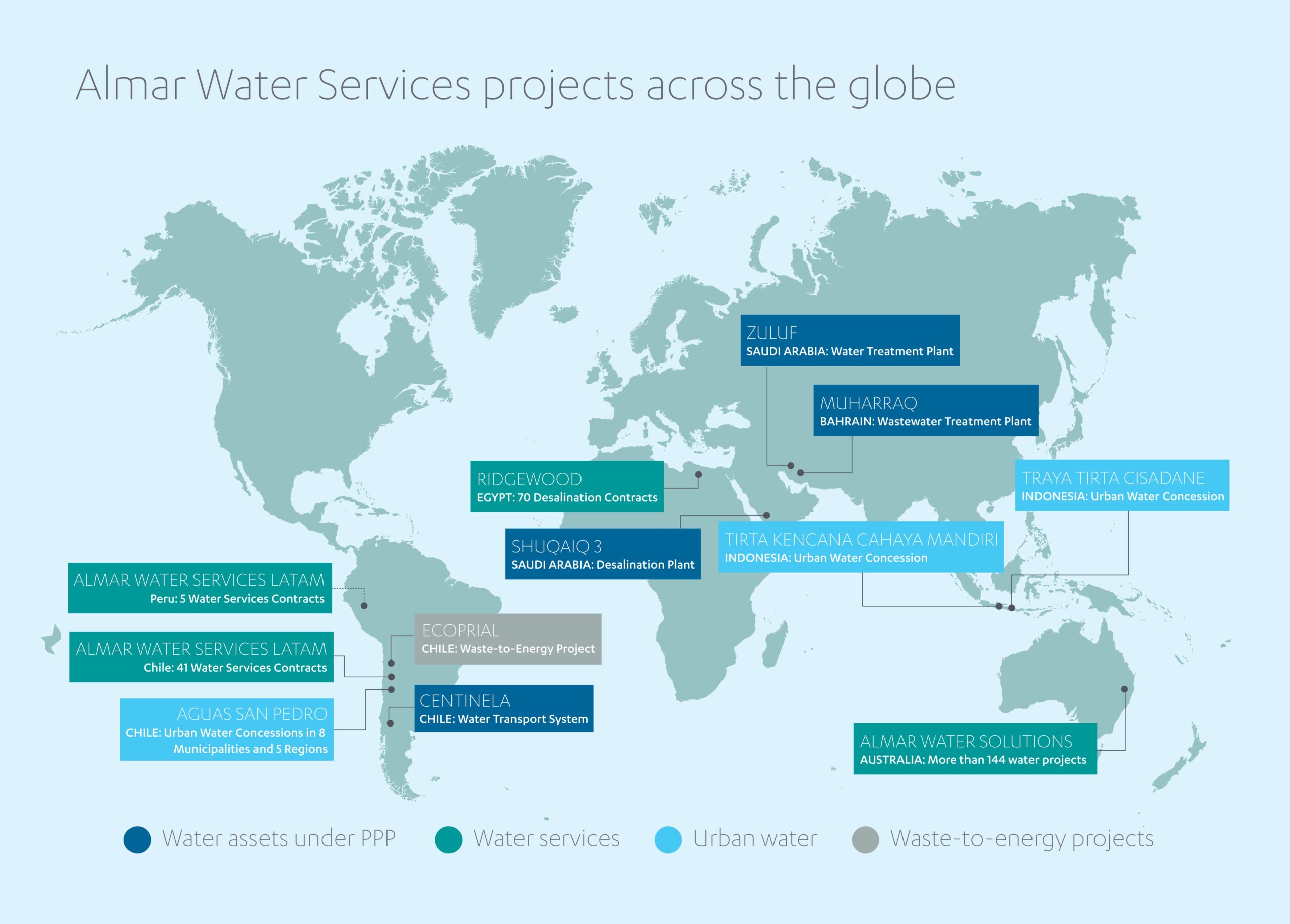
In 2021, for example, Almar completed the desalination plant on Saudi Arabia’s Red Sea coast, one of the world’s largest reverse osmosis desalination plants. Developed under a 25-year BOO (Build-Own-Operate) contract model, Shuqaiq 3 includes more than 54 kilometers of reverse osmosis pressure tubes and 53,000 membranes to produce more than 18 million liters of potable water every hour.

In Bahrain, Almar Water Solutions runs the Muharraq wastewater treatment plant, generating around 100,000 cubic meters of clean water daily from used water funneled in via a 16.5km deep gravity sewer trunk pipeline.
In Saudi Arabia, Almar Water Solutions is constructing the US$ 400 million Zuluf water treatment plant, designed to support the Zuluf Onshore Oil Facilities project 240 km north of Dhahran with 185,000 cubic meters of water daily.
Further afield, Almar Water Solutions also manages a series of urban water concessions and water / desalination contracts across locations as diverse as Chile, Peru, Indonesia and Australia.
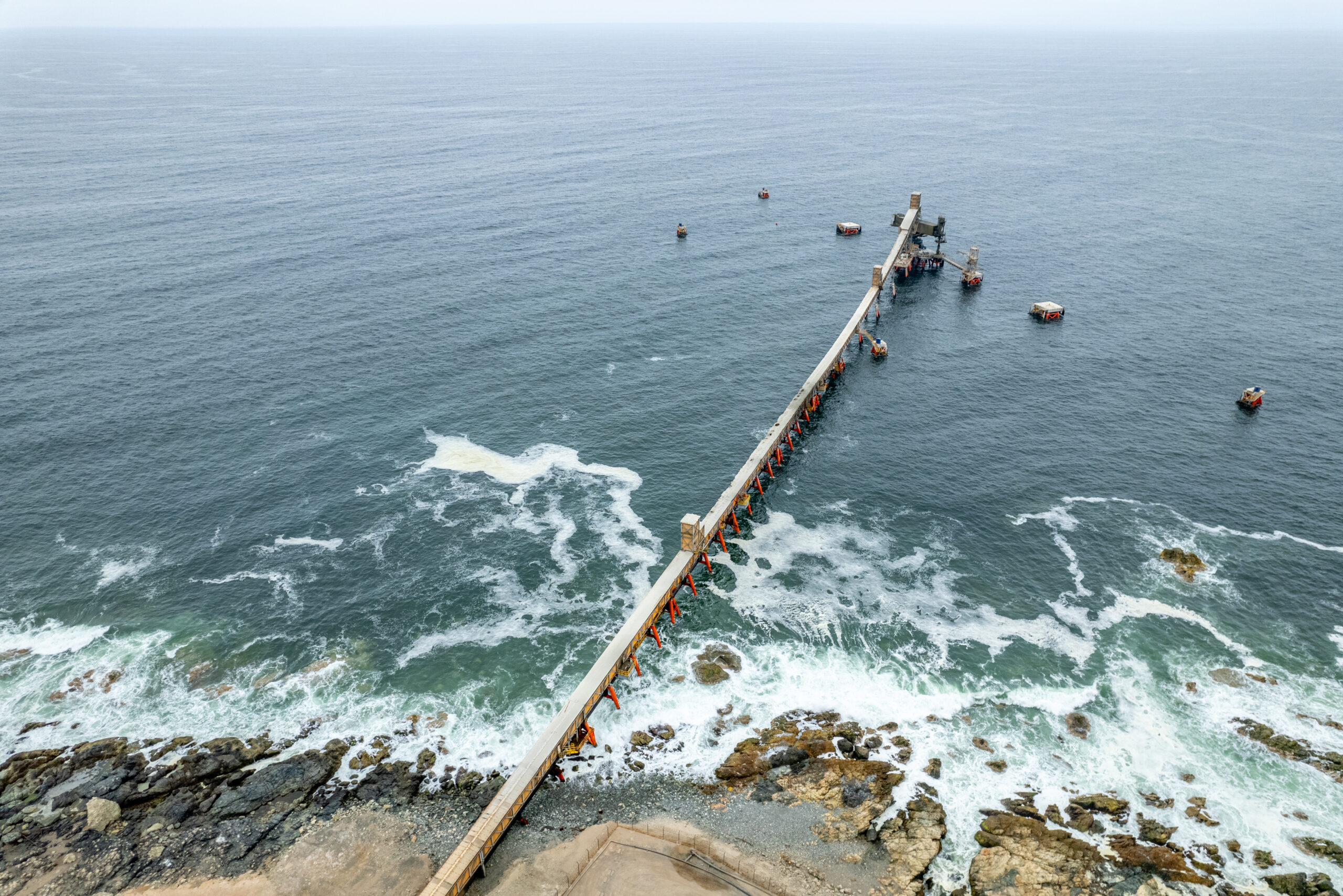
In Chile, for instance, the SIAM II extension of the flagship Centinela Water System project reached a milestone moment in summer 2025 with the completion of pipe laying. The dual pipeline will eventually transport over 167,000 cubic meters of water daily to the Centinela Mining District located 144 kilometers from the coast, preserving finite freshwater resources in the process.

Vice Chairman, International
Abdul Latif Jameel
“Clean water is a precious commodity, one which we all depend upon for healthy and prosperous lives,” says Fady Jameel, Vice Chairman, International, Abdul Latif Jameel.
“Despite this, our water supplies are subject to escalating pressures. Water use has grown at more than twice the rate of population increase over the last century, and by 2050 global demand from industry, homes and the power sector could see usage rise by half as much again.
“As one of the world’s population epicenters, the decisions made in North America today will shape water management globally for years to come,” comments Carlos Cosin, Chief Executive Officer, Almar Water Solutions.

Chief Executive Officer
Almar Water Solutions
“Millions of Americans already consumer water that fails environmental standards, while the story of the Colorado river serves as a troubling harbinger for water-stressed regions everywhere.
“Before an emergency descends into a crisis, the private and public sectors must coalesce around innovative and cutting-edge solutions, ensuring wiser water management for our fast-changing societies.
“We are at that crossroads now, so the big question becomes: What future is in the pipeline for planet Earth?”
Water challenges in North America: Five fast facts:
Q: How severe are declining water levels in the Colorado river in the USA?
A: Unless declines are halted, the river could face a water deficit equivalent to 1.8 million Olympic swimming pools next year.
Q: How much water does the USA need every day to function?
A: The country consumes some 322 billion gallons daily between hydration, sanitation, agriculture and industry.
Q: Is AI adding to the nation’s water shortage problem?
A: By 2028 data center water consumption in the USA could reach 280 billion liters annually, quadruple 2023 levels.
Q: Is chronic underinvestment deepening the US water emergency?
A: According to sources, the annual funding gap in water infrastructure investment across the USA has hit US$ 91 billion.
Q: Is desalination a plausible solution?
A: Yes. An estimated 300 million people worldwide currently rely on desalinated water. One desalination plant in California already provides water for around 10% of the region’s population.
[1] https://education.nationalgeographic.org/resource/explorer-caitlin-ochs/
[2] https://www.dw.com/en/water-conflict-scarcity-upper-basin-lower-basin-drought-agriculture-california-rights-allocation/a-74468546
[3] https://smartwatermagazine.com/news/smart-water-magazine/water-crisis-mexico-challenges-and-solutions
[4] https://mexiconewsdaily.com/news/mexico-water-crisis-day-zero-and-the-looming-threat-of-scarcity
[5] https://www.policymagazine.ca/without-water-theres-no-canada-why-we-need-a-water-resilience-and-security-strategy/
[6] https://www.asce.org/publications-and-news/civil-engineering-source/article/2024/09/17/america-is-in-a-water-crisis-but-help-is-on-the-way
[7] https://www.latimes.com/environment/newsletter/2026-02-26/boiling-point-things-to-know-colorado-river-crisis
[8] https://www.colorado.edu/center/gwc/ColoradoRiverInsights2025DancingWithDeadpool
[9] https://www.neefusa.org/story/water/increasing-demand-and-decreasing-supply-water
[10] https://www.macrotrends.net/global-metrics/countries/usa/united-states/population
[11] https://www.erm.com/globalassets/insights/the-future-of-water-resilience-in-the-us-jan.pdf
[12] https://www.visualcapitalist.com/ranked-states-americans-are-moving-to/
[13] https://www.ncei.noaa.gov/news/national-climate-202513
[14] https://www.reuters.com/business/energy/charting-data-center-development-roadmap-key-us-states-2026-01-22/
[15] https://netzeroinsights.com/resources/how-ai-intensifying-data-center-water-consumption/
[16] https://www.neefusa.org/story/water/increasing-demand-and-decreasing-supply-water
[17] https://www.neefusa.org/story/water/increasing-demand-and-decreasing-supply-water
[18] https://www.neefusa.org/story/water/increasing-demand-and-decreasing-supply-water
[19] https://www.neefusa.org/story/water/increasing-demand-and-decreasing-supply-water
[20] https://nawc.org/wp-content/uploads/2023/11/Americas-Water-Challenges.pdf
[21] https://www.erm.com/globalassets/insights/the-future-of-water-resilience-in-the-us-jan.pdf
[22] https://www.theguardian.com/environment/2025/jun/06/water-scarcity-us-facility-recycling-sewage-to-drink
[23] https://www.asce.org/publications-and-news/civil-engineering-source/article/2024/09/17/america-is-in-a-water-crisis-but-help-is-on-the-way
[24] https://www.twdb.texas.gov/innovativewater/desal/faq.asp#title-11


 Added to press kit