Why does water inequality persist despite decades of investment?



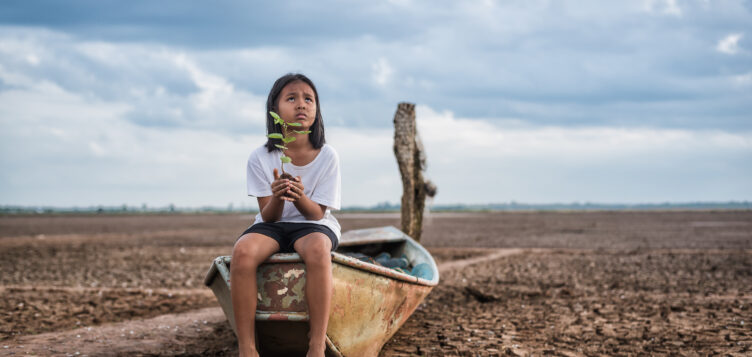
Access to safe water and sanitation has improved significantly over the past two decades. Nevertheless, billions of people still live without reliable drinking water, safely managed sanitation or basic hygiene services, particularly across so-called fragile states, rural communities and lower-income regions. The persistence of these gaps points to a deeper structural challenge in the way water systems are planned, financed and governed.
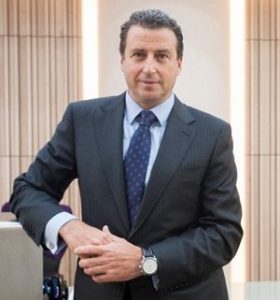
CEO
ALMAR Water Solutions
Carlos Cosín, CEO of ALMAR Water Solutions, argues that water inequality is driven by broader structural weaknesses across infrastructure, finance and governance. Investments often prioritize service delivery without adequately integrating hydrological systems, resource resilience or long-term watershed sustainability. As climate pressures intensify and demand continues to grow, Carlos believes that addressing inequality will require a more integrated and systemic approach to water investment.
ALMAR Water Solutions, part of Jameel Environmental Services, is on the frontline of this evolving environment. ALMAR was established in 2016 with a mission is to improve the world’s water security, particularly for the most vulnerable global communities. A decade later, it manages a growing portfolio of desalination, wastewater treatment, reuse and recycling programs.
With projects across Europe, the Middle East, Latin America, Africa, and Asia-Pacific, ALMAR designs, structures financing and operates systems across the full water cycle – from desalination and purification to wastewater treatment, reuse, distribution networks, and long-term operation and maintenance.
In this Q&A, Carlos reflects on the causes of global water inequality, and on the changes needed to bridge the divide through better alignment of infrastructure, finance, governance and resource management.
Q. Why does water inequality remain such a persistent global challenge?
The latest WHO–UNICEF report, Progress on Household Drinking Water and Sanitation 2000–2024, released at World Water Week 2025, highlights a stark reality: around 2.1 billion people still lack safely managed drinking water, while 4.4 billion lack safely managed sanitation services, including safe disposal and treatment of domestic waste. A further 1.7 billion people live without basic hygiene services, including facilities for handwashing with soap and water at home.[1]
These figures reflect active deprivations embedded in structural, spatial and fiscal inequities. Water inequality is rooted in fractured systems, unsustainable planning and chronic undercapitalization, extending far beyond the absence of taps or toilets.
Q. What are the main structural factors driving these inequities?
There are two main interconnected reasons why these deficits persist:
- Geospatial disparity remains entrenched. Rural communities, fragile states and lower-income districts suffer from significantly lower access rates than more stable or urban settings. In fragile contexts, for example, safely managed drinking water coverage is around 38% lower than more stable environments, pointing to systemic underinvestment where governance capacity is weakest.
- Incremental relative gains mask absolute backlogs. Global safely managed water coverage improved from 68% to 74% between 2015 and 2024, translating into hundreds of millions of additional people served. But more than 2 billion people still have poor access to safe drinking water.[2] Population growth and underinvestment in operations, maintenance and resilience are outpacing service expansion. This reflects a broader imbalance between infrastructure delivery and long-term operational resilience.
Q. Is the issue primarily one of insufficient investment?
Yes, finance is a key part of the challenge, particularly given the scale of investment required. The World Bank estimates that developing countries spend around US$164.6 billion annually on the water sector. At the same time, countries would need to increase annual spending on water supply and sanitation by a further US$ 131.4 – 140.8 billion to meet Sustainable Development Goal (SDG) targets.[3]
Finance is a key part of the challenge, particularly given the scale of investment required
At a broader level, the OECD has estimated that achieving SDG 6 may require global investment exceeding US$1 trillion annually.[4] Other studies suggest that delivering universal access to safely managed water and sanitation by 2030 could require around US$ 114 billion annually[5], highlighting a substantial financing gap between current investment levels and future needs. Closing this gap will require sustained investment focused on resilient systems, integrated planning and long-term operational sustainability.
Q. Where do current water investment models fall short?
One of the central misalignments in the sector is between water service delivery and water resource management.
In many countries, water and sanitation infrastructure is planned separately from the ecosystems and hydrological systems that sustain it. This means that investments frequently prioritize physical assets like treatment plants, pipelines and sanitation facilities without sufficient integration into hydrological planning frameworks. Water supply systems may be built above aquifers without understanding recharge dynamics, while sanitation discharge can affect downstream ecosystems and long-term resource quality.
Global water inequality in numbers
- 1 billion people lack safely managed drinking water
- 4 billion people lack safely managed sanitation
- 38% lower access to safe drinking water in fragile states
- US$ 114 billion annually to deliver safe water and sanitation by 2030
This fragmentation becomes even more problematic under climate stress, where operations may fail as water sources and supply volumes shift over time. The SDG 6 framework already promotes integrated water resource management, including water-use efficiency, wastewater treatment, ecosystem protection and transboundary cooperation. In practice, though, many capital programs remain siloed, focusing primarily on service delivery while neglecting watershed health, recharge zones and climate resilience.
Q. What would a more integrated approach to water investment look like?
The first priority is aligning water, sanitation and hygiene investment with integrated water resource management. Investment planning must extend across both service delivery and resource management. Water treatment plants, for example, should be coordinated with watershed protection and aquifer recharge strategies, while service contracts should include allowances for seasonal fluctuations and climate-driven variability.
A second priority involves refining cost models to incorporate resource resilience and natural capital dependencies. Traditional financial assessments often overlook ecological thresholds, ecosystem stress and long-term climate uncertainty. Revised frameworks should incorporate lifecycle costing, ecological sustainability and climate-adjusted risk assessments.
Traditional financial assessments often overlook ecological thresholds, ecosystem stress and long-term climate uncertainty
There is also a need for blended finance structures that bridge the divide between revenue-generating assets and natural resource resilience. Private capital typically concentrates on revenue-generating systems, while public or philanthropic finance may be better suited to supporting watershed restoration, recharge enhancement and ecosystem protection. This creates a broader capital spectrum, extending from philanthropy through to commercial investment.
Q. Why is governance reform such an important part of the solution?
The fragmentation of water institutions often mirrors the fragmentation within investment models. In many systems, water utilities and water-resource agencies operate under separate mandates, with limited coordination between them.
Addressing this requires integrated governance structures, including stronger cross-ministry planning, shared budgets and joint monitoring frameworks that connect service metrics with resource indicators such as aquifer depletion, water quality and effluent performance. Without institutional alignment, investment decisions risk reinforcing existing inefficiencies rather than strengthening long-term resilience.
Q. Why do fragile and rural contexts require a different investment approach?
The financing gap is particularly severe in fragile and rural environments, where service provision costs are higher and infrastructure systems are more geographically dispersed. These contexts require targeted capital investment alongside operational subsidies capable of sustaining services over time.
Funding models should also include dedicated support for resource protection measures such as watershed restoration and aquifer recharge enhancement. Without these protections, infrastructure systems remain vulnerable to long-term environmental degradation and resource instability.
Q. What broader changes are needed to achieve universal water access?
The challenge is technical, financial and institutional.
Water inequality reflects fractured systems, unsustainable planning and chronic undercapitalization.
The solution depends on recognizing that infrastructure relies on resilient hydrological foundations supported by sustainable resource flows, comprehensive financing strategies and coordinated governance. Investment models therefore need to connect service delivery with long-term resource resilience.
This requires an end to siloed thinking and aligning water, sanitation and hygiene investment with integrated water resource management, while redirecting capital towards the areas where inequality remains most deeply embedded.
As global water-policy discussions evolve, engineering solutions must increasingly be connected to hydrological science, financing structures and governance reform. Only through this level of integration can water equity move closer to universal, sustainable access, supporting future generations as well as the billions of people who remain underserved today.
Connecting infrastructure with resilience
The persistence of global water inequality reflects deeper structural challenges in the way water systems are financed, governed and managed. Expanding water infrastructure is essential. Long-term progress also depends on strengthening the hydrological, institutional and financial systems that enable reliable service delivery. More coordinated institutions, climate-adjusted financing models and blended investment structures all have a role to play in building more resilient and equitable water systems.
As Carlos highlights above, as climate pressures and population growth continue to intensify, the need for integrated approaches is increasingly urgent. Bridging the divide in water access will depend on creating systems capable of sustaining reliable and equitable services over the long term, supported by infrastructure, resilient resource management and coordinated governance.
Water inequality: Five fast facts
- How many people still suffer from water inequality?
Around 2.1 billion people worldwide do not have access to safely managed drinking water, while around 4.4 billion people still lack safely managed sanitation, and 1.7 billion live without basic hygiene services. - Has global access to safe water improved in recent years?
Yes, but not fast enough. Safely managed water coverage rose from 68% to 74% between 2015 and 2024, yet billions remain underserved. - How much do developing countries already spend on water each year?
Annual spending on the water sector is estimated at US$164.6 billion across developing economies. - Why are rural and fragile regions harder to serve?
Infrastructure costs are higher, systems are more dispersed, and long-term operations often require ongoing subsidies and resource protection measures. - What is one of the biggest weaknesses in current water investment models?
Many projects focus on pipes and treatment plants without fully integrating watershed protection, aquifer recharge or long-term climate resilience.
[1] https://www.who.int/publications/m/item/progress-on-household-drinking-water–sanitation-and-hygiene-2000-2024–special-focus-on-inequalities
[2] https://www.who.int/publications/m/item/progress-on-household-drinking-water–sanitation-and-hygiene-2000-2024–special-focus-on-inequalities
[3] https://www.worldbank.org/en/topic/water/publication/funding-a-water-secure-future
[4] https://www.oecd.org/en/publications/financing-a-water-secure-future_a2ecb261-en.html


 Added to press kit