Jameel Corporation co-hosts luncheon seminar on AI-enabled preventive medicine with support from MIT Jameel Clinic



- The seminar explored how AI-powered predictive medicine can help shift healthcare from disease detection and treatment to disease prevention.
- Around 200 healthcare professionals attended the event, reflecting strong interest in AI-enabled preventive healthcare solutions.
- Experts from MIT Jameel Clinic, the National Cancer Center Hospital, and Yotsuya Medical Cube shared insights on advanced cancer risk prediction technologies and their potential application in Japan.
Jameel Corporation, based in Japan and part of Abdul Latif Jameel, a network of internationally diversified businesses, co-hosted a luncheon seminar on “The Future of Preventive Medicine Powered by AI — From ‘Detecting Disease’ to ‘Preventing Disease’” at the 28th Annual Meeting of the Japan Society for Health Care Management. The seminar was held in Japan with support from MIT Jameel Clinic, the epicenter of artificial intelligence and health at the Massachusetts Institute of Technology (MIT) established in partnership with Community Jameel, an international organization advancing science and learning for communities to thrive.
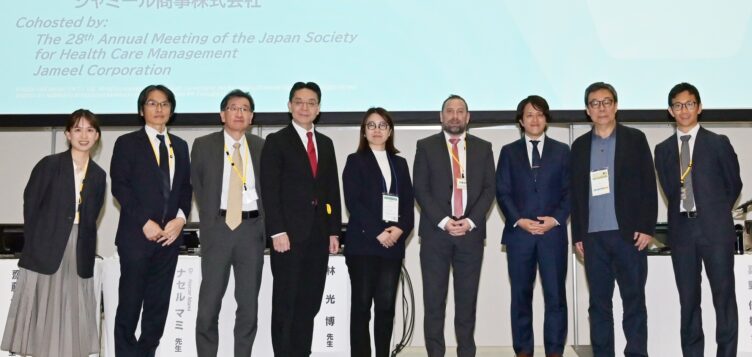
Approximately 200 healthcare professionals attended the seminar, reflecting strong interest in preventive medicine and the application of AI in healthcare. The seminar was chaired by Dr. Toshiki Mano, Professor at the Graduate School of Strategic Management, Chuo University, and featured presentations by Dr. Mitsuhiro Hayashi, Director of the Department of Breast Surgery at Yotsuya Medical Cube; Dr. Nacer Mami, Regional Lead – Clinical Network, MIT Jameel Clinic; and Dr. Ayumi Saito of the Department of Medical Oncology at the National Cancer Center Hospital in Japan.
Centered on the theme of transitioning from “detecting and treating disease” to “predicting and preventing disease,” the presentations introduced MIT Jameel Clinic’s AI-based cancer risk prediction models MIRAI and SYBIL. MIRAI predicts the risk of developing breast cancer up to five years in advance from a patient’s mammogram, while SYBIL, predicts the risk of developing lung cancer up to six years in advance from a patient’s low-dose CT scan.
The speakers emphasized the importance of generating evidence based on Japanese patient data. Based on ongoing collaborative research with the National Cancer Center Hospital and Yotsuya Medical Cube, they also discussed the opportunities and challenges for the social implementation of MIRAI and SYBIL in Japan.
The seminar provided an important opportunity to share the potential of AI-enabled predictive medicine and personalized preventive medicine, marking a significant step toward realizing “preventing disease” in Japan.


 Added to press kit