




 1x
1xOurs is an increasingly digital world. If we need a financial loan, we use the web to research the best deals. If we want to check some medical symptoms, the internet is usually the first place we turn to. Need some food in a hurry? A couple of clicks and it will be on your doorstep in 30 minutes. Or if we want to stretch the family budget a bit further, online shopping is often the cheapest solution.
In the developed world, we take these choices for granted. Yet for many people around the world, such a dilemma is more than a temporary frustration, it is their daily reality. Spend a few moments trying to navigate daily life without internet access, and the essential role of digital connectivity quickly becomes apparent.
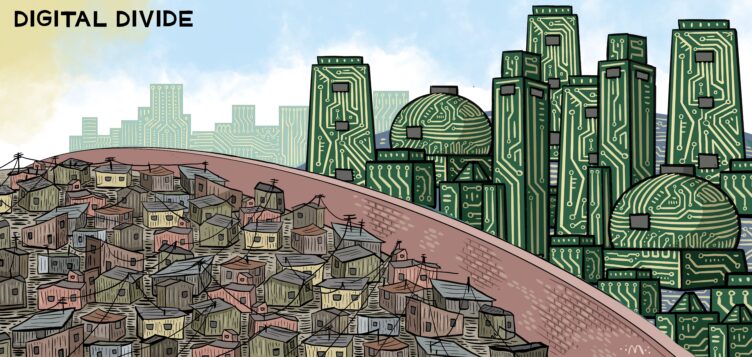
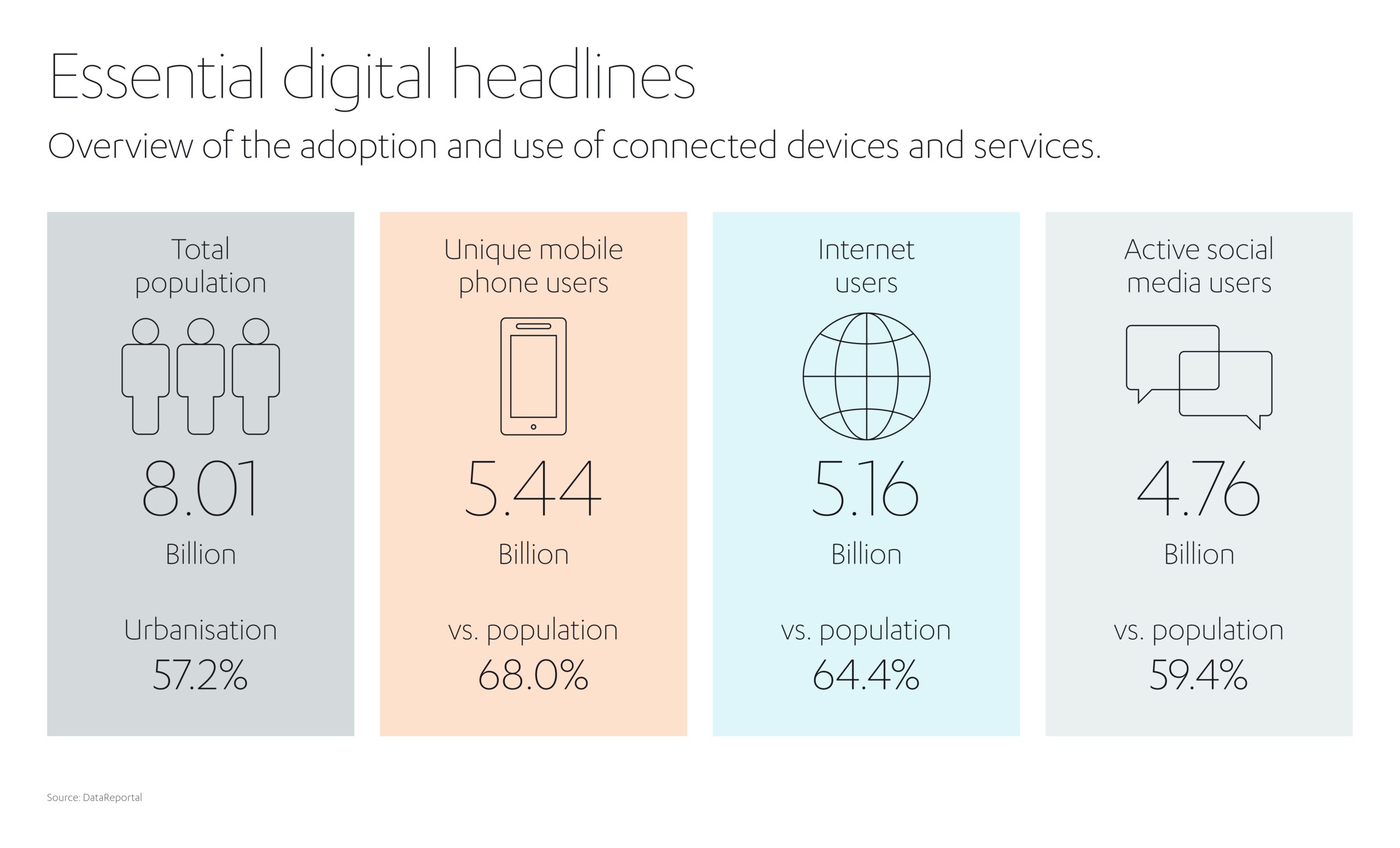
Despite the explosion in internet adoption over the past decade, we continue to live in a starkly divided digital world. As of 2024, an estimated 2.7 billion people – approaching a third of the global population – lack basic internet access. Even among the connected, fewer than half (47%) have access to the kind of high-speed broadband many of us take for granted.
Inevitably the digital divide is geographically dependent, with developing nations and emerging economies coming off worst. In Europe and the Americas ‘internet penetration’ (the proportion of a given population with access to the web) registers around 90% and 80% respectively. Elsewhere, it is a very different story. While the Arab states have achieved an internet penetration of 70%, across Asia as a whole the figure drops to 60%. In Africa, the number is hovering around 40%. In India, the most populous country on Earth, internet adoption lingers at 48.7%.[1] In Kenya, where the 50+ million population is expected to double by 2050, it is as low as 32.7% – fewer than one-in-three people.
People in remote areas invariably suffer the impacts of these ‘digital deserts’ more profoundly. Globally, rural dwellers are twice as likely to be deprived of internet access than those living in urban environments.[2] They may well live in the same digital world as we do, but without the necessary ‘last mile’ infrastructure to bring the internet to homes and offices, they endure a digital darkness.
Lacking connectivity means being deprived not just of internet access, but financial, medical, political and cultural access too – the very tools with which we build our lives, define our identities and shape the future of our societies. Such communities can find themselves locked into long-term poverty spirals. Digitally excluded, they lack the basic means of competing in the modern age and are severely hindered in their efforts to build a brighter future for themselves and their families.
Such practical considerations are central to expanding digital access worldwide and narrowing the dangerous divide that presently exists.
How can finance help to democratize digital access?
At the macro level, digitizing a national economy is vital for its entry into the global economic system. For countries to trade, and for businesses to compete, they must be able to share data and exchange finances in a speedy and reliable manner – none of which is possible without widespread digital connectivity. On a micro scale, digital access helps unlock the kind of individual innovation which, when multiplied across a society, can meaningfully impact GDP and help improve living standards.
How, though, can this be achieved? Not without significant expense. Laying broadband cables within geographically-remote or economically-challenged communities is costly and time-consuming; so too is establishing the network of data centers required for a thriving digital ecosystem. Securing last-mile connectivity is a stubborn challenge which requires bold imagination as well as deep pockets.
One report suggests that digitally connecting the billions of ordinary people currently lacking internet access will cost around US$ 28 billion by 2030.[3] The issue of ‘who pays’ is still up for debate. However, such a revolution will require more than just money. It also demands joined-up strategies to address infrastructure, legislation and, of course, digital literacy.
What’s the best strategy for improving digital connectivity?
Digital developments tend to ‘snowball’, so giving a nascent digital economy a financial kickstart can pay dividends for governments. Legislators in developing nations must drastically reduce licensing costs for ICT operators wishing to enter the market. Subsidies and tax-breaks can lure investors to a sector with traditionally high upfront costs, all while encouraging a healthy ecosystem of technical innovation. Plowing money into research and development, at university or private enterprise level, can upskill an enthusiastic workforce while also accelerating the evolution of necessary technologies. An open economy – one happy to embrace expertise and financial speculation from beyond national borders – can hasten the journey to a digitally-enabled society. Public-private partnerships can help split the risks involved in any state-wide ICT transformation.
Other initiatives require the targeted intervention of multilateral finance institutions. One such organization is the Islamic Development Bank (IsDB), which is funding digital development across the Muslim world. The IsDB has so far directed around US$ 1 billion of financial support to the ICT sector.[4] Recent initiatives include installing fiber-optic infrastructure in The Gambia and Sierra Leone, and investing in undersea cabling for Djibouti and Bangladesh to connect with international systems.
Tools like the UNDP Digital Inclusion Navigator can help policymakers gauge where shortfalls lie in the digital transition. The project marks a collaboration between private sector consultants and two major NGOs, the World Economic Forum and the United Nations Development Programme. It aims to shine a light in the digital darkness by collating the latest data relating to digital inclusion across the world. Coupled with case studies and expert insights, the Digital Inclusion Navigator will help shape budgetary and legislative priorities over the coming years.
The most effective policy strategies are regional in nature. The Broadband Commission for Sustainable Development, a public-private partnership fostering digital cooperation, is spearheading the Digital Infrastructure Moonshot for Africa project. Africa is home to around one-in-five people yet accounts for just 13% of internet users, with these users heavily concentrated in relatively developed countries like South Africa, Egypt, and Morocco.[5] The Moonshot project aims to bring an additional one billion Africans online by the end of the decade, although it carries a price-tag in the US$ 100 billion range.
A Moonshot working group is in charge of securing funds from public and private purses. Further, it has identified a series of policy strategies which will together help end the digital exclusion experienced by many Africans daily:
- Creating competing broadband markets to encourage lower pricing
- Cutting taxes for telecoms providers
- De-risking private investments by matching commitments with public funds
- Encouraging governments to use digital services themselves to create initial demand
- Prioritizing equal opportunities over profit by providing network coverage to remote areas
- Developing local skills to help maintain networks now and into the future
Some initiatives are even more geographically specific. The World Bank Group, for instance, has approved US$ 92 million financing for its Digital Acceleration for an Inclusive Economy (DARE) scheme in Kazakhstan, aiming to bring an additional one million people in rural areas online for the first time. Its grant-matching investments will promote the rollout of backhaul networks (which connect local areas to core networks via infrastructure such as transmission towers) and help plug last-mile connectivity gaps.
Knowledge-sharing is vital to gain momentum – likewise, the promotion of best-practice strategies. Cross-border forums such as the Lighthouse Countries Network will have a major part to play in the ongoing digital transition. This particular network unites legislators from the UAE, Bahrain, Bangladesh, Rwanda, Togo and Honduras to inspire a new wave of public-private collaborations and help each country maximize the economic yield of true digital connectivity.
Turning these intentions into actionable schemes will, naturally, require a helping hand from technology.
Why could wireless connectivity be the answer?
Scientists, innovators and investors in next-generation technology may hold the key to solving the world’s last-mile connectivity conundrum.
In a conventional cabled network it is estimated that the final 100 meters of connectivity accounts for 90% of the overall costs.[6] To counter this, concepts such as Fixed Wireless Access (FWA) can be installed at relatively low cost and without a high degree of specialist knowledge. These systems transmit high-speed data from masts using radio waves instead of cables, and promise to connect communities where challenging terrain or financial hardship prevent the deployment of physical infrastructure.
More than a hundred operators globally are providing FWA technology to millions of customers across emerging markets. India is expected to become the largest customer, with between 45 million and 50 million individual connections by the end of the decade.[7]
Satellite technology can also help bridge the digital divide threatening to embed inequalities in our global system. Satellites, from their lofty orbits, theoretically bring the possibility of digital connectivity to an estimated 95% of people worldwide.
Ambitions, fittingly, are sky high. In 2023 the GSMA, a non-profit trade association for mobile network operators, joined with the European Space Agency on an initiative to ensure the compatibility of new satellite and terrestrial network technologies[8]. The scheme’s Foundry Innovation Accelerator will steer promising ideas from early commercial trials to scalable regional and global solutions – all primed for assimilation within 5G and future 6G networks.
Artificial intelligence (AI) will also come to play a prominent role in bridging the digital divide. With a new generation of algorithmic instruments AI can help quantify the many variables pivotal for expanding digital coverage. Which communities are currently deprived of high-speed internet connectivity? Which solution from a suite of candidate technologies will allow the largest number of people within a given area to join the global digital family? AI-driven scanning tools will soon be able to deliver definitive answers to those vital questions.
Sometimes achieving last-mile connectivity is simply an issue of ensuring a reliable supply of electricity. Accordingly, innovations in the field of wireless power transfer (WPT) could help turn the tables. WPT transmits electrical energy from power source to device using electromagnetic fields. This means no traditional power infrastructure or cabling, effectively bringing digital connectivity within reach of almost everyone.
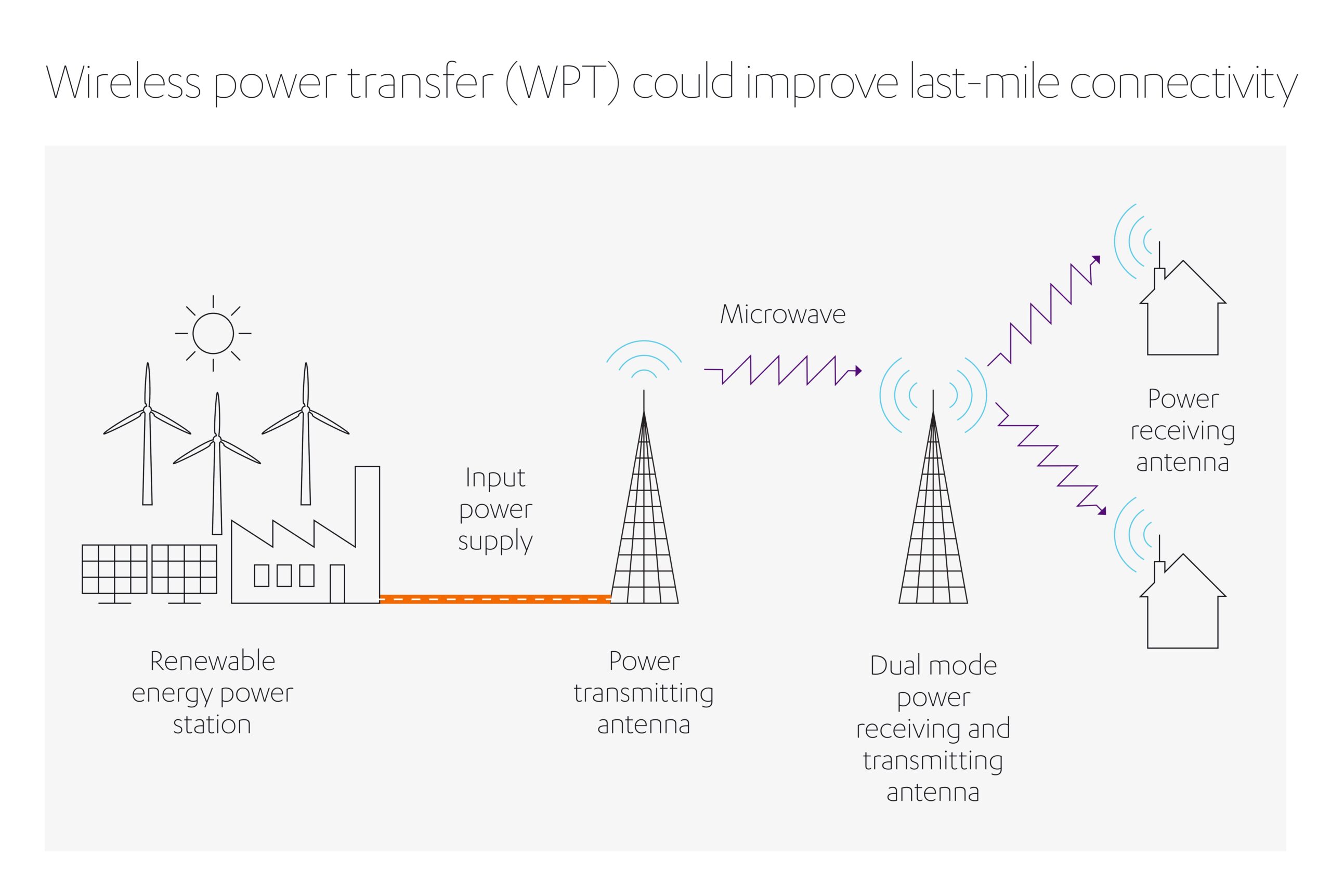
Even if it is not the primary means of community connection, wireless technology can serve as a dependable back-up for physical equipment in the event of service interruption. Wireless alternatives will prove priceless in case of power outages, mechanical breakdowns or loss of infrastructure due to the kind of climate-related disasters which are more likely to occur in a rapidly warming world.[9]
WPT remains limited to charging small devices rather than powering entire communities at present due to the high proportion of energy sacrificed during long-distance transfers, but research is ongoing to improve efficiency.
As we have seen, wireless and space-based technologies are useful tools in connecting remote areas and bridging the digital divide. These assets can be supplemented, where necessary, by last-mile boosters such as fiber-optic cabling for low latency and a more sophisticated grid of transmission towers. Altogether, this translates into high-speed internet access for underserved regions and more life opportunities for those living under its umbrella.
State-of-the-art solutions for a fairer future
Investors should not need much convincing about the long-term benefits of highly-evolved digital communication technologies. Advanced last-mile solutions will reap even greater economic rewards as ‘cities of the future’ adopt smart principles.
Tomorrow’s smart cities (such as Saudi Arabia’s in-development Neom) will boast a fusion of state-of-the-art technologies. However, these will only be able to interoperate if they can exchange data rapidly and reliably: Vehicle movements will need coordinating to aid traffic flow; power grids will need balancing from a plethora of renewable sources; water usage and waste management will be governed by a network of smart meters. All these concepts can only become reality within a digital domain.
Only a digitally-enabled society can exploit the transformational benefits of new technology. Digital communication, for example, is the lifeblood of the partnership between Spanish technology firm Datakorum and Almar Water Solutions, part of Abdul Latif Jameel Environmental Services. Datakorum technology translates water levels into smart data, increasing efficiency and preventing undue wastage of this vital natural resource. Real-world implications are already evident. In Abu Dhabi, Datakorum is providing 5G gateways to connect end-users with distribution channels, steering the digital transformation of the emirates’ water structure under a five-year contract.
In the Middle East, Africa and beyond, ending digital exclusion will enhance life opportunities among the world’s most vulnerable communities and allow greater alignment on existential threats such as climate change.
Maybe digital access used to be regarded as a privilege – a convenient addition to everyday life which, while not instrumental to survival, saved us time and helped streamline our chores. That is no longer the case. Since its emergence, digital access has evolved from luxury to mandatory. Nowadays, it is the engine which drives many of our lives.
Still not convinced? Try powering down your cellphone in a 24-hour experiment. Of course, you won’t be able to access live maps to navigate your way to that meeting. Or make that urgent payment to a supplier. Or book that hospital appointment, shift those shares from one company to another, or use online resources to help your children with their homework. Hardly a formula for digging oneself out of the poverty trap, or building a better future for one’s dependents.
The digital divide threatens to exacerbate the widening gulf between the world’s haves and have-nots. Digital inclusion, on the contrary, could help liberate billions.
Fast facts about bridging the digital divide
Q: How many people worldwide still lack basic internet access?
A: As of 2024, an estimated 2.7 billion people – around one third of the global population – lack basic internet access, with fewer than half of those connected having access to high-speed broadband.
Q: Which regions have the lowest internet penetration rates?
A: Africa has the lowest internet penetration at around 40%, followed by Asia at 60%. In contrast, Europe achieves around 90% and the Americas around 80%. India, despite being the world’s most populous country, has just 48.7% internet adoption.
Q: How much will it cost to connect the billions currently without internet access?
A: One report estimates that digitally connecting the billions of people currently lacking internet access will cost around US$28 billion by 2030.
Q: Why is Fixed Wireless Access (FWA) considered a game-changer for connectivity?
A: In conventional cabled networks, the final 100 meters of connectivity accounts for 90% of overall costs. FWA can be installed at relatively low cost without specialist knowledge, transmitting high-speed data from masts using radio waves instead of cables.
Q: How many people could satellite technology potentially connect?
A: Satellites theoretically bring the possibility of digital connectivity to an estimated 95% of people worldwide, making them crucial for reaching remote areas where traditional infrastructure is impractical.
[1] https://datareportal.com/reports/digital-2023-global-overview-report
[2] https://www.weforum.org/stories/2022/05/how-to-counter-the-global-digital-divide
[3] https://www.weforum.org/stories/2022/11/bridging-the-digital-divide-to-accelerate-development/
[4] https://www.weforum.org/stories/2022/11/bridging-the-digital-divide-to-accelerate-development/
[5] https://www.broadbandcommission.org/insight/broadband-for-all-a-digital-infrastructure-moonshot-for-africa/#
[6] https://www.gsma.com/solutions-and-impact/technologies/networks/5g/fixed-wireless-access-economic-potential-and-best-practices/
[7] https://www.gsmaintelligence.com/research/5g-fwa-on-the-rise-state-of-the-market-new-developments-and-outlook-through-to-2030
[8] https://www.gsma.com/newsroom/press-release/gsma-and-european-space-agency-launch-new-communications-innovation-partnership/
[9] https://www.worldwildlife.org/stories/is-climate-change-increasing-the-risk-of-disasters


 Added to press kit