As the rest of the world turns electric and embraces sustainable energy, much of Africa is finding it harder to navigate the move away from fossil fuels. What is hindering the energy transition in Africa and what can be done to boost momentum?
Electricity is the great enabler of modern life. It powers the hospitals that keep people alive, the schools that educate the next generation, and the factories, farms and digital networks that underpin economic growth. As AI, electric vehicles and industrial automation reshape economies around the world, demand for reliable power is rising faster than ever before.
For much of the world, this is a story of remarkable progress. Renewable technologies have become cheaper and more efficient, grids have modernized, and hundreds of millions of people have been connected to reliable electricity supplies over the past two decades[1]. In many advanced and fast-growing economies, the shift away from fossil fuels is well underway, even if the pace and shape of that transition varies from country to country.
This progress has not been shared equally, however. In several regions of the Global South, electrification is struggling to keep pace with population growth. The result is a widening gap between countries that are powering ahead and those left struggling with unreliable, insufficient or entirely absent electricity supplies.
Nowhere is this gap more pronounced than in Africa[2]. Home to the world’s fastest-growing population and some of its richest renewable energy resources, the continent should be well placed to lead a clean energy transformation. Instead, it lags behind other regions in electrification rates, exposing millions of people and businesses to the daily consequences of energy poverty.
One of the major challenges holding back Africa’s transition to cleaner, greener electricity is a crippling mixture of outdated infrastructure, inconsistent policies and insufficient investment. This means a lack of electricity to heat homes, cook food, run hospitals and support the industries which provide employment.
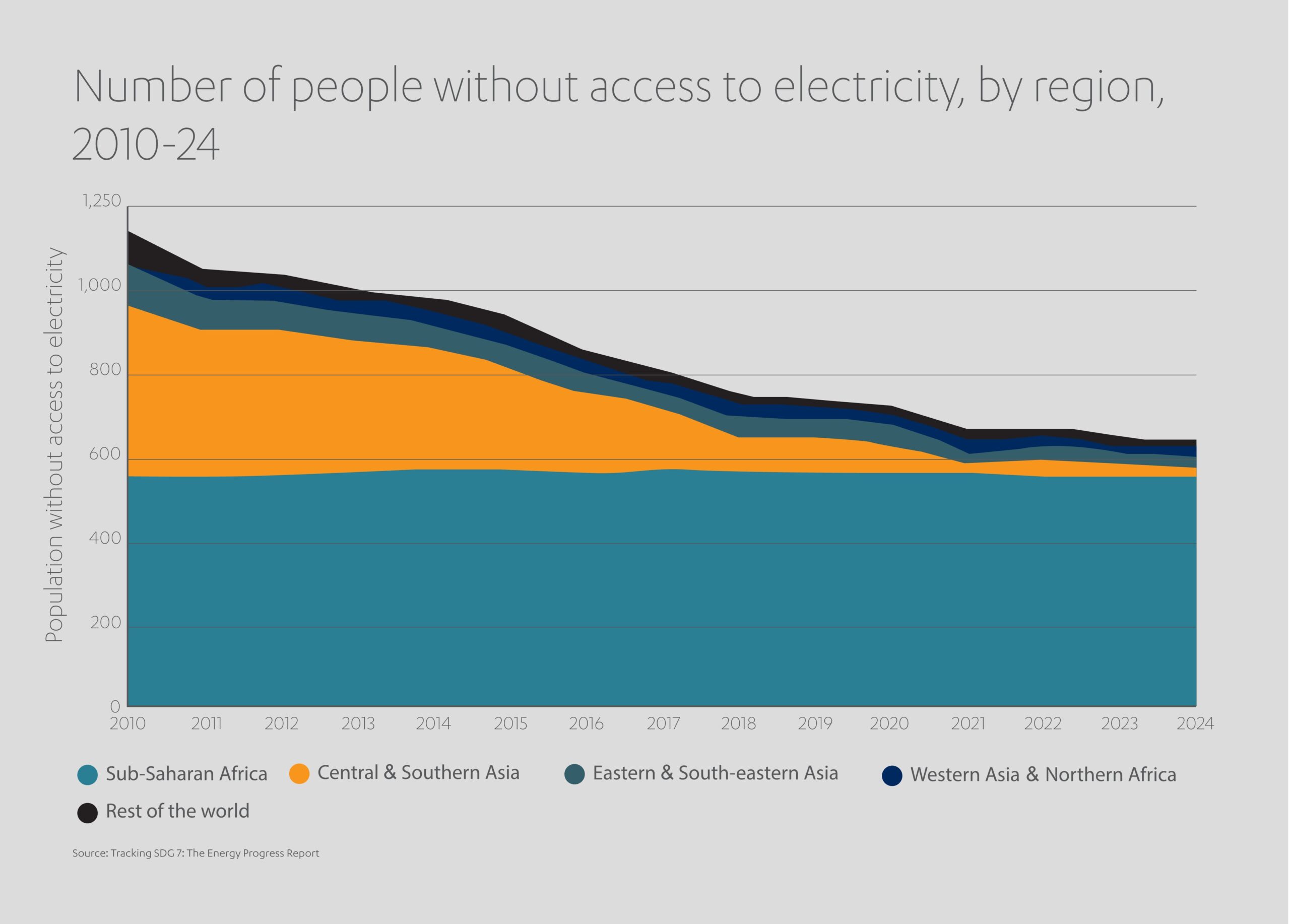
For as many as 560 million people in Sub-Saharan Africa, this absence of electricity is a daily, life-limiting reality.[3] In fact, Sub-Saharan Africa has the greatest concentration of the world’s energy-poor population. In 2024, 18 of the top 20 countries with the highest electricity access deficits were in Sub-Saharan Africa.[4] Certain areas, such as central Africa and the Sahel regions, report electrification rates below 5%, affecting jobs, health and education.[5]
In some African countries the problem is endemic. Fewer than 20% of people in Chad, Burkina Faso, the Central African Republic and the Democratic Republic of the Congo, for example, have dependable access to electricity supplies.[6]
“In some African countries, fewer than 20% of people have access to dependable electricity supplies”
How has this situation been allowed to arise, and what can be done to resolve the issue?
Which African countries have the most outdated power infrastructure?
With little spare cash for investment in new power plants, or for spending on equipment maintenance, Africa’s energy grid is both outdated and unreliable, as these examples demonstrate:[7]
- Niger: With little independent generation capacity of its own, Niger is reliant on neighboring Nigeria’s network for its energy supplies. Power outages are blamed for 5.5% annual sales losses for business and industry.
- Benin: Grid instabilities, partly caused by reported transformer theft and vandalism, have resulted in a 9.4% hit to GDP.
- Democratic Republic of Congo: Ageing infrastructure means frequent blackouts. Plastic waste clogging up the Ruzizi hydroelectric plant, one of the main energy generators, causes periodic outages.
- Ghana: Households and businesses have been hit by US$ 680 million annual losses due to gas supply limitations. Peak time demand regularly exceeds supply.
- Burundi: Power cuts are now a daily occurrence in Burundi, where fuel shortages are curtailing alternative energy sources and restricting economic growth for families and businesses.
- Zimbabwe & Zambia: These neighboring countries typically experience 10 to 12 hours of ‘load shedding’ outages daily, due to repeated grid failures and record low water levels at the Kariba Dam, a major hydroelectric plant.
- Ivory Coast: While the Ivory Coast has a relatively modern energy grid, maintenance is often neglected, with stability jeopardized by overburdened facilities. As a consequence, employers in the mining and cocoa sectors have weathered multi-million dollar losses.
- South Africa: State power provider Eskom is hampered by end-of-life infrastructure and heavy debt, resulting in mass blackouts and economic losses of some US$ 30 billion in 2024 alone.
- Nigeria: Chronic under-investment in generation capacity led to a series of energy blackouts throughout 2025. Experts believe that overhauling Nigeria’s power network could lift GDP by 5% – in sharp contrast with the estimated US$ 4 billion cost of repeated grid failures.
Rising population numbers are adding extra pressure to already struggling energy systems. Although an extra 35 million people were hooked up to the grid in 2023, the number of people living without electricity fell by only 5 million during that period, from 570 million to 565 million.[8]
How much do African nations depend on fossil fuels?
An initial appraisal of the continent’s energy profile shows that three-quarters of Africa’s power emanating from fossil fuel sources such as coal, oil and natural gas.[9]
The ramifications of a society wedded to high-carbon energy are life-defining for those involved. Power cuts are common, with outages on 140 days per year in Burundi and 60 days annually in Tanzania[10], for example.
“Businesses often depend on highly polluting diesel generators to provide power”
To compensate for the unreliable supply, businesses often depend on highly polluting diesel generators to provide power, which are not just environmentally hazardous but also inefficient and costly. Public services are often interrupted, damaging international confidence and creating a sterile environment for potential investment. This means limited opportunities for young people, poor provision of essential utilities, and frequent isolation from the kind of modern commercial systems which underpin sustainable growth.
As World Bank analysis has shown, “High income, low energy countries do not exist”.[11] In other words, nations which do not electrify cannot generate enough wealth to invest in economic development.
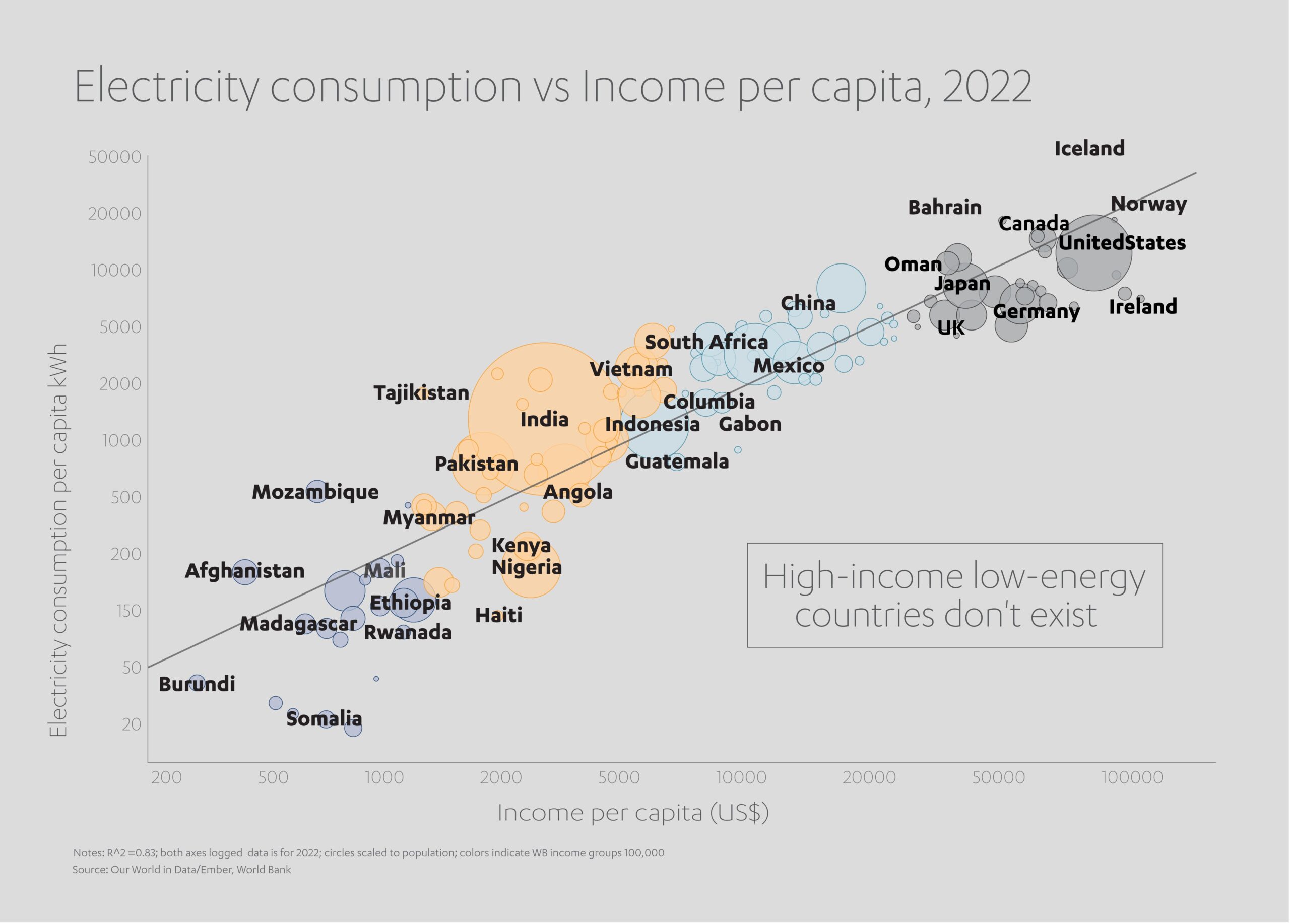
The paucity of green energy options across Africa is ironic given the terrain’s natural abundance in the sources of sustainable electricity.
How much solar power potential does Africa have?
Given different geopolitical imperatives, a pathway exists for Africa to become a global leader in renewable electricity.
“Africa has a unique abundance of solar energy – more than anywhere else on Earth”
Africa has a unique abundance of solar energy, boasting an average long-term potential solar output of 4.51 kWh/day – more than anywhere else on Earth, including South America (4.48 kWh/day), Asia (4.33 kWh/day) and Oceania (4.14 kWh/day).[12]
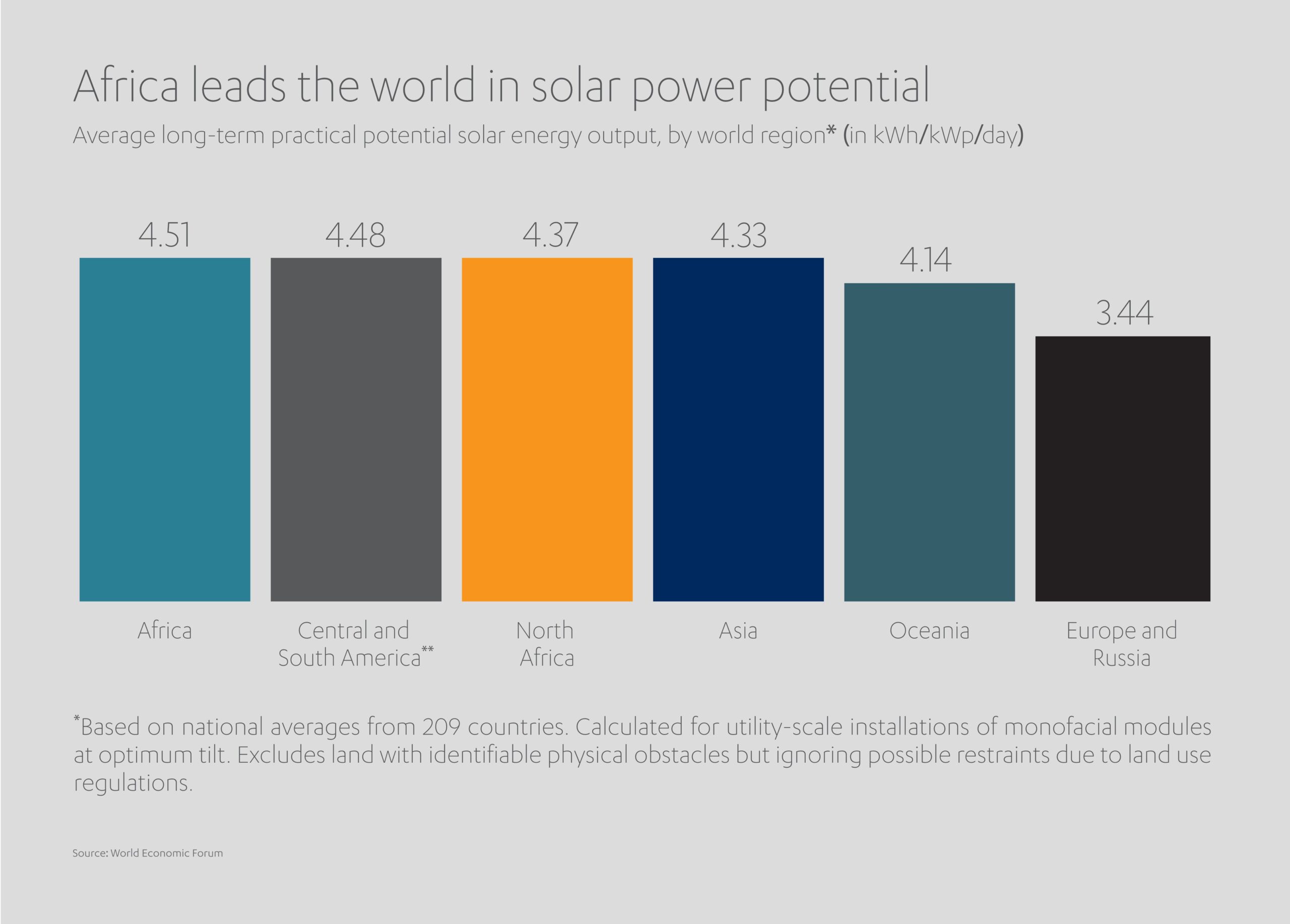
Away from solar, Africa is also rich in potential wind, geothermal and hydropower resources, but these likewise remain underexploited due to a combination of:
- competing and often contradictory national policies
- difficulty integrating energy into outdated grids
- high upfront capital costs
- uncertain returns on investment
Acknowledging these challenges, what can be done to hasten Africa’s electrification journey?
How can Africa encourage faster and more widespread electrification?
Local lawmakers and global investors need to boldly reimagine the future of Africa’s energy framework. To ensure long-term viability, the project to electrify Africa must be sustainable, fair and profitable. This means focusing on issues such as:
- Decentralization: In regions where extending national grids is financially or geographically impractical, off-grid solar technologies and localized mini-grids provide a useful alternative. Rwanda, for instance, adopted a national electrification strategy that combined traditional grid expansion with off-grid solutions such as domestic PV systems. Electricity access rose dramatically, from very low levels in the late 2000s to over 80% of households by 2025.[13]
- Public/private/NGO engagement: Greater collaboration between governments, businesses and international development organizations is essential for financing large-scale energy projects. Combining public oversight with private investment can help countries speedily deploy sustainable electricity infrastructure, particularly in underserved areas.
- Legislation: Governments could establish complementary regulatory environments that encourage investment in the energy sector. Policies that reduce barriers for investors, simplify licensing procedures, or provide long-term stability, can help attract domestic and foreign capital for electrification initiatives.
- State support: Subsidies for solar home systems, reduced grid connection costs, and financial assistance for low-income households, could significantly expand universal access to electricity.
- Infrastructure: Many African countries need to modernize outdated transmission and distribution systems to improve reliability. Smart-grid technologies can help reduce transmission losses, while smoothing the integration of renewable sources such as solar and wind into national grids.
- Diversification: Economies that depend heavily on fossil or imported fuels remain vulnerable to price shocks and geopolitical instability. Introducing hydroelectricity, wind, and solar power would strengthen long-term energy security.
- Storage: Solar and wind generation can naturally fluctuate, so renewable energy systems must be supported by robust storage technologies such as battery energy storage systems (BESS). South Africa, for example, is already exploring large-scale BESS projects to support its renewable energy transition.
- Energy saving: Improving energy efficiency across households, transport systems and industry can reduce pressure on electricity demand. Governments could provide incentives for energy-saving appliances, building retrofits and more efficient industrial practices.
- Subsidies: Well-designed subsidies can protect low-income communities while encouraging more sustainable energy consumption. Supporting alternatives such as LPG or electric hobs for cooking can also reduce dependence on traditional biomass fuels.
- Talent pool: African countries could invest more heavily in research and innovation related to emerging energies. Financial support for universities and innovation hubs could encourage the development of clean alternatives, while ensuring a pipeline of specialists to steer the technology transition.
- Cross-border collaboration: Stronger regional cooperation could help improve energy security. Organizations including the African Union and regional economic blocs can support the international energy trade, while facilitating new infrastructure projects and coordinating responses to geopolitical disruption.
South Africa plans continent’s largest BESS facilities
In 2025, South Africa reached financial close on its Red Sands BESS project in the Northern Cape – set to be the largest standalone BESS system in Africa.
Developed by Globeleq, the US$ 300 million project has a capacity of 153 MW / 612 MWh and aims to connect to the grid via the Garona substation.
Rather than powering a particular community, Red Sands BESS will serve as a massive grid stabilizer, allowing Eskom and the National Transmission Company South Africa (NTCSA) to absorb substantially more solar and wind power into the national grid without overloading it.
Fortunately, several of these strategies are converging in one major endeavor to supercharge the electrification of Africa – the Mission 300 initiative.
What is ‘Mission 300’ and how many millions of lives will it impact?
 The World Bank Group, the African Development Bank Group and the Sustainable Energy for All initiative are collaborating on Mission 300 , which aims to provide electricity for 300 million extra people in Africa by the end of the decade.
The project aims to achieve this through a combination of infrastructure, policy and investment. Core efforts focus on expanding connections for underserved areas and rolling out standalone solar solutions such as mini-grids to more rural locations.
African governments are taking the lead on critical reforms across five key areas, in line with agreed National Energy Compacts:
- Investing in affordable power generation
- Ensuring technological harmonization to nurture cross-border commerce
- Using distributed renewable energy solutions to power last-mile electrification
- Sourcing private capital with reliable regulatory environments
- Bolstering utilities with transparent financial management and oversight
More than 85 Mission 300 projects are already underway, across 40 countries.[14]
- In Guinea, the UN is supporting the development of the Kogbédou-Frankonédou hydroelectric dam to provide clean and continuous electricity.
- In Burundi, the UN is working on renewable energy projects designed to attract new investors, while expanding the electricity distribution network to neglected areas.
- In Djibouti, efforts are under way to encourage solar PV use in homes and workplaces to improve energy efficiency.
- Studies are also taking place to unlock the potential of offshore wind in Mauritius, while in Madagascar a business incubator program is bankrolling 15 sustainable energy projects from startups and SMEs.
“Since the Mission 300 project launch some 50 million people have already been connected to the grid”
Gambia goes electric
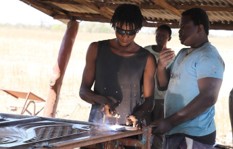
In Gambia, young welder Muhammed Kandeh often struggled to turn a profit running his tools on gasoil-fueled generators.
Since his off-road village of Jah Kunda was connected to the national grid via the Gambia Electricity Restoration and Modernization Project (GERMP), his energy costs have fallen to less than US$ 2.50 weekly – which means more money for food on the table, healthcare and education.
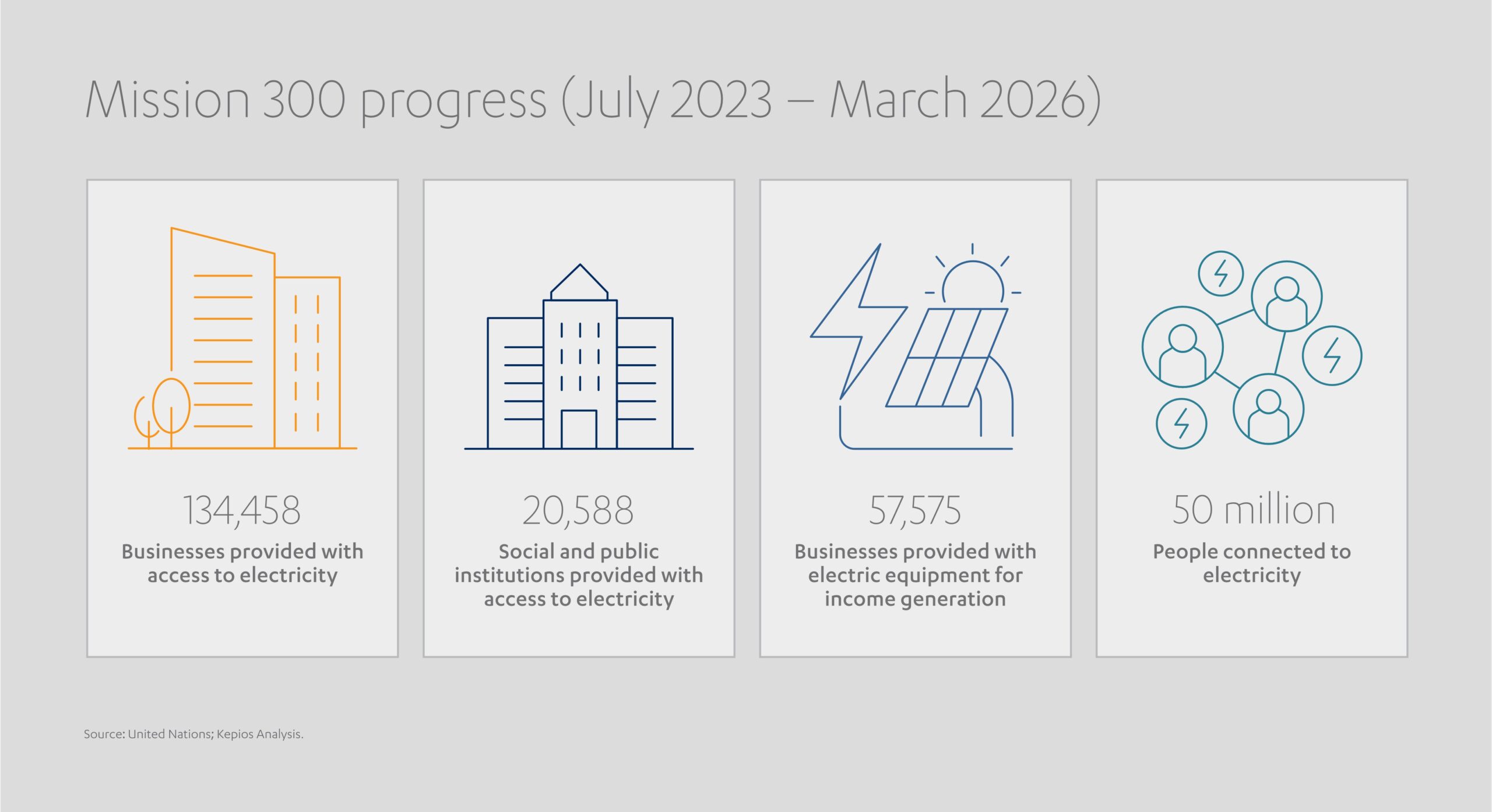
Since the Mission 300 launch in July 2023, some 50 million people have been connected to the grid, along with almost 135,000 businesses and more than 20,000 public institutions.[15] As the project proceeds, organizers will seek to galvanize an eager public sector to provide competitive procurement, funding and de-risking tools.
Can African energy transition become a template for the world?
Africa is on the frontline of the fight against global warming – a position that is hard to morally justify. Industry across the continent accounts for less than 4% of the world’s annual carbon emissions, yet the African population endures disproportionate repercussions.[16]
Droughts and heatwaves are increasing in frequency. More than six-in-ten Africans live on land classified as arid, semi-arid, dry sub-humid or hyper-arid. Up to 65% of productive land in Africa is deemed ‘degraded’, with 45% of the remaining 55% at ‘high risk’ from desertification.[17]
This must be a particularly bitter pill to swallow considering Africa is, on paper, rich in the raw ingredients of clean electricity, but lacking in the infrastructure and investment to capitalize on their potential.
“With every passing year Africa is becoming more plugged into modern energy networks”
With every passing year Africa is becoming more plugged into modern energy networks. But the rate of progress is too slow and the scope presently too small in ambition.
I strongly believe that if legislators can overcome the hurdles traditionally associated with slow electrical adoption – by lowering upfront costs, standardizing grid integration, coordinating national policies and safeguarding private investment – then Africa can begin to reduce its dependence on fossil fuels. Instead, it can promote a cleaner energy future both for itself and for the world at large.
Electrifying Africa: Five fast facts
Q: How many African live without access to modern electrical supplies?
A: As many as 560 million people in Sub-Saharan Africa lack electricity to heat homes, cook food, run hospitals and support their livelihoods.
Q: What is the electrification rate for the most underserved African countries?
A: In some parts of central Africa and the Sahel region, electrification rates are below 5%, affecting jobs, health and education.
Q: How does Africa compare to other regions in terms of electricity access?
A: In 2024, 18 of the top 20 countries with the highest electricity access deficits were in Sub-Saharan Africa.
Q: Does Africa receive enough sunshine to power its society affordably and sustainably?
A: Africa has a unique abundance of solar energy, boasting an average long-term potential solar output of 4.51 kWh/day, more than anywhere else on Earth.
Q: What impact is the Mission 300 initiative having on electrification in Africa?
A: Since the Mission 300 electrification project launched, some 50 million people have already been connected to the grid, along with almost 135,000 businesses and more than 20,000 public institutions.
[1] https://www.iea.org/reports/sdg7-data-and-projections/access-to-electricity
[2] https://www.ecofinagency.com/news/2606-47434-electricity-access-gap-grows-in-sub-saharan-africa-report-calls-for-action
[3] https://www.esmap.org/news/tracking-sdg7-655-million-people-still-without-electricity-underscore-urgent-need-deliver
[4] https://trackingsdg7.esmap.org/sites/default/files/download-documents/ExecutiveSummary.pdf
[5] https://www.weforum.org/stories/2025/05/africa-energy-trilemma-security-equity-sustainability/
[6] https://unsdg.un.org/latest/stories/decoding-africa%E2%80%99s-energy-journey-three-key-numbers
[7] https://www.africanexponent.com/top-10-african-countries-with-the-worst-power-outages-in-2024-2025/
[8] https://www.worldbank.org/en/topic/energy/publication/tracking-sdg-7-the-energy-progress-report-2025
[9] https://www.weforum.org/stories/2025/05/africa-energy-trilemma-security-equity-sustainability/
[10] https://www.weforum.org/stories/2025/05/africa-energy-trilemma-security-equity-sustainability/
[11] https://blogs.worldbank.org/en/africacan/africa-s-big-push-on-electrification–a-cautionary-afe-tale
[12] https://www.weforum.org/stories/2025/05/africa-energy-trilemma-security-equity-sustainability/
[13] https://www.reg.rw/media-center/news-details/news/electricity-access-reaches-854-up-from-6453-five-years-ago-reg/
[14] https://www.worldbank.org/ext/en/energizingafrica/progress-portal
[15] https://www.worldbank.org/en/news/press-release/2026/06/16/under-mission-300-a-new-way-of-doing-business-connects-over-50-million-people-to-electricity-across-africa
[16] https://www.weforum.org/stories/2025/05/africa-energy-trilemma-security-equity-sustainability/


 Added to press kit