Can water become our most powerful tool for preventing wildfires?



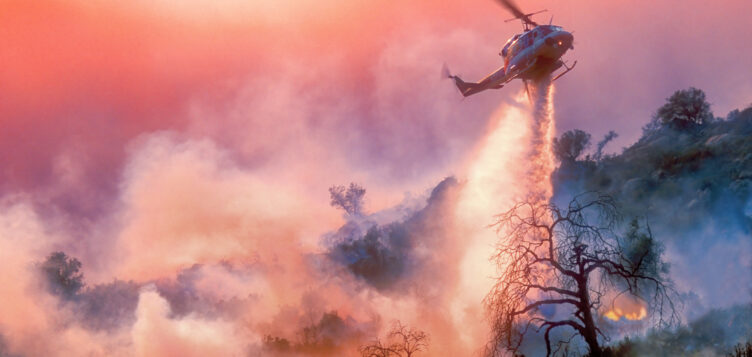
Every summer, wildfires consume more land, destroy more homes and place greater pressure on communities, ecosystems and public finances. Rising temperatures, prolonged droughts and decades of poor land management have made large parts of the world increasingly vulnerable to fast-moving fires.
From southern Europe and North America to Australia and Canada, wildfire seasons are becoming longer, more destructive and more expensive.
Governments continue to invest heavily in emergency response, but far less attention is given to preventing fires before they begin.

Chief Executive Officer
Almar Water Solutions
For Carlos Cosín, Chief Executive Officer, ALMAR Water Solutions (part of Jameel Environmental Services), this is where the greatest opportunity now lies. Throughout his career developing water infrastructure in water-stressed regions around the world, Carlos has seen how effective water management can strengthen resilience long before a crisis emerges. In the case of wildfires, he believes water should be viewed as a cornerstone of prevention, helping to reduce the likelihood, intensity and spread of fires through better landscape management, healthier ecosystems and stronger local preparedness.
ALMAR Water Solutions, part of Jameel Environmental Services, is on the frontline of this evolving environment. ALMAR was established in 2016 with a mission to improve the world’s water security, particularly for the most vulnerable global communities. A decade later, it manages a portfolio of desalination, wastewater treatment, reuse and recycling programs. With a growing number of projects across Europe, the Middle East, Latin America, Africa, and Asia-Pacific., ALMAR designs, structures financing and operates systems across the full water cycle – from desalination and purification to wastewater treatment, reuse, distribution networks, and long-term operation and maintenance.
In this Q&A, Carlos explains why wildfire resilience begins long before the first spark, how water can become one of the most effective tools for prevention, and why future fire strategies need to give as much attention to landscapes and water systems as they do to emergency response.
Q. Why are wildfires becoming more destructive around the world?
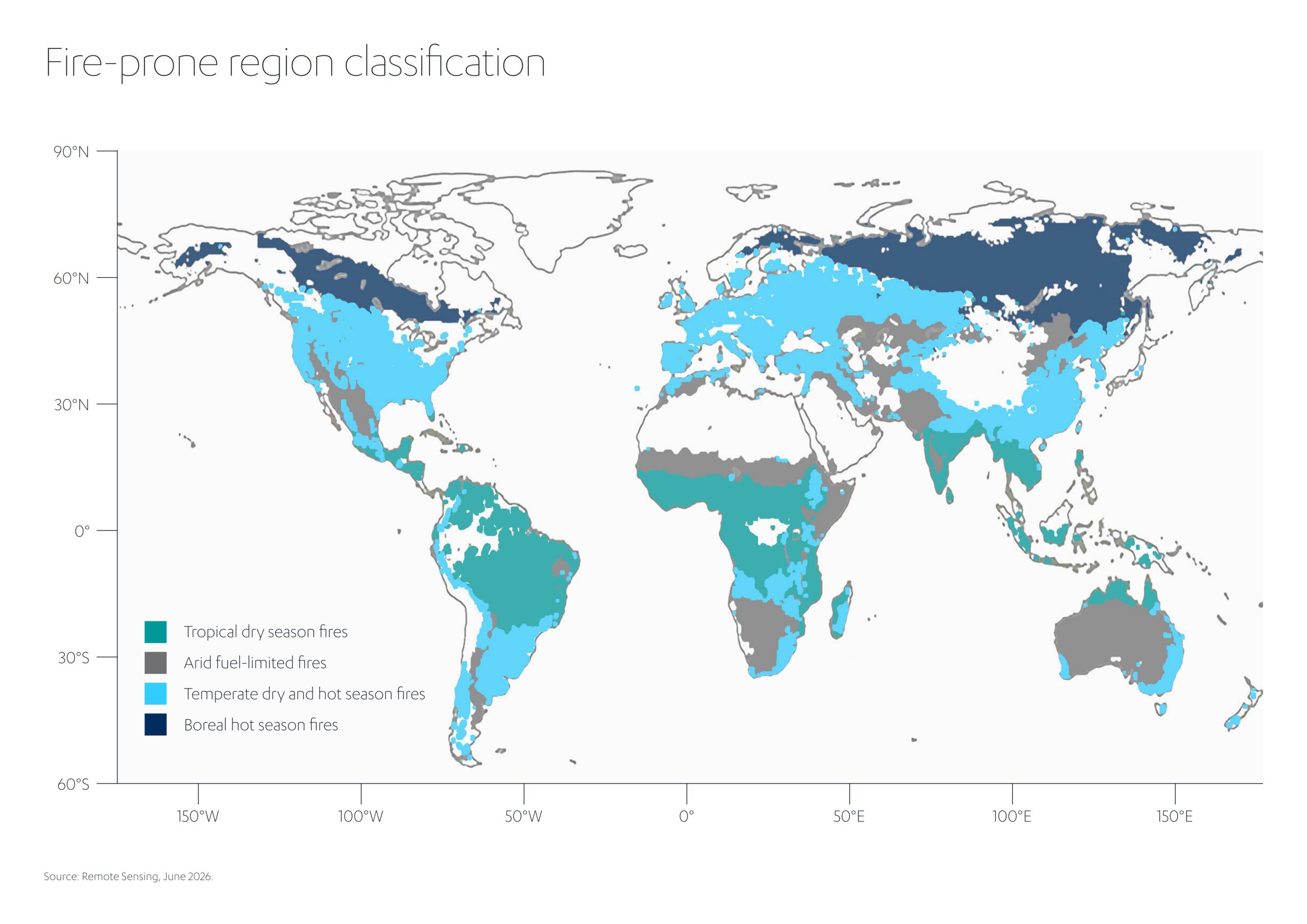
Every year, the flames return with growing ferocity. Rising temperatures, frequent droughts and poor land management have turned large parts of the planet into tinderboxes. From the pine forests of southern Europe to the chaparral of California, the bushlands of Australia and Canada’s boreal zones, wildfires are multiplying in intensity, speed, frequency and cost.
Rising temperatures, frequent droughts and poor land management have turned large parts of the planet into tinderboxes.
The 2025 wildfire season is already a stark warning:
- In Spain, thousands were evacuated and more than 375,000 hectares destroyed by fire
- On Rhodes in Greece, more than 19,000 people were forced to flee their homes.
- In California, decades of population growth in wildland-urban interfaces have created areas where fire risk is constant and firefighting costs exceed several billion dollars annually.
- Further north in Canada, millions of acres of forest, including carbon-rich peatlands, are incinerated in wildfires, releasing unprecedented greenhouse gas emissions.
The pattern is global and the causes are interlinked: hotter summers, longer droughts, weakened ecosystems and, at the core, the absence or mismanagement of water.
Q. Why do you believe prevention should become the primary strategy?
Around the world, pioneering initiatives are proving that fire risk can be reduced if we plan ahead and place water at the heart of prevention.
In Spain, the Guardian system in Valencia deploys towers that spray recycled water to create ‘wet corridors’ that slow or stop advancing fires before they reach towns. While in Galicia, strategically located rural reservoirs, together with traditional grazing by wild horses and goats, help remove combustible undergrowth naturally.
California’s Fire Safe Councils bring together communities, landowners and authorities to reduce fuel loads, create defensible space and secure water access points before fire season begins.
Australia, meanwhile, is demonstrating the value of indigenous fire management through controlled burns that reduce fuel build-up while maintaining ecosystem balance. Similarly, in Indonesia, the Fire Free Alliance is supporting villages with water storage and irrigation alternatives that make fire-free farming viable.
These examples demonstrate that prevention is already possible. The challenge is expanding successful local initiatives into coordinated long-term policy.
Key facts: Water & wildfires
- 375,000+ hectares burned in Spain during the 2025 wildfire season.
- 19,000+ people were evacuated during the Rhodes wildfires.
- 3× more timber is produced by Germany than Spain despite Germany having around half the forest area.
- Dry vegetation ignites faster, burns hotter and spreads more quickly, making landscape moisture a critical factor in wildfire prevention.
- Strategically placed water reservoirs can enable firefighting teams to reach a water source within five minutes, according to a 2024 optimization study.
- Wildfires can contaminate drinking water supplies for months or even years by increasing sediment, ash and pollutant levels in rivers and reservoirs.
- Recycled water is already being used to create “green firebreaks” that slow the spread of wildfires without competing with potable water supplies.
Q. What role does forest management play in reducing wildfire risk?
One of the greatest overlooked challenges is that large areas of forest remain unmanaged. In Spain, for example, only 11% of forested land has a forest management plan. This neglect has helped turn forests into ticking time bombs.
Paradoxically, the denser forests become, the more vulnerable they are. Spain’s forests are now denser than at any point in the last 100,000 years. Without proactive forest management, we are stacking fuel for the next catastrophe.
Countries such as Germany and Sweden demonstrate another path. Germany, with around half the forest area of Spain, produces three times more wood through active, sustainable forestry. Sweden, too, has built a thriving bioeconomy around sustainable timber production, while forest-related employment in Spain has fallen by 47% over the past decade, highlighting both the environmental and economic costs of inaction.
Q. Why is water such a critical part of fire resilience?
Water is typically seen as the tool for fighting fires once they have begun. But I believe its greatest potential comes before the fires start.
Water resilience begins by keeping vegetation and soils hydrated, ensuring rapid access for firefighting teams and designing landscapes that incorporate natural and artificial firebreaks sustained by water.
Water resilience begins by keeping vegetation and soils hydrated, ensuring rapid access for firefighting teams.
Dry vegetation ignites faster, burns hotter and spreads further. Moisture-rich landscapes buy valuable time for containment. Maintaining adequate moisture in soils and vegetation can dramatically reduce the speed and intensity of a wildfire, even during periods of severe drought.
California has shown how recycled water can maintain green buffer zones through record heatwaves, creating living barriers that slow fire spread without competing with drinking water supplies. In Spain and Portugal, strategically placed irrigation systems and water-retaining firebreaks force fires to lose momentum while acting as both physical and hydrological barriers.
Q. How can water infrastructure strengthen emergency response?
Access to water is equally important. Rural reservoirs, underground storage tanks and heli-hydrants positioned along known fire corridors can reduce response times from hours to minutes.
When this infrastructure is integrated with wetlands, rivers and riparian forests, it creates multiple layers of protection. Hydrated landscapes resist ignition more effectively while providing safer environments for communities and wildlife.
By embedding water management into land-use planning and emergency preparedness, water becomes a proactive shield that can determine whether a fire is contained quickly or develops into a national disaster.
By embedding water management into land-use planning and emergency preparedness, water becomes a proactive shield.
Q. Is water alone enough to build long-term resilience?
Water alone is not enough. Sustainable forest management delivers rapid environmental, social and economic returns, but forestry remains underfunded and widely misunderstood.
Europe allocates almost half of its agricultural budget to livestock feed production, much of it on monoculture fields with limited biodiversity. At the same time, forest management is still treated as a cost instead of a strategic investment. Large infrastructure projects continue to receive substantial public support while forests are left to burn.
Forest thinning, sustainable timber production and active landowner engagement should all be recognized as essential tools of climate resilience.
Q. Which practical solutions are ready to be implemented today?
The technologies already exist. Strategic rural reservoirs, recycled water networks, heli-hydrants, wetland and riparian restoration, automated sprinkler barriers and stronger regulatory incentives all have an important role to play.
These ideas are already being implemented, but they are too often delivered as isolated pilot projects, instead of part of a coordinated long-term fire prevention strategy.
Public funding should be redirected from reactive firefighting towards proactive infrastructure, ensuring that water resilience is treated as a strategic investment. Scaling these models requires political commitment, cross-sector coordination and recognition that water resilience is fire resilience.
Q. What is the most important lesson policymakers should take away?
The lesson from Spain to California, from Rhodes to the Australian outback, is clear: water management is fire management.
Without strategic water planning, storage, distribution and governance, the costs of wildfire suppression will continue to rise and the impact on communities, ecosystems and economies will deepen. Fire prevention should become a central pillar of environmental and urban planning. We need to rethink how we prepare for fires throughout the year and across entire landscapes, with water recognized as the defining factor. Because when the heat rises and the winds shift, one truth holds everywhere: No water, no nothing.
The lesson from Spain to California, from Rhodes to the Australian outback, is clear: water management is fire management.
Embedding prevention into policy
The growing scale and intensity of wildfires demand a broader approach than emergency response alone. As Carlos highlights above, many of the tools already exist, from recycled water networks and strategic reservoirs to integrated landscape management and active forestry. The next challenge is implementation. Embedding these measures into national policy and long-term investment strategies will strengthen resilience, protect communities and help shift wildfire management from reacting to disasters towards preventing them.
Water & wildfires: Five fast facts
- Why is water so important in preventing wildfires?
Because keeping vegetation and soils hydrated can reduce the likelihood, speed and intensity of fires before they take hold. - How can water improve wildfire response?
Strategic reservoirs, recycled water networks and heli-hydrants can reduce response times and help firefighters tackle blazes more quickly. - Why does forest management matter?
Active forestry, controlled grazing and sustainable timber production reduce fuel loads and make forests more resilient to wildfire. - Are effective wildfire prevention strategies already available?
From Spain’s Guardian system and California’s Fire Safe Councils to indigenous fire management in Australia, successful approaches are already being used around the world. - What is the biggest challenge now?
Not developing new technologies, but scaling proven solutions through long-term investment, coordinated policy and stronger integration of water management into wildfire prevention.


 Added to press kit