
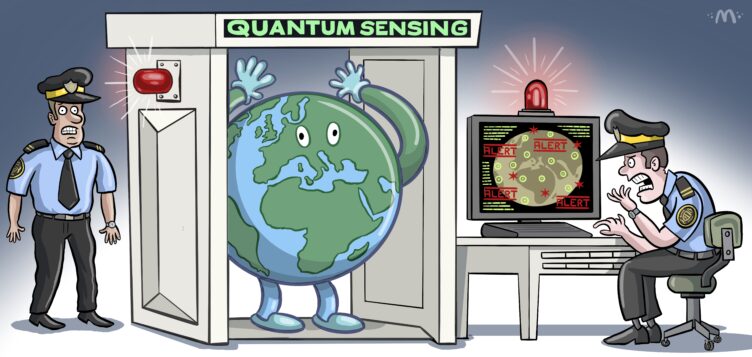
The most ubiquitous substance in the universe is one so elusive that it has never been seen by scientists, nor detected by any of the fantastic instruments we have at our disposal. This tantalizing material – dark matter – is responsible for holding galaxies together and shaping the cosmic web. Despite its fundamental duty, dark matter’s extreme elusiveness has, until now, confined it to the hypothetical. Yet that is all set to change thanks to a cutting-edge technology that is promising, for the first time, to unmask this most mysterious of subatomic particles.
This game-changing scientific innovation is quantum sensing, a technology of unprecedented power and precision. Its dark matter breakthrough[1] will see researchers use optomechanical sensors (best envisaged as microscopic membranes designed to vibrate when exposed to very weak forces) to detect the interaction of dark matter and finally reveal its presence via quantum light.
In doing so, quantum sensing will solve one of the universe’s most profound mysteries. But not all its applications are confined to the outer fringes of theoretical study. In fact, quantum sensing is a technology that will come to enhance many facets of ordinary life: Travel, medicine, safety, research, commerce and industry. It is a tool that, along with AI, has the potential to exert a profound influence on unleashing human potential, including in key use cases such as:
- More sensitive detection of tectonic and gravitational behaviors, providing advance warning of natural disasters such as tsunamis, earthquakes and volcanic eruptions.
- Greater insight into processes causing climate change.
- Highly detailed mapping of subterranean environments: Mines, transport tunnels, sewers and public utilities.
- Safer and more efficient piloting of autonomous vehicles on roads, at sea and in the air, even in traffic-dense conditions.
- Ultra-precise geolocation technologies, far exceeding the performance of today’s global positioning system (GPS) devices.
- Highly refined medical images for doctors diagnosing and treating patients with an array of illnesses.
With such potential at our fingertips, the growth forecast for quantum sensing technologies is sizable. The sector is tipped to reach a market value up to US$ 1 billion by 2030, growing at a CAGR of 10% to 15%, and up to US$ 6 billion by 2040 as it comes to displace conventional sensor technologies.[2]
So, what exactly is quantum sensing and how could a technology of the infinitesimally small have such enormous real-world impacts?
How does quantum sensing work?
Quantum sensing is one member of the emerging family of quantum technologies. Quantum sensing uses the unique properties of quantum physics – tiny magnetic fields, gravitational variations, subtle shifts of time and motion – to measure minute changes in the world. Together, these technologies turn delicate quantum systems into measuring devices of extraordinary precision.
At the core of any quantum sensor is some form of controllable quantum system – individual atoms, perhaps, or ions, or photons – that behave according to the laws of physics. They can exist in precisely defined energy states, or in superpositions of several states simultaneously. To generate a meaningful reading, engineers first prepare the system in a known quantum state, then allow it to interact with whatever physical quantity they want to measure – a magnetic field, maybe, or a gravitational gradient – and finally analyze how the quantum state has changed.
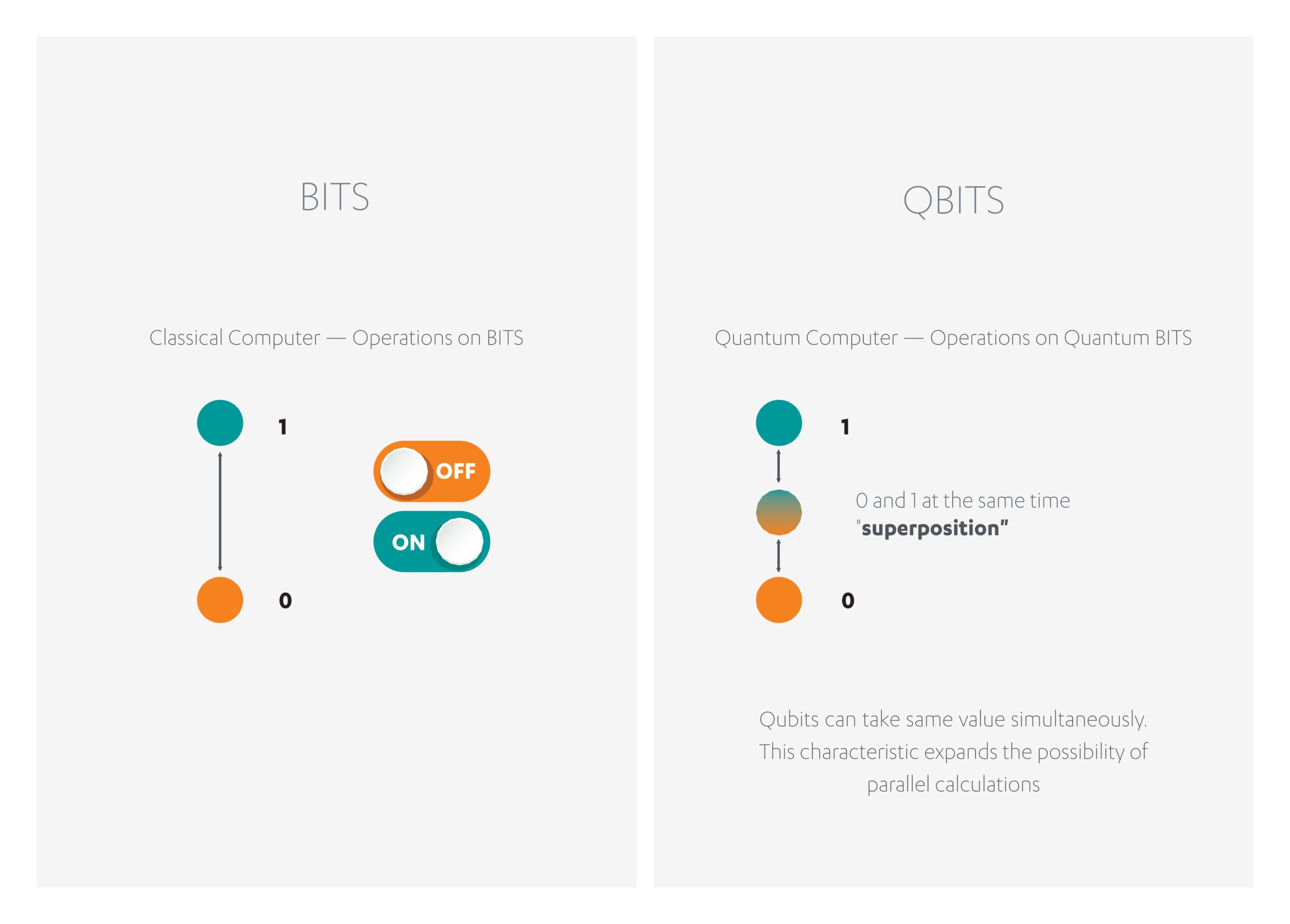
Quantum technologies surpass traditional alternatives because quantum states respond extremely sensitively to their environment, with even minute disturbances leaving a measurable signature.
Several quantum concepts amplify this sensitivity. One is ‘quantum coherence’, where a particle maintains a stable relationship between multiple states long enough to accumulate information about its surroundings. Another is ‘quantum entanglement’, in which multiple particles share correlated states so that measurements from one reveal information about the others. When used in sensors, these effects can help reduce measurement noise and increase the signal, enhancing precision way beyond classical devices.
How far are we along the quantum sensing pathway?
Some quantum sensors already exist in everyday technology. Think of atomic clocks, the timekeeping backbone of GPS systems, exploiting the extremely stable quantum energy levels of atoms. Other examples of quantum sensors are at different stages along the development journey. Newer devices use ultra-cold atoms, superconducting circuits, or diamond defects known as nitrogen-vacancy centers to detect even weaker signals. These sensors are starting to unlock capabilities that until recently, would have been the domain of science fiction: Navigation systems that work without satellites; ultra-sensitive medical imaging; or instruments able to map underground structures just by measuring tiny variations in Earth’s gravity.
Specialist research hubs are emerging to explore some of these concepts, such as the Advanced Quantum Technologies Group at MIT’s Lincoln Laboratory. Engineers at the Lincoln Laboratory are pushing the boundaries of the quantum universe by designing a range of devices with stunning potential: Ion-based computing testbeds, precision clocks, magnetometers and quantum microscopy for microelectronic diagnostics.

The Advanced Quantum Technologies Group has already developed new measurement methods using ultrasensitive nanoscale detectors, capable of sensing a far wider range of frequencies than existing technologies. In March 2026 the group announced the successful capture of ions using in-vacuum cryoelectronics for reduced thermal noise and improved sensitivity, a pivotal step toward building scalable quantum computing systems.
Quantum sensor insights will help turbocharge performance across a range of sectors: Aircraft manufacture, climatology, healthcare, cybersecurity, geology and engineering, insurance, mineral extraction, environmental management, shipping, space exploration, power grid harmonization and more.
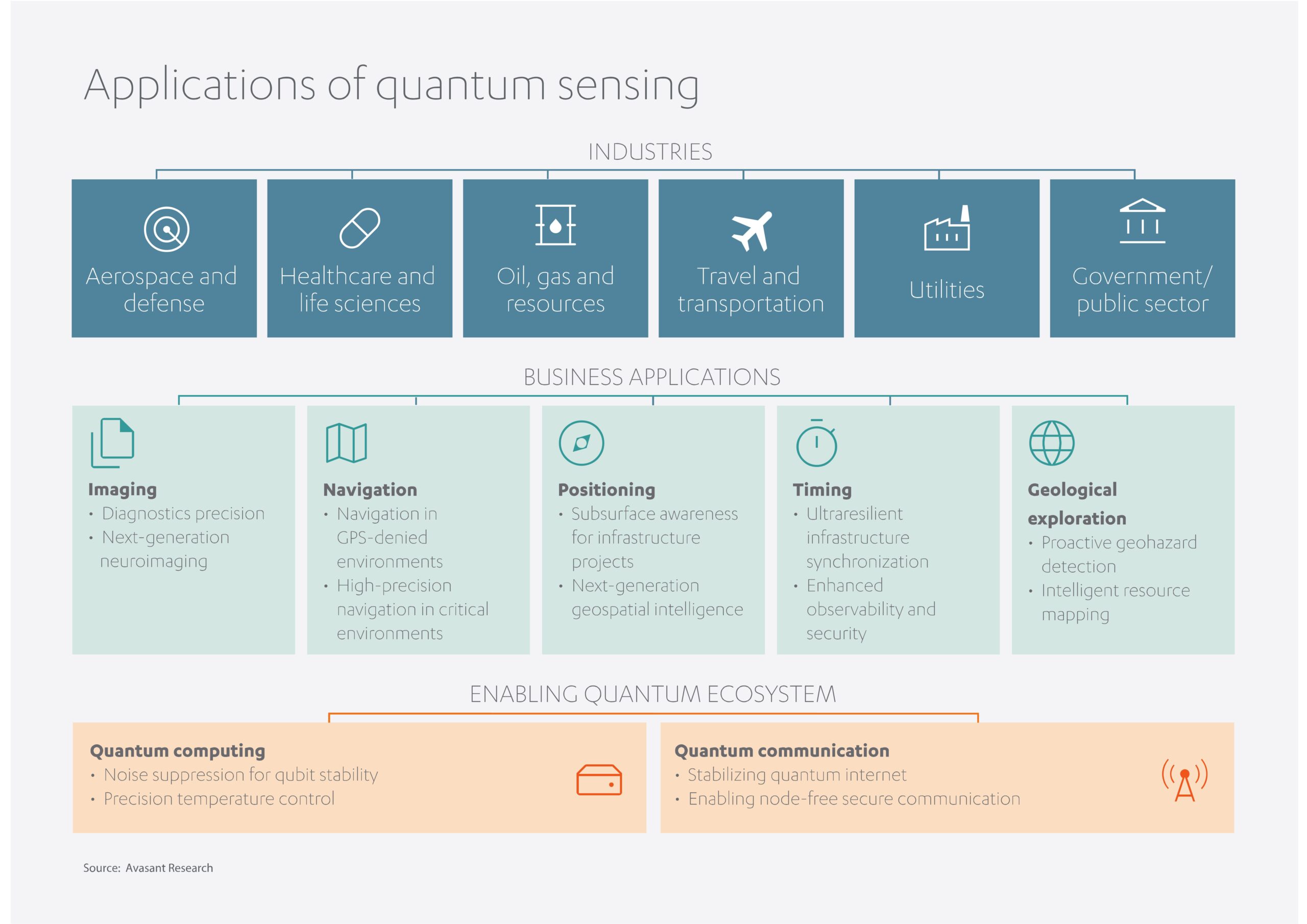
Unless we work in the field many of us find it difficult to comprehend the practicalities, potential and parameters of quantum sensing. It can be instructive to study in detail quantum sensing’s application across select disciplines, such as disaster detection and subterranean scrutiny.
A new way to safeguard our future?
The Indian Ocean tsunami of December 2004 killed almost a quarter of a million people and left countless more injured, homeless and destitute. What if systems had been in place to provide advance warning of the earthquake that triggered it, allowing people time to flee to the safety of higher ground?
Perhaps in the future more accurate predictions of natural disasters will become standard, and if so, we may have quantum sensing to thank.
The UK has recently invested almost US$ 1 million in its International Science Partnerships Fund with New Zealand to develop quantum systems technology at the UK’s National Physical Laboratory (NPL) in London.[3] Its work focuses on the deployment of quantum optical interferometry across existing fiber-optic telecommunication cables on the seabed, to identify early indicators of earthquakes and irregular ocean currents.
Elsewhere in the UK, researchers at the University of Birmingham’s Quantum Technology Hub for Sensors and Timing are developing sensors to detect subtle changes in the gravitational field caused by the sudden shifting of mass synonymous with earthquakes. These highly-evolved next-generation sensors hinge on the quantum behavior of cold atoms – atoms cooled to absolute zero by lasers and magnetic fields, which cease their typical motion and instead exhibit wave-like properties.[4]
Telltale shifts in localized gravity will also help deliver advance warning of volcanic eruptions, which continue to claim lives due to the limitations of traditional seismic sensors. Guatemala’s Volcán de Fuego erupted in June 2018, producing pyroclastic flows that consumed local villages and killed more than 150 people, with hundreds more reported missing. The following year an unexpected phreatic (steam-driven) explosion on Whakaari Island, New Zealand, killed 22 people and injured 25 others. Two years later, Mount Semeru in Indonesia erupted, with heavy ashfall and volcanic mudflows claiming at least 50 lives.
Tenerife, in the Canary Islands, is the current testbed for a new quantum sensing technology that could, in future, sound the alarm in advance of such devastating events.[5] Tenerife is home to Mount Teide, Europe’s highest volcano, which over the past decade has shown increasing signs of instability. It is now the site of three Absolute Quantum Gravimeters (AQGs) developed by French technology company Exail. These AQGs work by cooling and trapping a cloud of rubidium atoms using lasers, then subjecting it to a matter-wave interferometry sequence to measure its acceleration while freefalling under gravity. This analysis can detect changes in the local gravitational field triggered by the shifting of subterranean magma and gas. Exail now has more than 25 AQGs in operation across Europe, the USA, Japan, China and Greenland[6].
It is not just imminent disasters that quantum sensors can help identify. Increasingly, we may come to rely on them for diagnosing the long-term symptoms of an even more existential threat: Climate change.
Space-based quantum accelerometers, such as those being developed under the EU’s new €17 million CARIOQA-PMP project[7], will help orbital sensors generate a high-res gravitational map of the Earth and equip scientists with environmental data of unprecedented accuracy.[8]
When launched into space on a future mission, these quantum sensors will track precise changes in Earth’s atmosphere and ecosystems such as glacier melt, and sea level rises. By predicting future climate patterns, they could guide attempts to mitigate global warming. The project, a partnership between the European Commission and Quantum Flagship, aims to overcome the longstanding problems of gravitational detection from space. Conventional gravimeters struggle with weak gravitational signals from Earth when measuring subtle variations across regions. The new breed of quantum accelerometers will allow for calculations that accommodate a satellite’s trajectory and speed, strengthening the end signal. The Team is hoping to “transform satellite-based Earth science” and are targeting an orbital launch by no later than 2030.[9]
Can quantum sensors enrich our society?
The subterranean world is one usually closed off to human eyes. Arthur C. Clarke’s famous quote: “Any sufficiently advanced technology is indistinguishable from magic.”[10] Seems to fit the quantum sensing promise – something akin to magic: The ability to ‘see’ underground.
Quantum sensing will allow engineers to detect underground voids, overcoming the limitations of traditional ground penetrating radar, and avoiding costly – and risky – invasive drilling. Using quantum gravimeters, we can expect far more detailed subterranean mapping at a high spatial resolution.
Among its many applications, underground quantum sensing will enable surveyors to monitor aging infrastructure and ensure its safety. Transport and utility tunnels, for example, can develop cracks and internal stress points that weaken over time. None can be easily or cheaply assessed at present, sometimes resulting in disastrous failures. In November 2023, a two-lane highway tunnel in northern India suffered a partial collapse, trapping 41 workers underground who were later rescued. The failure was blamed on unforeseen weak rock mass composed of meta-siltstone and phyllites.[11] In July 2025, a section of the wastewater Clearwater Tunnel in Wilmington, Los Angeles collapsed during upgrade, leaving 31 workers needing rescue. The collapse was blamed on unexpected geostatic pressure exerting stress on the tunnel causing inward deformation.[12] Quantum gravimeters can also detect cavities beneath proposed roads and buildings, helping planners avoid natural sinkholes and ensure subsurface suitability prior to approval.
Different forms of quantum sensors can aid the quest to locate valuable resources buried underground: Minerals, oil, or even water. Neutral-atom sensing technologies, like atomic vapor magnetometers and gradiometers, are capable of measuring extremely faint vector magnetic fields and subtle gravitational variations, boosting the accuracy of subterranean maps. These allow for detailed 3D mapping of structures underground, meaning more efficient drilling, reduced exploration costs, and a reduced environmental impact. Diamond-based quantum magnetometers can detect the presence of valuable minerals such as lithium, copper, cobalt, platinum, nickel and other rare earth elements, many essential for powering the transition to green energy. In 2025, quantum gravimeters at Glencore’s Raglan nickel mine in northern Quebec, Canada, for example, created a 3D map of ore deposits that was deemed nine times more precise than traditional magnetic field maps.[13]
Another application is Superconducting Quantum Interference Devices, or SQUIDs, which are already being used in portable exploration tools developed by Australia’s national science agency, CSIRO. SQUIDs use quantum sensors to read magnetic fields 100 millionth the size of Earth’s and have been credited with discovering more than US$ 4 billion of deposits in Australia alone.[14]
With public safety and economic benefits soundly established, the lure of quantum sensing is evident. So, who is leading the quantum charge worldwide, and what support is still needed to encourage this flourishing sector?
Is investment momentum growing behind quantum tech?
Investments and acquisitions suggest a healthy, maturing market for advanced quantum sensing industries, with players from a range of backgrounds: Technology stalwarts, defense contractors and startups. Established giants betting big on quantum sensors include SandboxAQ (a division of Google’s parent company Alphabet), Honeywell, Lockheed Martin and IonQ.
As well as the big names, many startup specialists are also acting as disruptors in the sector. In the USA, California-based AOSense is constructing atom interferometers for navigation and gravimetry, with wide applications for geophysical surveys. Infleqtion, headquartered in Colorado, is developing cold-atom technology for magnetometers and gyroscopes, with its devices already being tested by government agencies. In Asia, Singapore’s Atomionics is making portable quantum gravimeters using atom interferometry for detecting subsurface resources. While in Australia, Q-CTRL is creating software to improve the stability of quantum sensors, particularly for use in navigation, and in the UK, Aquark Technologies is developing laser-cooled atom technology for compact quantum sensors, targeting the defense industry.
The public sector is equally active. The USA’s Department of Energy Quantum Leadership Act of 2025 outlines US$ 2.5 billion of quantum funding between now and the end of the decade[15]. Similarly, the UK’s National Quantum Technologies Programme[16] is bankrolling research into gravimeters for monitoring infrastructure, and portable magnetometers for healthcare. China, meanwhile, hosts a network of national laboratories undertaking quantum sensing programs for fundamental research and military applications.
This investment is crucial given the challenges still facing the sector. Like any new technology, quantum sensors come with a steep price tag. Lasers and high-fidelity optical components are expensive, and the industry is presently too small for economies of scale to have any impact on materials or manufacturing.
The technology underpinning quantum sensing remains prone to corruption due to external electromagnetic interference, mechanical vibrations and temperature variations. Hope is on the horizon, however, thanks to artificial intelligence, with AI-based error suppression programs set to filter out environmental disturbances and improve quantum coherence.
For quantum sensors to go truly mainstream we need to somehow shrink the technology. Many systems still rely on large vacuum setups and bulky magnetic shielding. Progress is being made towards making kit more compact, with some magnetometers now roughly the size of a portable toolbox. If this initiative can be rolled out to other devices, quantum sensing could take another step towards mass market adoption.
In addition, quantum sensors will need to connect with existing systems and hardware, requiring significant efforts in software engineering and standardization. Consistent benchmarks and regulatory rulebooks will also be necessary for the technology to achieve widespread adoption across borders and industrial sectors.
If we can overcome these hurdles, I’m confident quantum sensing will reshape industries and help us lead safer lives. It could protect our vital infrastructure, locate vital resources, support a new wave of self-navigating vehicles, and even monitor the long-term effects of climate change on our precious ecosystem
Quantum sensing, like that other transformative technology, AI, generates a unique sort of excitement – the kind of feeling you get when you know the future is here. It may operate in the realm of the tiny, but its impacts are destined to be outsized in every sense. Personally, I cannot wait to see what unsuspected opportunities it delivers for humankind as we continue our bold explorations into the quantum world.
Quantum Sensing: Five fast facts
Q: Is quantum sensing already used in everyday applications?
A: Yes – look no further than atomic clocks, the timekeeping component of GPS systems.
Q: Could quantum sensing have life-saving potential?
A: Absolute Quantum Gravimeters (AQGs) are currently monitoring suspect seismic activity at Mount Teide in Tenerife, Europe’s highest volcano, enabling it to offer earlier warnings of dangerous volcanic activity.
Q: How might quantum sensing help us tackle climate change?
A: The EU’s new €17 million CARIOQA-PMP project will help future orbital sensors create a high-res gravitational map of the Earth and track precise changes in the planet’s atmosphere and ecosystems.
Q: Could quantum sensing help us locate more rare earth elements underground?
A: SQUIDs – Superconducting Quantum Interference Devices – use quantum sensors to read magnetic fields 100 millionth the size of Earth’s, and have already discovered more than US$ 4 billion of ore deposits in Australia alone.
Q: Does quantum sensing have a promising financial future?
A: The sector could be worth US$ 1 billion by 2030 and up to US$ 6 billion by 2040.
[1] https://phys.org/news/2026-02-quantum-sensor-advances-pursuit-dark.html
[2] https://www.mckinsey.com/capabilities/tech-and-ai/our-insights/tech-forward/quantum-sensing-poised-to-realize-immense-potential-in-many-sectors
[3] https://www.innovationnewsnetwork.com/uk-research-advances-tsunami-warning-systems-and-quantum-tech/46720/
[4] https://www.birmingham.ac.uk/news/2023/how-can-quantum-technology-improve-earthquake-detection
[5] https://spie.org/news/photonics-focus/marchapril-2026/detecting-volcano-eruptions
[6] https://spie.org/news/photonics-focus/marchapril-2026/detecting-volcano-eruptions
[7] https://carioqa-quantumpathfinder.eu/
[8] https://thequantuminsider.com/2024/09/26/european-scientists-quantum-space-sensor-could-help-monitor-climate/
[9] https://thequantuminsider.com/2024/09/26/european-scientists-quantum-space-sensor-could-help-monitor-climate/
[10] This is known as Clarke’s Third Law, published in his 1962 essay “Hazards of Prophecy” and Profiles of the Future, implying that highly sophisticated technology seems miraculous to those who do not understand it.
[11] https://www.theisrm.org/failure-of-foresight/
[12] https://www.geoengineer.org/news/the-los-angeles-clearwater-collapse-insights-on-the-causes-and-technical-response
[13] https://www.kearney.com/service/digital-analytics/article/quantum-sensing-unprecedented-precision
[14] https://www.csiro.au/en/news/All/Articles/2023/May/Quantum-computing-and-mining
[15] https://thequantuminsider.com/2025/02/14/senators-introduce-2-5-billion-bill-to-expand-u-s-quantum-research/


 Added to press kit