Can technology drive forward a green mobility revolution?




Our world is transforming at an unprecedented pace. Global politics are realigning. Social media is liberating voices long subdued. Energy systems are shifting to sustainable electrification. AI is reshaping vast swathes of our daily lives. Yet still we inhabit a physical realm, a world where people and goods need conveying from place to place just as they did centuries ago. Travel and trade underpin much of modern society’s limitless potential. The methods of this mobility, however, are undergoing a series of radical shifts.
New Energy Vehicles (NEV) are fast replacing fossil fuel technologies. Plug-in charge networks are the gas stations of tomorrow. A new epicenter of car production has emerged as a genuine rival to traditional OEM hubs. Smart mobility solutions are redefining conventional notions of ownership. Autonomous vehicles are taking the chore of driving out of human hands. As for the congestion caused by the surging number of vehicles on city roads? Airborne taxis offer a tantalizing solution.
Mobility, it seems, is truly moving with the times.
How much is China driving forward the global motor industry?
Think of vehicle production and certain images spring to mind: Shiny new Fords snaking along conveyor belts in America, dependable Renaults emerging from proud French factories, or sleek Maseratis raising eyes enroute to showrooms in Italy. Yet there is a bold new rival in car manufacturing worldwide, one which is rapidly leaving these traditional production hubs in the dust: China.
China is now the largest single producer of motor vehicles globally, fulfilling some 40% of the market by 2025.[1] Having doubled its unit numbers since 2010, China now dwarfs the output of historic motoring rivals in Europe and America, which account for approximately 15% each. In 2024 China produced more than 31 million vehicles, up 22% from 2019, with the collective output of the USA, Canada and Mexico providing the only real competition at 19.8 million units combined.[2]
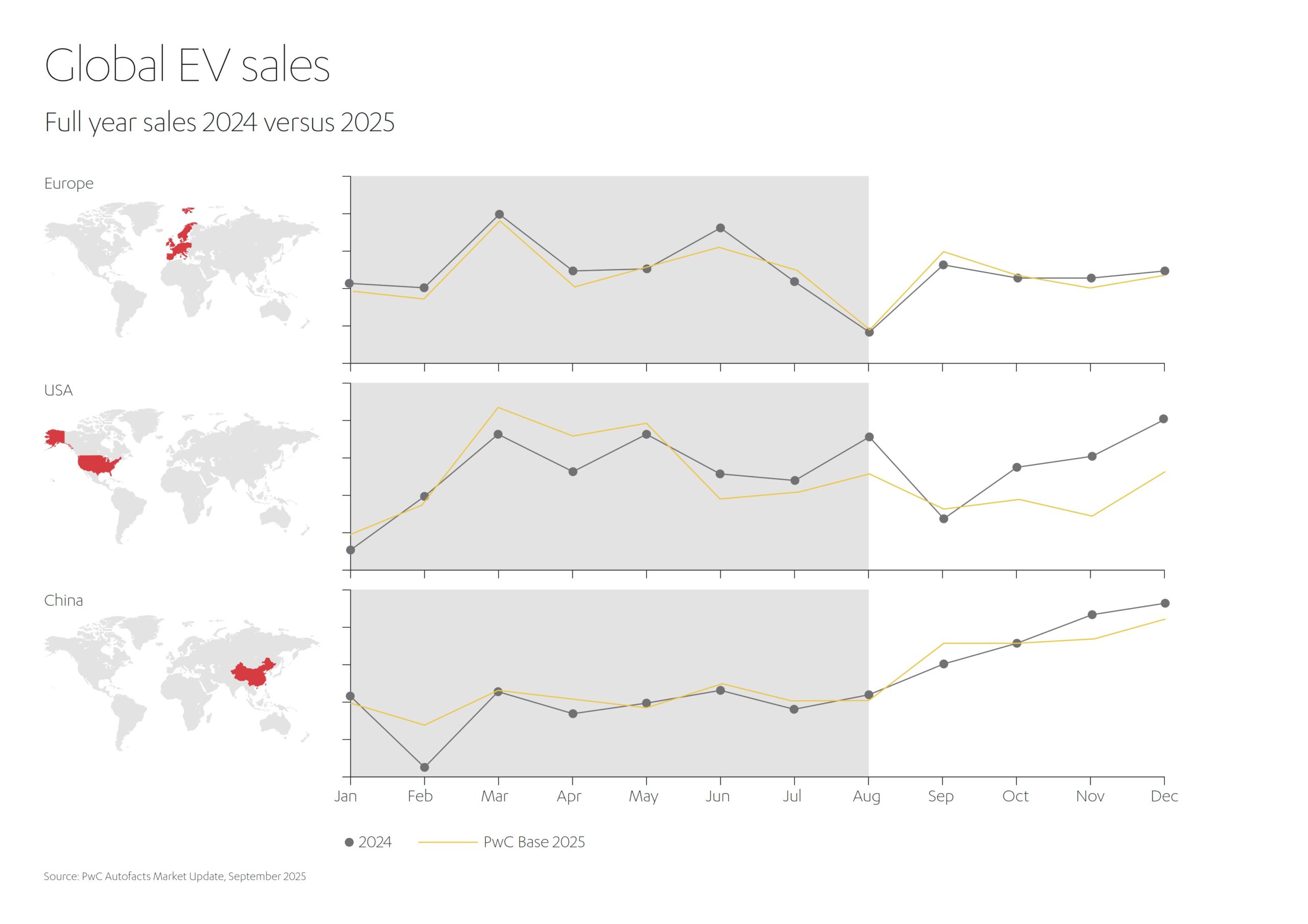
Soaring production numbers are mirrored by growing sales of Chinese vehicles worldwide. China and fellow emerging economies such as India now account for more than half of all car sales globally, up from just 20% at the turn of the century.[3] Latest figures show these trends continuing deep into 2025, with Chinese sales rising 14% from the previous year, far outpacing the USA (+4%) and Europe (flatlined at +0%).[4]
China has triumphed by creating a winning proposition for motorists: Affordable cars with few quality compromises. That formula has overcome long-held stigmas that vehicles from emerging economies cannot compete in terms of reliability and durability with models from traditional automotive powerhouses.
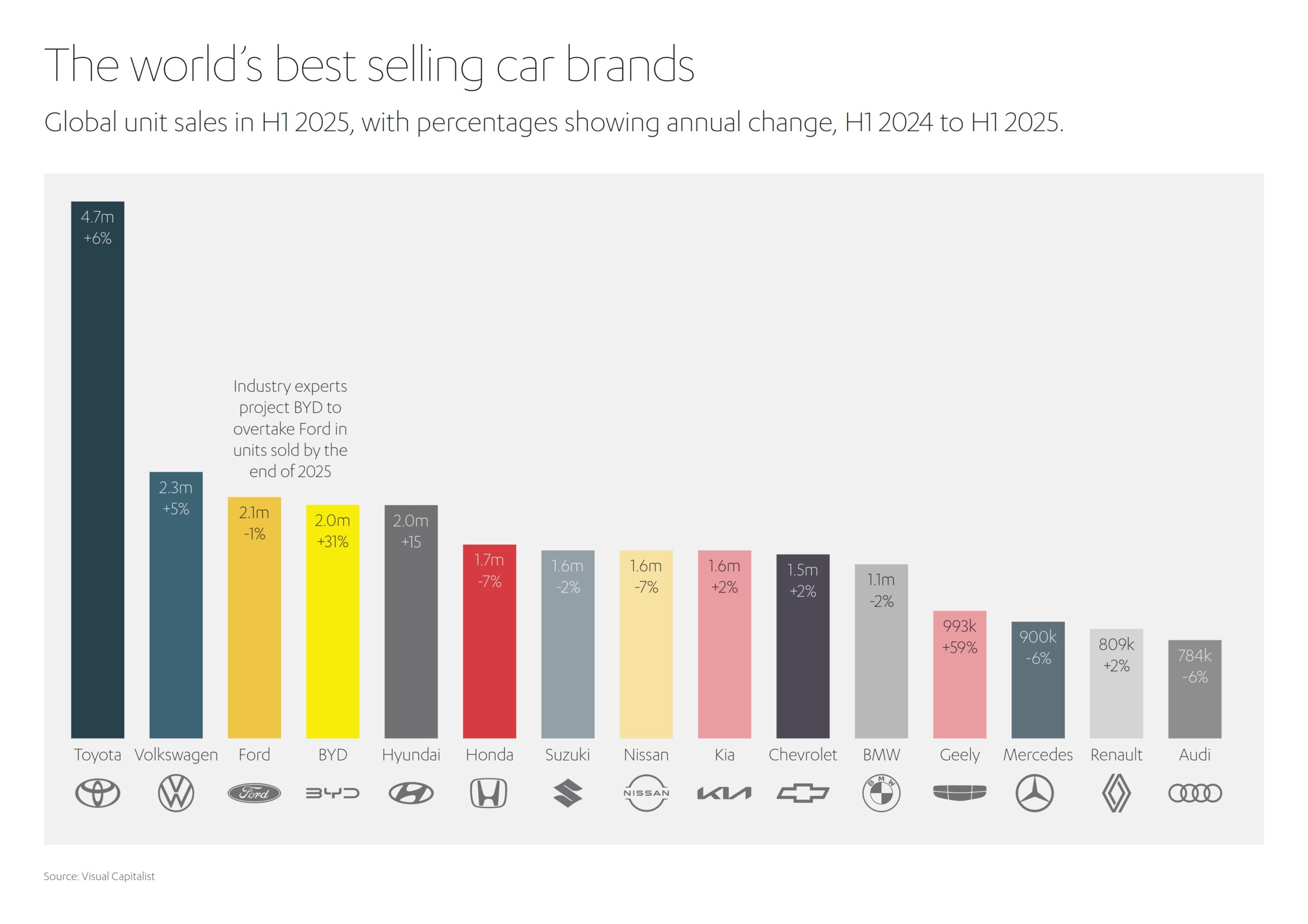
It is increasingly common to see Chinese marques such as BYD (4.6 million sales in 2025), Geely (3 million), Chery (2.6 million) and GWM (1.3 million) cruising the highways worldwide.[5] BYD was the world’s fourth bestselling car brand in the first half of 2025 with 31% year-on-year growth, behind only Toyota, Volkswagen and Ford, and with expectations of overtaking the latter by the year’s end.[6] It is estimated that by 2030 China will manufacture one-third of all the world’s new cars.[7]
Little surprise that China is a key focal point for Jameel Motors, the international mobility brand within the Jameel family’s Abdul Latif Jameel network of businesses. Jasmmine Wong, Chief Executive Officer, Jameel Motors, understands that China’s pioneering attitude to electric vehicles (EVs) – its leadership in automotive electrification – lies at the root of its recent soaraway success.
“Chinese OEMs have been the biggest global exporters of cars since 2023, and that will only increase. They are investing not only in terms of the physical vehicle, but also the technologies. Their desire for success and willingness to take risks is amazing. And because of their willingness to take risks, they are able to innovate very quickly. They have all the ingredients to be masters of their destiny in the next five to 10 years,” says Jasmmine.
Is the whole world embracing the electric vehicle revolution?
As the world wrestles with the ramifications of the looming climate crisis, EVs are near-single-handedly transforming the way we power our personal mobility. EV sales reached 20.7 million units in 2025, a 20% growth from the previous year.[8] Moreover, the trend is truly global: China sold 12.9 million EVs (+17%), Europe 4.3 million (+33%), and emerging markets combined for a further 1.7 million (+48%).
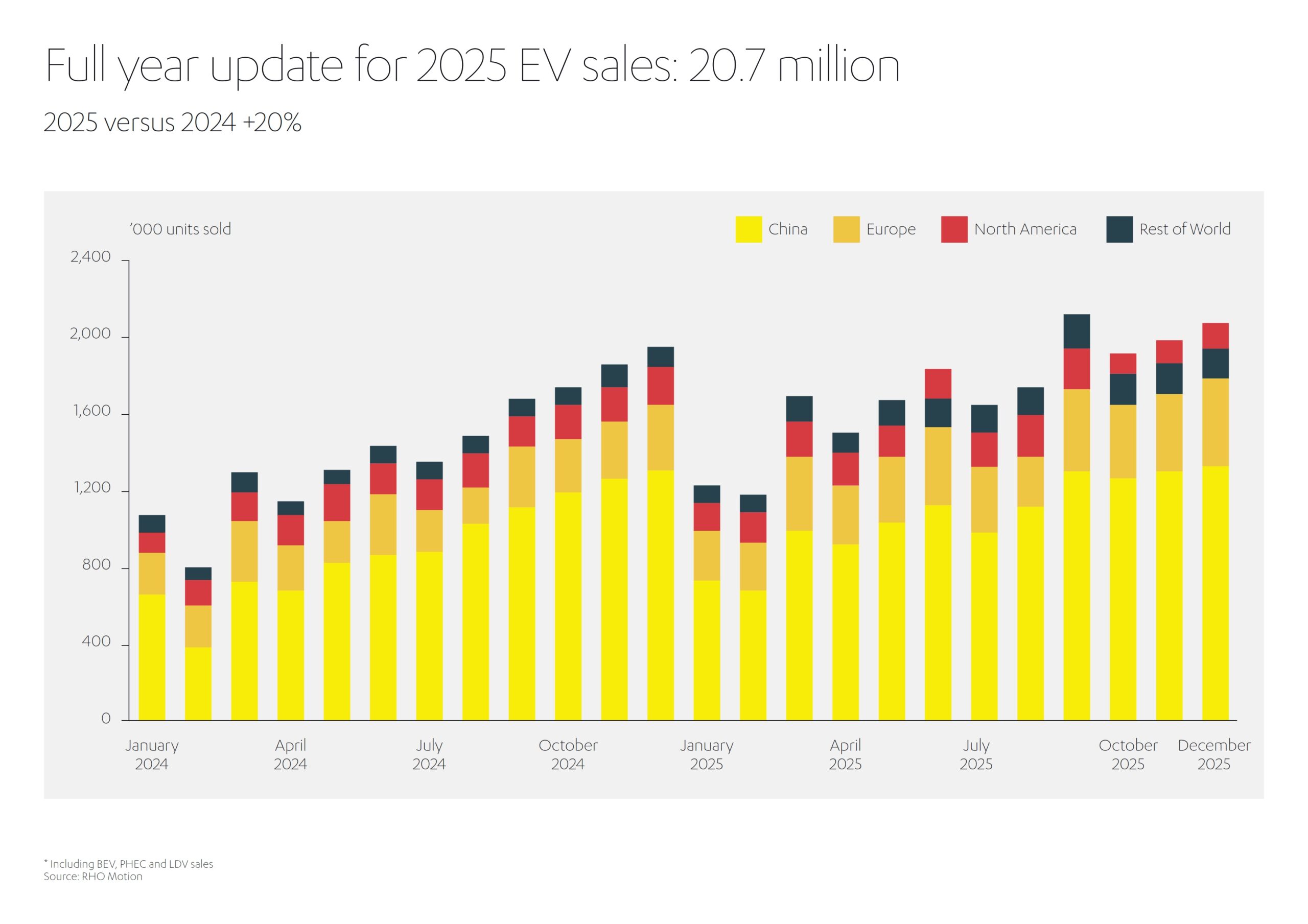
EVs now account for an unprecedented one-quarter of all vehicle sales globally.[9] Almost half of all new vehicles sold in market-leading China are EVs, with most of them now cheaper than their internal combustion engine (ICE) equivalents. China warrants its status as the global epicenter of EV production, manufacturing 70% of all EVs via major brands like BYD, SAIC, Geely and GAC.
Even with these surging sales, EVs might not have an entirely clear road ahead.
In Europe, the EU had originally legislated to outlaw the production of all fossil fuel vehicles by 2035. In late 2025, however, that target was lowered to 90% of vehicles, albeit with compensatory measures including the use of green steel and the adoption of biofuels instead of petrol and diesel.[10]
In the USA, the EV market is weathering the withdrawal of federal tax credits and the relaxation of Corporate Average Fuel Economy (CAFE) standards, with forecasters predicting a resulting decline in EV sales of 29% in 2026.[11]
In China, EVs will attract a purchase tax for the first time in 2026, with the previous 100% exemption rate falling to 50% in future.
Despite these hurdles, the global shift to sustainable motoring appears to be one-way traffic. Going forward, EV penetration around the world will continue to be buoyed by rising exports from China. BYD alone more than doubled its unit numbers shipped to foreign territories in 2025, from 0.4 million to 1 million.[12] Even with today’s mixed bag of legislation, estimates suggest the proportion of EV sales is set to exceed 40% by the end of the decade.[13]
Competitive pricing will see battery vehicles secure a huge 80% market share in China by 2030, with Europe close behind on 60%[14]. With strong policy support already in place EVs will account for one-in-four sales in Southeast Asia by the same date, or one-in-three in the case of the region’s all-important two- and three-wheelers.
What of the Middle East? While starting from a relatively low base, the Middle East is one of the fastest growing regions for EVs globally. EV penetration in Gulf Cooperation Council (GCC) territories doubled from 2% to 4% in the space of just 12 months as governments set ambitious new green targets and spent heavily on infrastructure.[15] In Saudi Arabia, where EV sales grew tenfold in 2024, the industry is tipped to achieve a 37.5% CAGR between now and 2030 driven by fleet electrification mandates and large-scale public and private investments.[16],[17] Abdul Latif Jameel’s own sustainable motoring operations now span multiple countries across Asia, Africa, Europe, America and Australia, with recent expansion into upcoming markets such as Poland, Italy and South Africa.
If this future is going to be as electrifying as it sounds, motorists need ample opportunities to conveniently recharge their vehicles. Fortunately, a comprehensive charging infrastructure is already taking shape around the world.
Can infrastructure keep up to speed with EV surge?
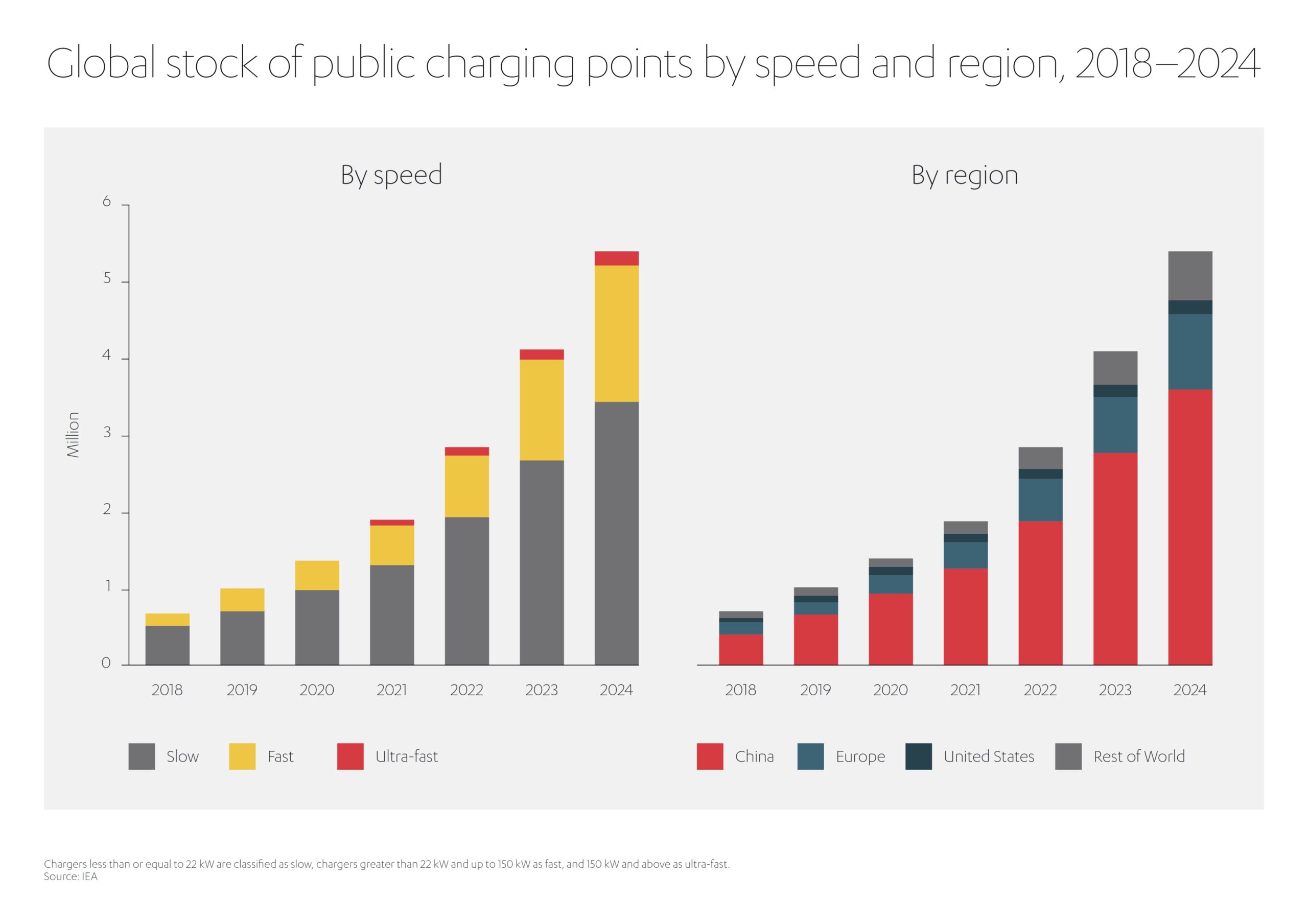
If there is one thing likely to derail a sustainable EV revolution it is consumer inconvenience – the fear of motorists being left high and dry with a flat battery. Studies show that a perceived lack of charging stations is a primary barrier to broader adoption of electric vehicles[18]. As such, the world is witnessing a dramatic expansion of EV charging networks. Globally, the number of public charging points has doubled since 2022 to more than 5 million units by 2025.[19]
In 2024 alone more than 1.3 million new charging points were added to the global stock, a 30% year-on-year increase. Two-thirds of this growth occurred in China, which now houses 65% of the world’s charging facilities[20].
In Europe it is a similar story, with the EU’s new Alternative Fuels Infrastructure Regulation (AFIR) requiring the installation of fast-charging stations every 60km along the core TEN-T road network spanning the continent. Charge stations must offer at least 400 kW power output, rising to 600 kW by 2027.
The USA’s charging stock grew 20% in 2024 to more than 200,000 publicly accessible charge points, although an Executive Order of January 2025 paused the dispersal of further funds pending a policy review. India is proving more progressive, allocating a new US$ 240 million kitty under the PM-EDRIVE initiative to further boost charging infrastructure in cities and key transport corridors.
Overall, the number of public charging points worldwide is expected to cross the 15 million threshold by 2030, and 25 million by 2035.[21]
Within this new mobility paradigm, it is not just people that need moving from A to B, but the goods and materials upon which we rely for our tech-driven 21st Century lifestyle. Sustainable mobility means greener logistics, too.
Is sustainable transport the solution to cleaner logistics?
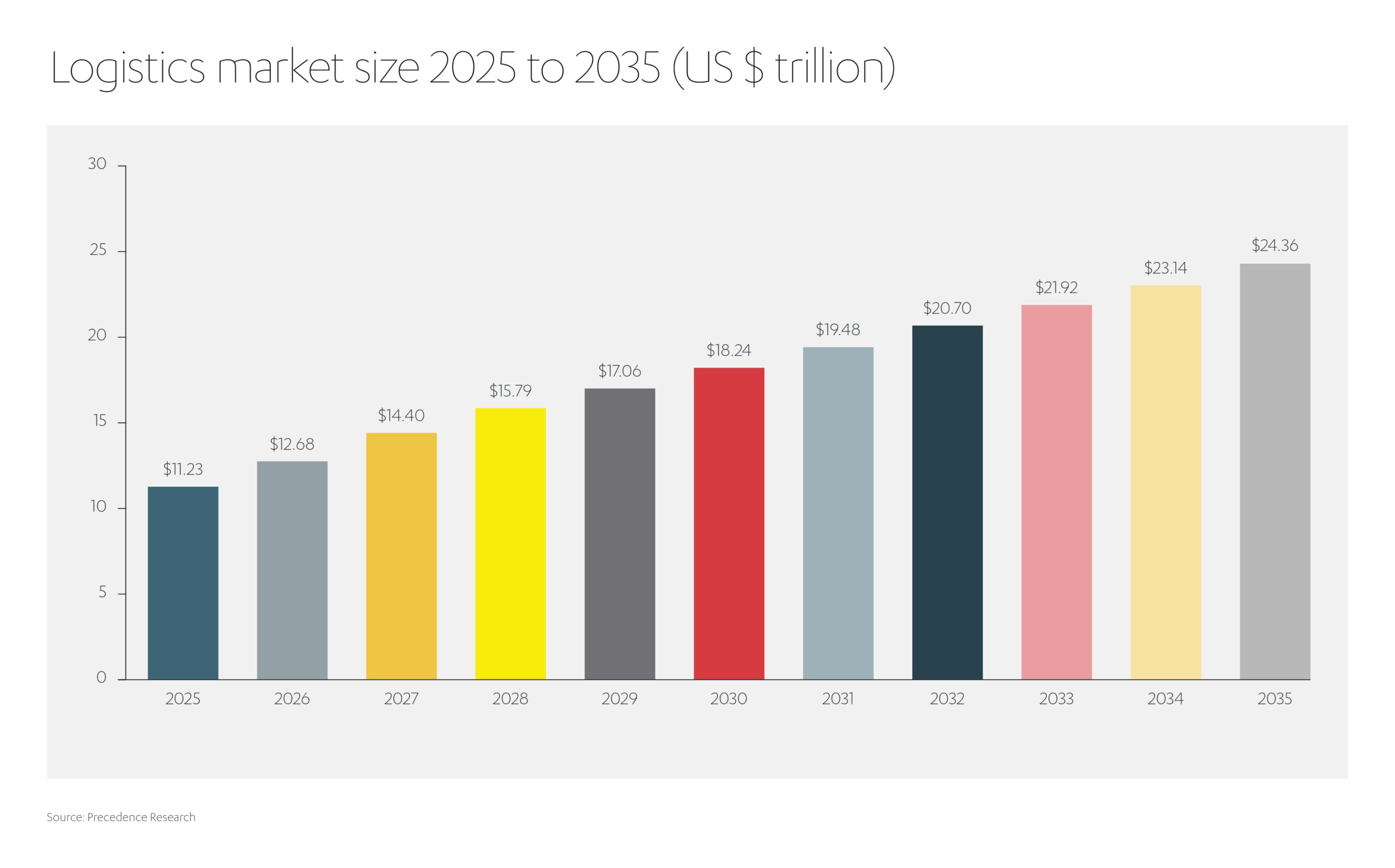
The global logistics market grew from US$ 9.98 trillion in 2024 to US$ 11.23 trillion in 2025, and by 2028 is anticipated to exceed US$ 18.2 trillion, indicating rapid growth in international trade.[22] Asia-Pacific emerged as the largest single market in 2025, with 44.59% of logistics concentrated within the region. Roads continue to be the most common method of transportation, conveying 39% of all goods traffic.
As consumers we want more products than ever; we are less concerned about where in the world our purchases are sourced; and we want them quicker than ever. Logistics mobility becomes as important as human mobility for greening modern society.
Electrification again promises to come to our rescue. EV truck sales grew 80% in 2024 while the number of available models expanded from fewer than 70 to more than 400 in the space of five years.[23] While purchase costs remain higher for EV trucks than fossil fuel equivalents, total cost of ownership is now lower in many cases in China, and will reach parity across Europe and the USA by the end of the decade.
Heavy goods transport may be hard to electrify economically, which is why road cargo is at the forefront of one of the most promising solutions for greener mobility – hydrogen energy. The hydrogen truck market reached a record US$ 3 billion valuation in 2025 and is projected to reach US$ 16.2 billion by 2030.[24] The technology deploys hydrogen fuel cells to power electric motors, producing only water vapor as a byproduct and sharply reducing greenhouse gas emissions compared to conventional diesel-driven trucks.
Hydrogen likewise promises to unlock greener options for personal mobility: All hail the new wave of hydrogen-powered buses. The global hydrogen bus market, worth some US$ 1.68 billion in 2024, is expected to soar to US$ 13.21 billion by 2032 as more legislators promote clean-air initiatives in urban environments.[25] Private sector support is integral for widespread uptake. Abdul Latif Jameel Motors, for example, joined forces with Toyota Motor Corporation in 2025 to run a groundbreaking hydrogen fuel cell bus trial across Makkah, Saudi Arabia. The trial demonstrated the technical potential of hydrogen-powered buses, achieving 400km driving distances on just a 10 minute refuel.
Despite its clear aptitude for greening the bulkier side of mobility, hydrogen is not limited to trucks and buses. Hydrogen cells lie at the heart of several cutting-edge concept cars, suggesting that this revolutionary technology also has a future in the world of family logistics.
Whatever type of vehicle you have in mind, one question must be asked which would have been unthinkable even a few short years ago: Do you want human hands to be in charge of driving, or would you rather delegate that task to an automated system?
Are human drivers being replaced by autonomous vehicles?
Autonomous vehicles (AVs) were once the stuff of science fiction. Now, however, this futuristic concept is entering the real world via a range of new AI-driven cars offering varying degrees of independence in their day-to-day operation.
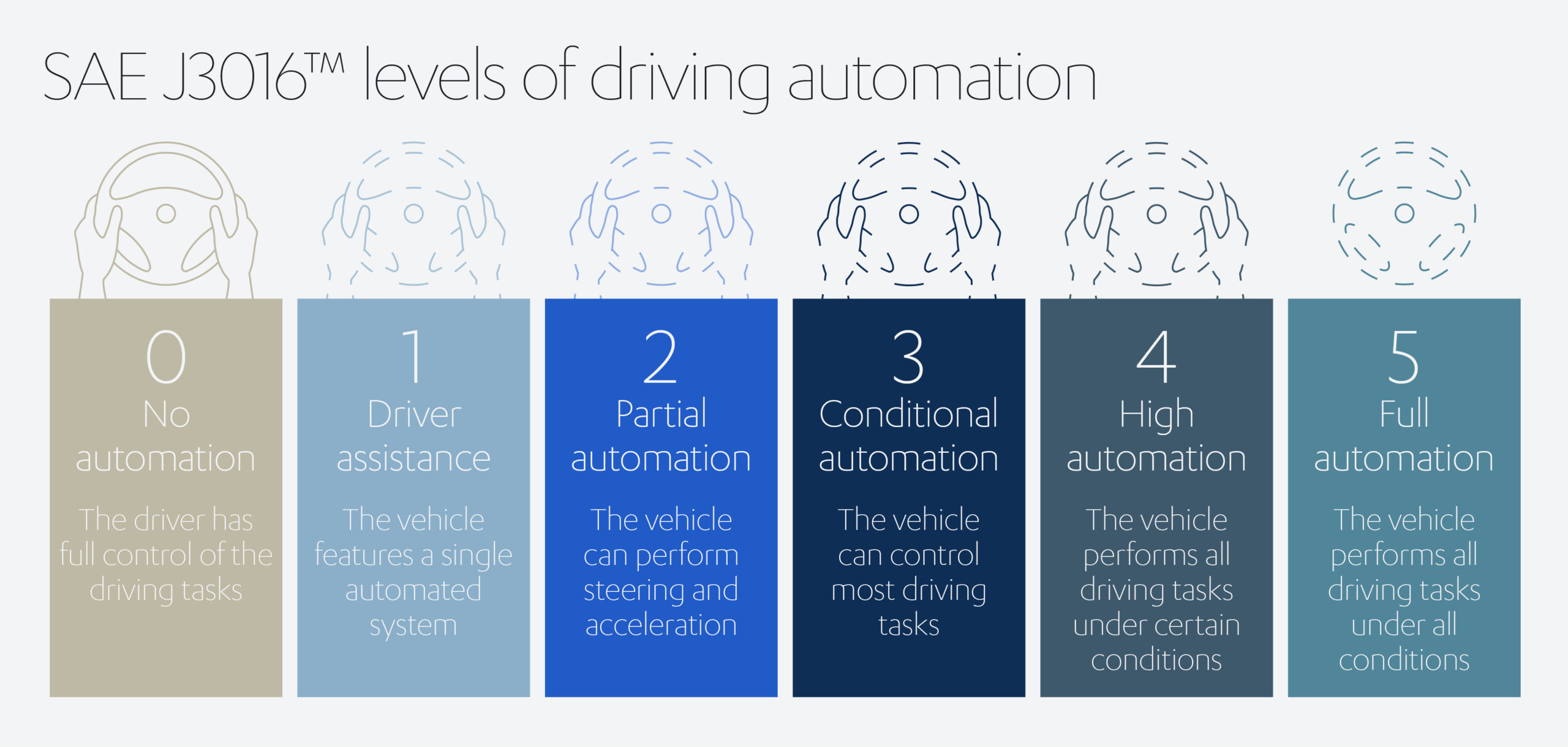
What do we actually mean by autonomous vehicles? There are several stages on the journey from traditional human-controlled vehicles to completely self-driving ones. To help make sense of this, automation is usually categorized using a six-step scale, from Level 0 (where the driver does everything) to Level 5 (requiring no human intervention at all). A Level 1 car might feature a single automated system, whereas a Level 2 might be partially automated in terms of steering and acceleration. At Level 3 the vehicle drives itself some of the time, though the driver must take back control if requested by the vehicle. At Level 4, the vehicle drives itself all of the time under optimal conditions.
Manufacturers are making rapid progress up the stages. Although a fully driverless world of Level 5 vehicles is still some way off, more breakthroughs are happening lower down the scale with each passing year, including:[26]
- the release to market of the first Level 3 vehicles
- more than 700,000 autonomous robo-taxi rides per week in pilot schemes around the world
- the first driverless demonstrations of autonomous trucks
In terms of landmark vehicles, BMW became the first manufacturer to gain approval for a combined Level 2 (Highway Assistant) and Level 3 (Personal Pilot) system in its BMW 7 Series[27]. Its steering and lane control technology applies to motorways with separate carriageways and allows the driver to remove their hands from the wheel while keeping their attention on the road. In traffic jams or low-speed scenarios, however, the car can manage all its own functions, freeing the driver to stream videos or use their cellphones.
Not to be outdone, Chinese regulators have granted Level 3 authorization to a pair of electric sedans from state-owned automakers Changan Auto and BAIC Motor[28]. The two models can switch to autonomous driving in certain districts of Bejing and Chongqing with respective speed limits of 80kmh and 50kmh.
The acceleration in AV technology is global in nature. Europe has greenlit more than 35 AV pilot programs to date. The USA and China are already gathering data from hundreds of thousands of ride-hailing AV journeys per week.[29]
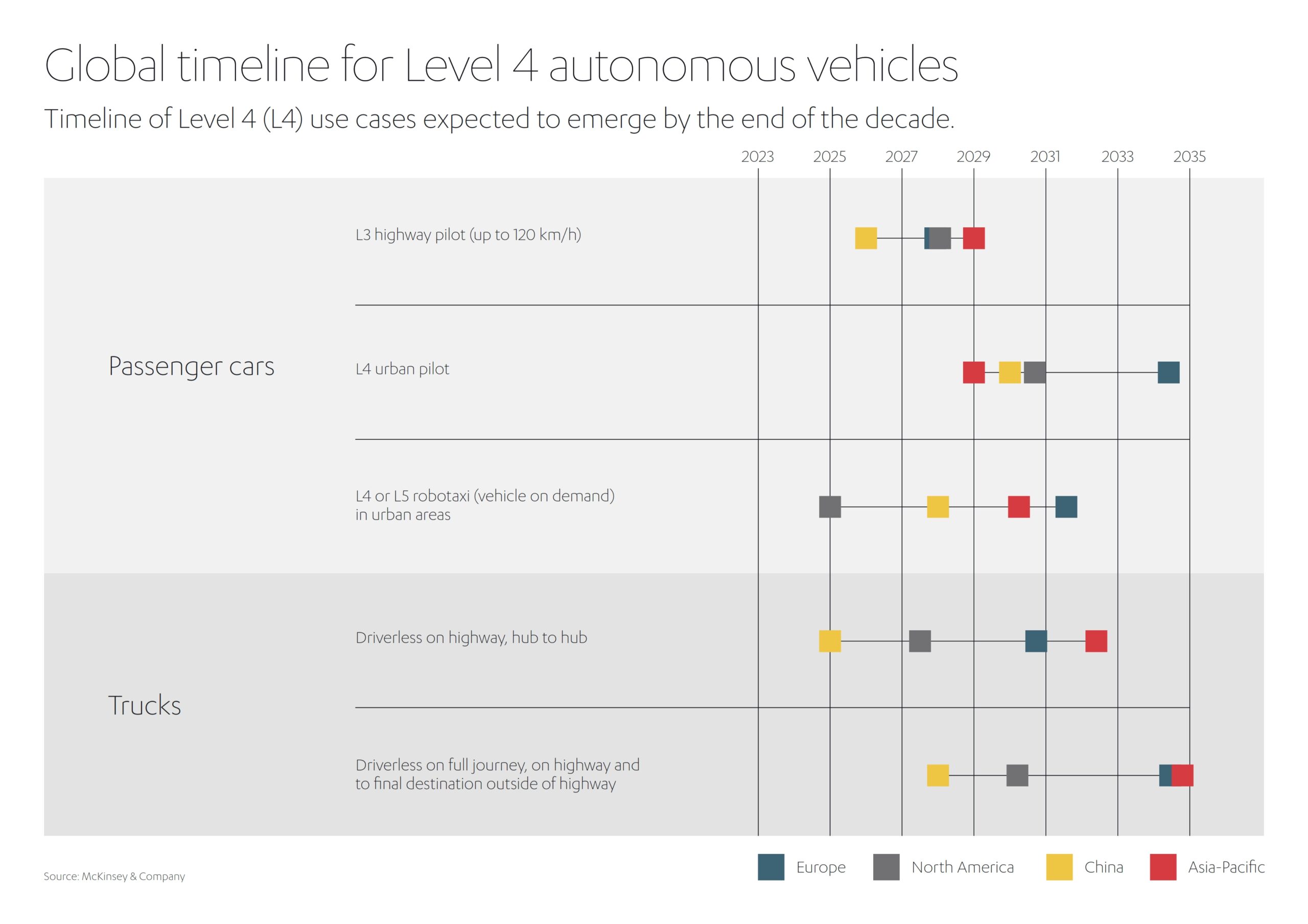
Progress is rapid, and an AV-dominated landscape might be arriving sooner than expected. Looking ahead, the widespread rollout of robo-taxis is forecast by the end of the decade. Soon after, maybe by 2032, we can anticipate Level 4 urban pilot schemes for private passenger cars, with Level 2 vehicles becoming mass market by 2035. Around the same time, fully automated trucks could start commercial operations in designated locations around the world. China and America are expected to lead the AV revolution, with Europe and the rest of Asia close behind.
Confidence in the technology remains high, even as experts acknowledge possible roadblocks impeding progress: A lack of funding for cutting-edge research; the high cost of development and certification; prohibitive price tags for potential early adopters; and as-yet-unforeseen bottlenecks in AI advances.
Prioritizing customer value will be pivotal for mass sales, but so too will safety, with accidents involving AVs attracting disproportionate media attention.
What role does AI play in the future of mobility?
In many ways the future of AVs is wedded to the future of artificial intelligence, since the ‘intelligence’ of the latter is fundamental to removing the human dimension of motoring. AI will underpin the versatility of software-defined vehicles (SDVs), allowing features such as wireless updates, enhanced connectivity with smart cities, and real-time interpretation of dynamic street environments.
Tellingly, AI is big business for OEMs. The global automotive software and electronics market is predicted to grow 4.5% annually and reach US$ 519 billion by 2035, by which time up to 70% of new vehicles will come with advanced driver assistance systems.[30]
A note of caution: If our personal mobility is becoming more digitally dependent, how do we maintain our data privacy? One survey from 2024 highlighted cybersecurity as a key concern among industry stakeholders, citing the many customers who object to having their personal communications uploaded to the cloud.[31]
All is not lost, however, as potential solutions loom on the horizon. Data security fears might steer OEMs towards so-called ‘Edge AI’ technology, with AI operating in isolation on localized devices rather than being transmitted for centralized processing – even if performance is slightly compromised.
With so many elements of the industry in transition, we must prepare for not just a technological but also a psychological transformation of our concept of mobility.
Could Mobility as a Service signpost an alternative route for transport?
For decades many of us have become used to owning the vehicles we depend on in our daily lives. They sit on our driveways, or on the streets outside our homes, waiting for the moment we summon them into action. But is this really the most efficient model for personal mobility?
Increasingly, alternative options are available.
Imagine having a whole range of connected transport options at your fingertips – e-scooters, taxis, cabs, car-shares and buses – and a single app which let you arrange an entire door-to-door journey. That is the promise of Mobility as a Service, or ‘MaaS’ – an interconnected ecosystem of mobility solutions that could transform our cities and revolutionize the relationship between society and transport. No longer would it be necessary to own a car – you could simply call one using your smartphone as and when needed. The potential benefits are readily apparent: Fewer unnecessary journeys, a reduction in carbon emissions, less congestion in crowded cities and potential cost savings for consumers.
MaaS has long been discussed, but in several cases, we are starting to witness it move beyond theory and into practice. Third-party MaaS aggregators have emerged in recent years, compiling data from multiple transport sources and allowing users to customize their preferred trips – apps like Transit, TripGo and Citymapper.
Berlin’s Jelbi, launched in 2019, was an early trailblazer, unifying various transit options (public transport, ridesharing, e-bikes, taxis, scooters and more) across 230 mobility hubs. It attracted more than 800,000 downloads in its first five years and increased customers more than 200% at Germany’s largest public transport company, Berliner Verkehrsbetriebe.[32], [33] In 2023, Berlin was listed as one of Europe’s leading smart cities largely due to its MaaS efforts with Jelbi.
Grab, in Southeast Asia, is one of a new breed of ‘super-apps’, offering parcel and food deliveries alongside personal mobility services. A runway success, Grab logs around 42 million monthly users and 3.5 billion annual transactions across eight countries: Cambodia, Indonesia, Malaysia, Myanmar, the Philippines, Singapore, Thailand and Vietnam.[34], [35] Grab is increasingly veering towards autonomy and AI, announcing in 2025 a multi-year partnership with American tech firm May Mobility to launch a series of AV services across Southeast Asia[36].
The global MaaS market is expected to grow from US$ 328.98 billion in 2025 to US$ 716.3 billion by 2031. Its rise will be fueled by the rollout of 5G technology, increased urbanization, ongoing smartphone proliferation and greater awareness of environmental issues.[37]
As MaaS matures we might even see currently niche modes of urban transport, like air taxis, take to the skies. California-based Joby Aviation, for example, in which the Jameel family through their venture investment arm, JIMCO, was a major early investor, recently announced plans to double its manufacturing capacity in the USA and develop 25 vertiports across American cities. In partnership with Abdul Latif Jameel, Joby Aviation is also exploring options to deliver up to 200 electric aircraft in Saudi Arabia worth US$ 1 billion over the coming years.
The air taxi market, estimated to be valued at US$ 4.47 billion in 2026, is forecast to reach US$ 10.56 billion by 2031.[38] While piloted air taxis currently hold 60% of the market, autonomous vehicles are due to experience fastest growth, with a CAGR of around 24% to the end of the decade.
“People are contemplating mobility in whole new ways,” says Fady Jameel, Vice Chairman, International, Abdul Latif Jameel. “They’re thinking speed. Convenience. Economy. And environment. These mental shifts, complemented by technological earthquakes such as green energy, smart cities and AI, are set to rapidly and irreversibly transform the transport landscape around us. New markets are emerging, old assumptions are fading, and we must all brace ourselves to climb aboard this new-look mobility market.”
Mobility: Five fast facts
- Which country leads global vehicle manufacturing?
China produces around 40% of the world’s vehicles, with 31 million built in 2024 alone. - How mainstream are electric vehicles today?
Around 20.7 million EVs were sold in 2025. This represents one in four new vehicles globally, and nearly half in China. - Is EV charging infrastructure expanding fast enough?
Largely, yes. Public charging points have doubled since 2022, topping 5 million worldwide, with 65% in China. - How quickly is green logistics growing?
The logistics market is expanding rapidly. It reached US$11.23 trillion in 2025, while EV truck sales jumped 80% in 2024. - Are autonomous vehicles already in use?
Yes. Over 700,000 autonomous robo-taxi rides now happen every week globally, with wider rollouts expected before 2030.
[1] https://www.iea.org/news/changes-in-global-car-industry-raise-key-questions-for-economies-and-energy-sector
[2] https://www.icaew.com/library/industry-profiles/automotive-manufacturing
[3] https://www.iea.org/news/changes-in-global-car-industry-raise-key-questions-for-economies-and-energy-sector
[4] https://www.pwc.com/ph/en/publications/2025/autofacts-market-update-september-2025.pdf
[5] https://carnewschina.com/2026/01/01/overachievers-and-underperformers-chinese-car-manufacturers-2025-sales-results-revealed/
[6] https://www.visualcapitalist.com/ranked-the-worlds-best-selling-car-brands/
[7] https://www.bloomberg.com/graphics/2025-china-ev-byd-global-price-cuts/
[8] https://rhomotion.com/news/global-ev-sales-reach-20-7-million-units-in-2025-growing-by-20/
[9] https://www.iea.org/news/more-than-1-in-4-cars-sold-worldwide-this-year-is-set-to-be-electric-as-ev-sales-continue-to-grow
[10] https://www.theguardian.com/business/2025/dec/16/eu-water-down-landmark-ban-new-petrol-diesel-cars
[11] https://rhomotion.com/news/global-ev-sales-reach-20-7-million-units-in-2025-growing-by-20/
[12] https://rhomotion.com/news/global-ev-sales-reach-20-7-million-units-in-2025-growing-by-20/
[13] https://www.iea.org/reports/global-ev-outlook-2025/executive-summary
[14] https://media-publications.bcg.com/Winning-the-EV-Charging-Race.pdf
[15] https://www.rolandberger.com/en/Media/GCC-emerges-as-one-of-the-world-s-fastest-growing-EV-markets-with-penetration.html
[16] https://www.rolandberger.com/en/Media/GCC-emerges-as-one-of-the-world-s-fastest-growing-EV-markets-with-penetration.html
[17] https://www.nexdigm.com/market-research/report-store/ksa-electric-vehicle-market-report
[18] https://www.sciencedirect.com/science/article/pii/S2773153724000057
[19] https://iea.blob.core.windows.net/assets/7ea38b60-3033-42a6-9589-71134f4229f4/GlobalEVOutlook2025.pdf
[20] https://www.iea.org/reports/global-ev-outlook-2025/electric-vehicle-charging
[21] https://www.iea.org/reports/global-ev-outlook-2024/outlook-for-electric-vehicle-charging-infrastructure
[22] https://www.precedenceresearch.com/logistics-market
[23] https://www.iea.org/reports/global-ev-outlook-2025/executive-summary
[24] https://www.businesswire.com/news/home/20251006186714/en/Hydrogen-Trucks-Global-Markets-Report-2025-Revenue-Data-from-2024-Estimates-for-2025-Forecasts-for-2026-and-2029-and-CAGR-Projections-Through-2030—ResearchAndMarkets.com
[25] https://www.datamintelligence.com/research-report/hydrogen-bus-market
[26] https://www.mckinsey.com/features/mckinsey-center-for-future-mobility/our-insights/future-of-autonomous-vehicles-industry
[27] https://www.press.bmwgroup.com/global/article/detail/T0443285EN/road-to-autonomous-driving:-bmw-is-the-first-car-manufacturer-to-receive-approval-for-the-combination-of-level-2-and-level-3?language=en
[28] https://www.reuters.com/world/asia-pacific/china-approves-first-batch-l3-autonomous-driving-vehicles-2025-12-15/
[29] https://www.mckinsey.com/features/mckinsey-center-for-future-mobility/our-insights/future-of-autonomous-vehicles-industry
[30] https://www.mckinsey.com/features/mckinsey-center-for-future-mobility/our-insights/mapping-the-automotive-software-and-electronics-landscape
[31] https://www.mckinsey.com/industries/semiconductors/our-insights/the-rise-of-edge-ai-in-automotive
[32] https://www.trafi.com/post/bvg-jelbi-5-years
[33] https://batch.com/blog/posts/crm-strategy-berliner-verkehrsbetriebe-bvg
[34] https://investors.grab.com/news-and-events/news-details/2025/May-Mobility-to-Expand-Its-AV-Technology-into-Southeast-Asia-with-Grab-Investment-2025-yk4Z3TwkNG/default.aspx
[35] https://openai.com/index/grab/
[36] https://www.grab.com/sg/press/others/may-mobility-to-expand-its-av-technology-into-southeast-asia-with-grab-investment/
[37] https://www.mordorintelligence.com/industry-reports/mobility-as-a-service-market
[38] https://www.mordorintelligence.com/industry-reports/air-taxi-market


 Added to press kit


