Powering the future: how are corporate climate commitments accelerating the energy transition?


The climate crisis is one of the most urgent and complex challenges facing humanity today. Rising global temperatures, increasingly severe weather events, biodiversity loss, and growing pressure on natural resources are reshaping economies, infrastructure, and livelihoods across the world.
Beyond environmental consequences, climate change is now widely recognized as a systemic risk affecting energy security, supply chains, financial stability, and social equity. For organizations of all sizes, the transition to a low-carbon economy is not a distant aspiration, but an immediate strategic imperative.
Addressing a challenge of this scale requires collective action.
Governments play a critical role in setting policy direction and enabling investment; communities are central to ensuring the energy transition is inclusive and locally beneficial; and businesses bring the innovation, capital, and operational capability needed to accelerate change at pace. Collaboration between these stakeholders is essential to build resilient infrastructure, scale clean technologies, and ensure the transition delivers both environmental and economic value. Some of the world’s largest businesses can show the way.
Encouragingly, many global corporations have stepped forward with ambitious renewable energy and net-zero commitments, recognizing that climate leadership is closely tied to long-term competitiveness and consumer trust. Large organizations have the ability to catalyze markets, stimulate investment, and help bring new renewable projects online, often creating ripple effects that benefit supply chains, local economies, and the broader energy system.
How has Microsoft demonstrated corporate climate leadership?
A recent milestone from Microsoft highlights this momentum in action. Earlier this year, the company announced that it successfully met its 2025 renewable energy goal of offsetting 100% of the electricity used across its datacenters, buildings, and campuses with renewable energy[1]. To achieve this, Microsoft has contracted 40 gigawatts of renewable energy to be added to the grid globally through long-term agreements, enabling new solar, wind, and other clean energy projects to be developed and connected to the grid. Of that some 19 GW are now already online.
This ground-breaking achievement is testament not only to the scale of Microsoft’s commitment, but also the collaborative ecosystem required to deliver it, including developers, utilities, policymakers, and local communities. It provides a powerful example of how bold corporate ambition, when paired with sustained investment and partnership, can help drive meaningful progress in the global transition to renewable energy.
Where has Microsoft sourced its renewable energy from?
Microsoft’s success in matching 100% of its electricity consumption with renewable energy has been driven by a diverse portfolio of projects spanning geographies, technologies, and partnership models. Rather than relying on a single solution or partner, the company has combined long-term power purchase agreements, community-focused investments, and infrastructure modernization to bring new renewable capacity online while strengthening local energy systems.
In the United States, for example, Microsoft has partnered with Sol Systems to support large-scale solar developments designed to deliver both clean electricity and local economic benefits.
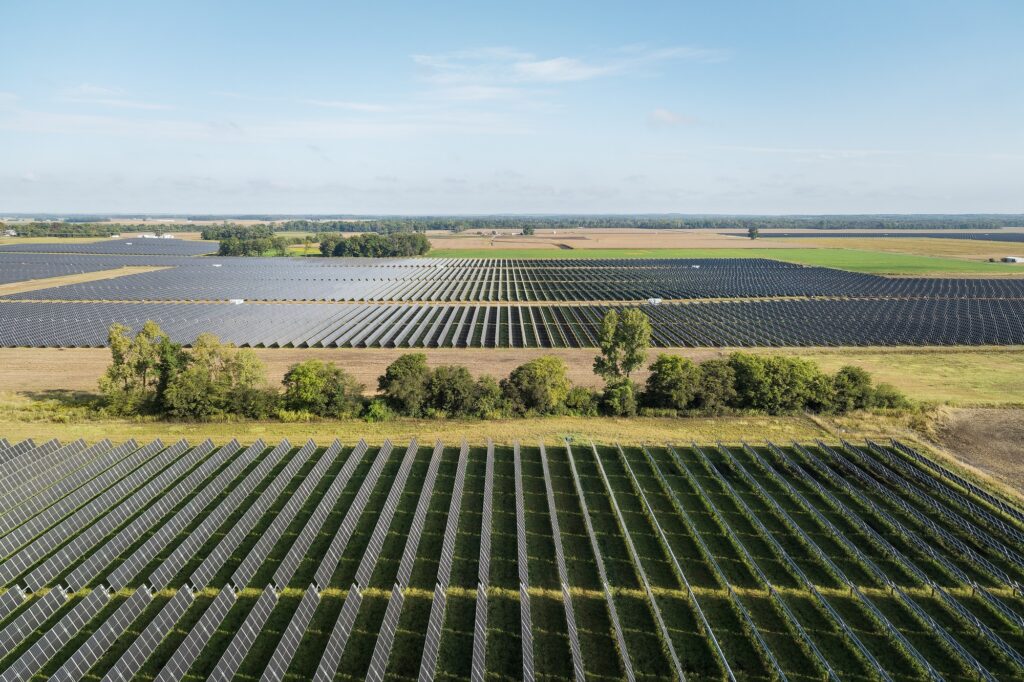
A standout example in Eldorado, Illinois, demonstrates the concept of dual-use solar, where agricultural activity continues beneath solar arrays. The project combines energy generation with education initiatives, workforce development, and community funding designed to create long-term value beyond power production.
In West Virginia, an agreement with Brookfield Renewable Energy Group has helped revitalize existing hydropower assets while enabling new renewable capacity. Investments in facilities such as the Hawk’s Nest plant are extending the operational life of long-standing infrastructure and connecting additional clean electricity to the grid.
Similarly, through agreements with EDP Renewables North America, Microsoft has supported solar and wind projects across multiple US states that provide clean electricity alongside stable income opportunities for landowners and local governments. Community investments linked to these developments include funding for schools, emergency services, and infrastructure, highlighting how renewable deployment can strengthen regional resilience while contributing dependable generation to the grid.
In Brazil, Microsoft’s renewable energy procurement includes a wind complex operated by Auren Energia. Beyond contributing renewable power to the grid, the project has delivered infrastructure improvements, local employment, and skills development opportunities. While its collaboration with ENGIE in France focuses on repowering existing wind farms, replacing ageing components with more efficient technology to significantly boost generation without expanding land use.
How is FRV supporting Microsoft in driving the energy transition?
Among the most compelling examples is Microsoft’s partnership with Fotowatio Renewable Ventures (FRV) at the Walla Walla solar facility in New South Wales, Australia.
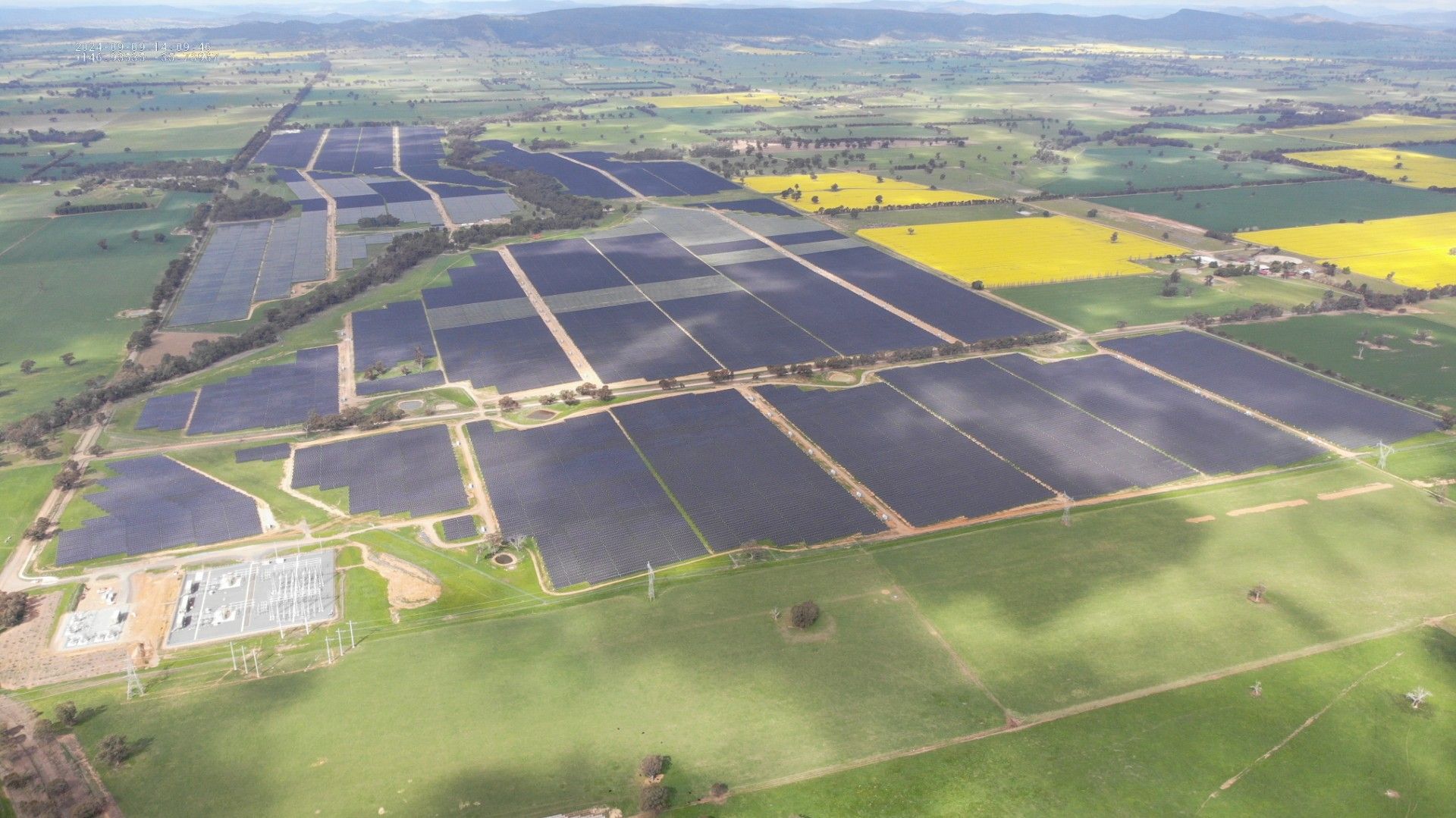
This project illustrates the importance of integrating community engagement into renewable development from the outset. The 353-megawatt dc solar installation will contribute substantial clean energy capacity while supporting Australia’s broader transition away from coal-fired generation, bringing sustainable electricity to tens of thousands of homes annually.
One of the features that distinguishes this project is the depth of its local impact, creating jobs, providing economic stimulus to the region and supporting skills development in renewable energy. The project team worked closely with local stakeholders to ensure community priorities were addressed, including funding for infrastructure upgrades and restoration of community facilities. Initiatives such as improvements to public spaces and support for local amenities demonstrate how renewable developments can contribute tangible benefits that extend well beyond energy generation.
The project also reflects thoughtful land-use planning and environmental stewardship. By leveraging proximity to existing transmission infrastructure, the facility was able to minimize additional grid disruption while accelerating deployment timelines. FRV’s collaboration with the community on land management, fire prevention measures, and biodiversity considerations further highlights the evolving maturity of large-scale solar development. In addition, efforts to repurpose construction materials, including recycling timber packaging for community use, demonstrate how circular economy principles can be integrated into project delivery.
What other projects does FRV have in Australia?
Walla Walla is only one of many similar pioneering projects FRV is involved in around the world. Initially founded in 2006 and part of Jameel Energy since 2015, FRV has evolved from an early solar pioneer into a diversified renewable platform spanning solar, battery storage, hybrid infrastructure and emerging digital energy solutions. With portfolio of 3 GW of green energy in operation and a further 1GW in construction, across four continents, its proposition centers on delivering reliable, cost-competitive clean energy while working closely with partners, communities and customers to ensure projects contribute to broader system resilience and local value creation.
From the outset, FRV’s growth has been closely tied to its partnership-led model. The company has expanded from its European origins into Australia, the Americas, the Middle East and parts of Asia, building a track record across multiple regulatory environments and infrastructure contexts. This international presence has enabled FRV to increasingly act as a long-term asset owner and operator, not just a developer, reflecting a strategic shift towards lifecycle optimization and deeper engagement with customers’ evolving energy needs.
In Australia, as well as the Walla Walla project that helped Microsoft to achieve its renewable energy targets, FRV has consolidated its position as a major infrastructure developer. It now operates 8 renewable energy projects in the country, including Lilyvale and Dalby (Queensland), Winton (Victoria), and Metz, Goonumbla, Sebastopol and Moree in New South Wales.
As renewable penetration increases and electricity demand patterns become more variable, storage has emerged as a critical enabler of reliability. FRV has responded by expanding its battery energy storage footprint across multiple markets. This strategy reflects a broader industry shift: moving beyond pure generation towards integrated solutions capable of balancing supply and demand, improving dispatchability and supporting grid stability.
In August 2025, FRV reached financial close on the 250MW / 500MWh Gnarwarre project in Victoria, its largest battery energy storage system (BESS) in Australia to date.
Designed to enhance grid stability and facilitate renewable integration, the project incorporates grid-forming inverter technology and received support from the Australian Renewable Energy Agency to strengthen system services capability. Another project in Victoria, the 100 Terang BESS facility, is currently in development. Located 1.5 miles north-east of the town of Terang, the plant will have a capacity of 100MW / 200MWh.
The importance of storage is even more pronounced in New South Wales, where FRV’s Armidale East BESS secured a Long-Term Energy Service Agreement in February 2026 under the state’s Electricity Infrastructure Roadmap. With a total capacity of 315MW, Armidale East is among the most substantial long-duration battery projects in the country. Beyond its technical specifications, the project incorporates a formal Social License framework, outlining commitments to community engagement, local industry participation and First Nations inclusion, in line with FRV’s approach to partnering with local communities.
Hybridization – the co-location of solar generation and storage – is another defining feature of FRV’s strategy. The acquisition of the Axedale project in Victoria in March 2025, combining 140MWac of solar with a 50MW / 100MWh battery system, underscores the company’s view that integrated assets offer stronger system value than standalone projects. By blending generation with dispatchable capacity, hybrid facilities can smooth output, reduce congestion and enhance grid reliability.
Where else is FRV pioneering sustainable energy?
FRV’s expansion beyond Australia reveals similar themes. In New Zealand, the development of the 210MWdc Rangitikei solar project marks a significant step in regional growth. Expected to generate approximately 350,000MWh annually, the project supports national decarbonization ambitions while creating construction employment and contributing to local economic activity.
Across Europe, meanwhile, FRV has also sharpened its focus on battery energy storage as a core pillar of growth. In Spain, the company has recently announced plans to develop more than 1.2GW and 5GWh of storage capacity by 2027, integrating batteries with photovoltaic assets and advancing standalone projects across several regions.
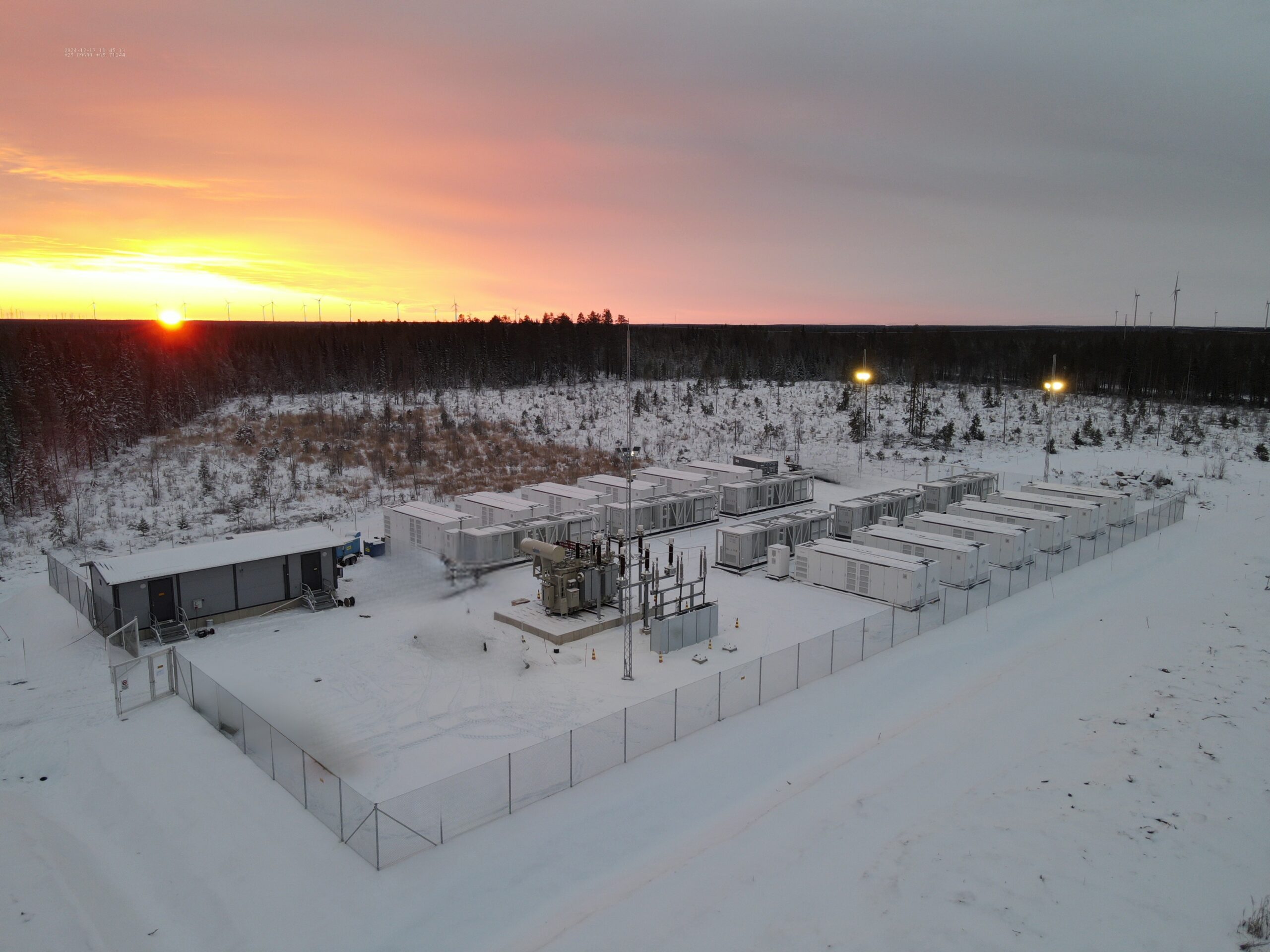
Northern Europe is another focal point. The financial close of the 100MW / 200MWh Simo BESS project in Finland in October 2025 consolidates FRV’s presence in the Nordic market. Developed in partnership with local stakeholders and backed by institutional financing, the project is expected to support grid balancing and renewable integration in a region advancing rapidly toward decarbonization.
To help drive its ambitions in Europe, FRV has established a BESS Center of Excellence in Madrid headed by David Menendez. The company is already involved in UK BESS projects at Clay Tye, Essex (99 MW / 198 MWh); Holes Bay, Dorset (7.5 MW / 15 MWh); and Contego, West Sussex (34 MW / 68 MWh), and recently advanced a 1.8GW portfolio of battery and solar projects as part of the National Energy System Operator’s (NESO) connection reform process – a major overhaul of the UK’s electricity grid connection process designed to accelerate projects that support the country’s 2030 clean power targets.
Further afield, in Chile, the Tarapacá hybrid power station is currently under construction. With a nominal peak power of 504 MW: 168 MW PV and 1.34 GWh (336 MW4h) of battery storage, the project will cover an area of 461 hectares.
Alongside these developments in mature markets, FRV continues to deliver in emerging economies. The commissioning of the 55MWac Masrik-1 photovoltaic plant in Armenia, set to be the largest in the country, exemplifies the company’s ability to structure projects in collaboration with international financial institutions and national authorities. Supplying electricity to more than 21,000 households and avoiding significant annual carbon emissions, Masrik-1 reflects FRV’s broader contribution to sustainable energy systems beyond its core Western markets.
How does FRV demonstrate its commitment to innovation?
Alongside these project milestones, innovation remains a central pillar of FRV’s strategy. Through FRV-X, its dedicated innovation and incubation platform, the company is exploring emerging technologies and business models, Data Centers, digital energy platforms and green hydrogen development.
These initiatives reflect a recognition that the future energy system will be shaped not only by infrastructure, but also by new commercial models and customer-centric solutions that enhance flexibility and participation across the value chain.
By combining large-scale solar expertise with a rapidly expanding storage portfolio, deep partnerships and a growing innovation pipeline, FRV is helping to address one of the energy transition’s central challenges: ensuring that clean electricity is not only generated at scale but delivered reliably, flexibly and in a way that supports communities and long-term system resilience.
Five fast facts
- Has Microsoft met its renewable energy target?
Microsoft achieved its 2025 goal of matching 100% of its electricity use with renewable energy, contracting tens of gigawatts globally to do so. - How large is FRV’s global renewable portfolio?
FRV’s portfolio encompasses 5 gigawatts across four continents, spanning solar, battery storage and hybrid infrastructure. - What impact will the Walla Walla solar project have in Australia?
The 300MW facility will deliver clean power to tens of thousands of homes each year, while creating local jobs and community investment. - How big is FRV’s largest battery project to date?
The Gnarwarre BESS in Victoria, Australia, is FRV’s largest battery project to day, with a capacity of 250MW / 500MWh. - How fast is FRV scaling energy storage in Spain?
In Spain, FRV plans to develop more than 1.2GW and 5GWh of storage capacity by 2027, accelerating grid flexibility.
[1] https://blogs.microsoft.com/blog/2026/02/18/a-milestone-achievement-in-our-journey-to-carbon-negative/


 Added to press kit